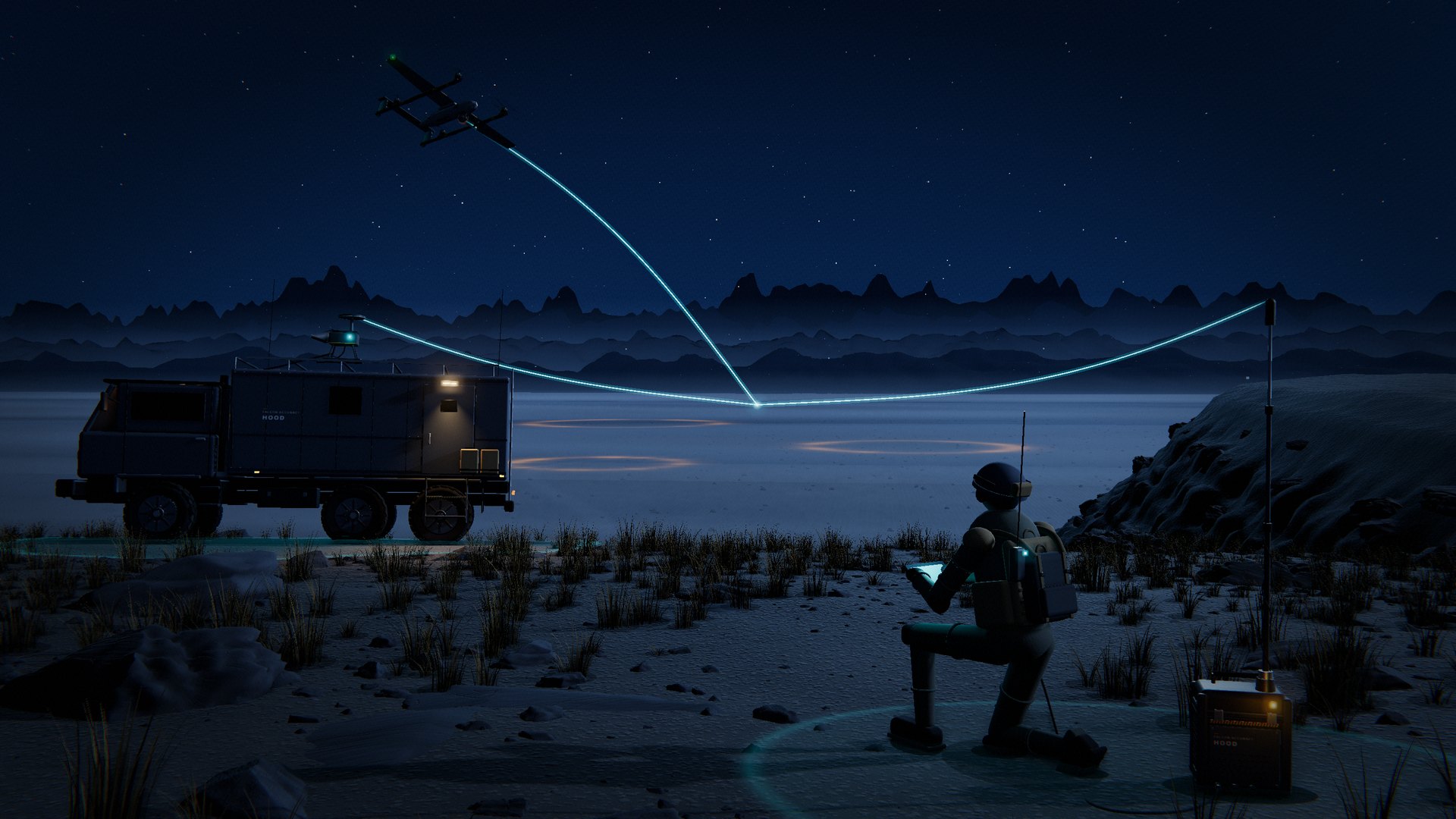
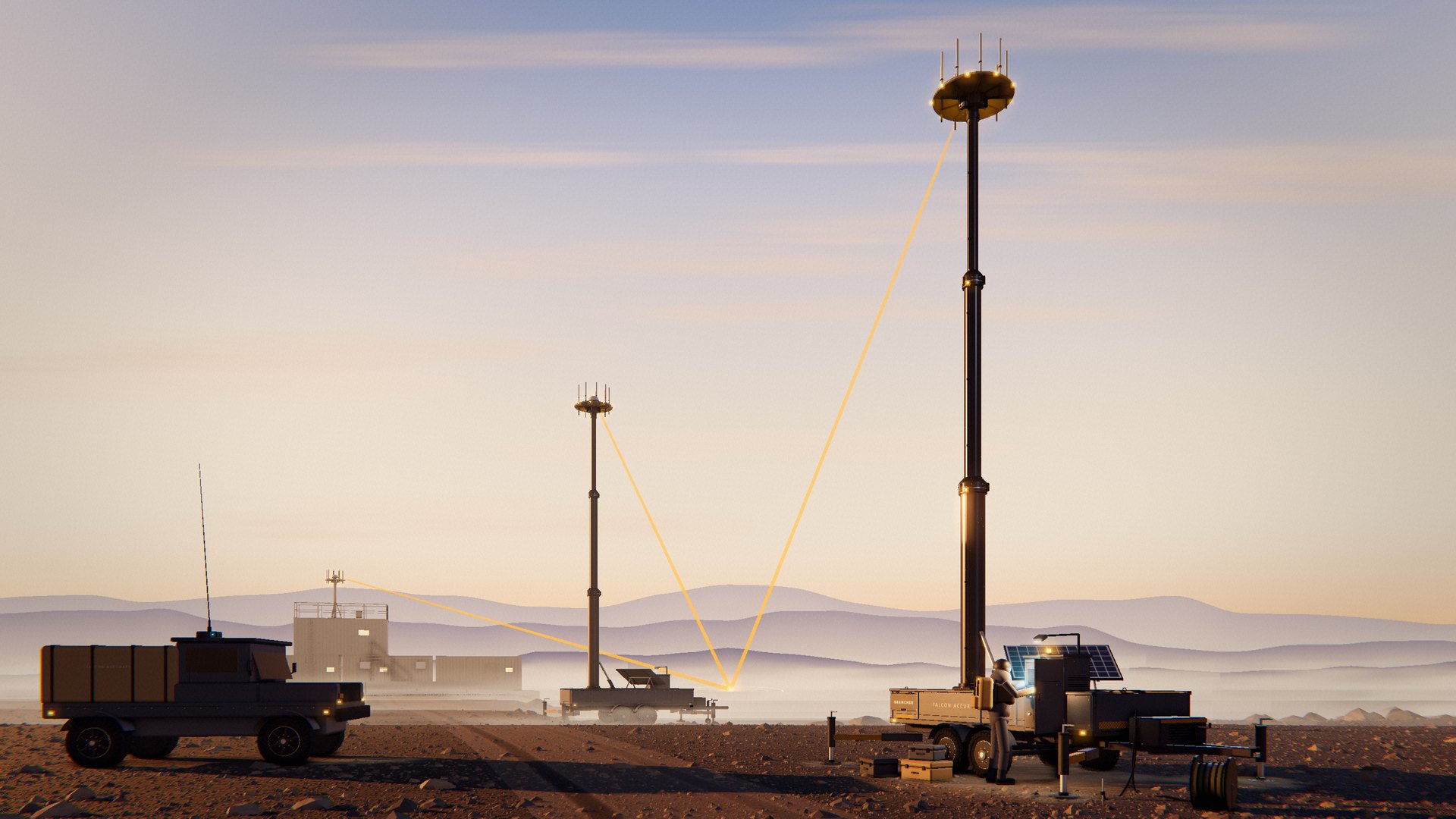
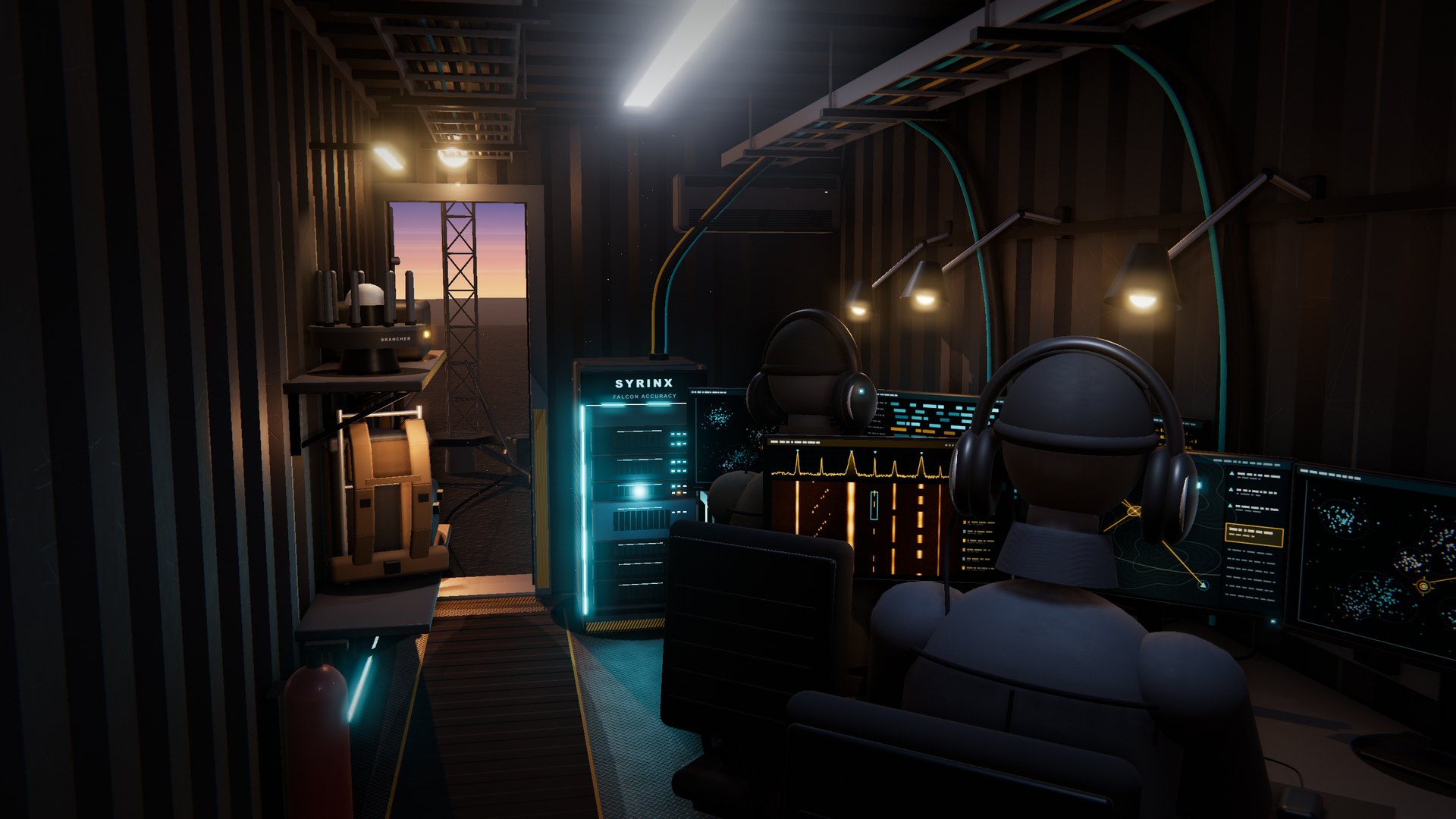
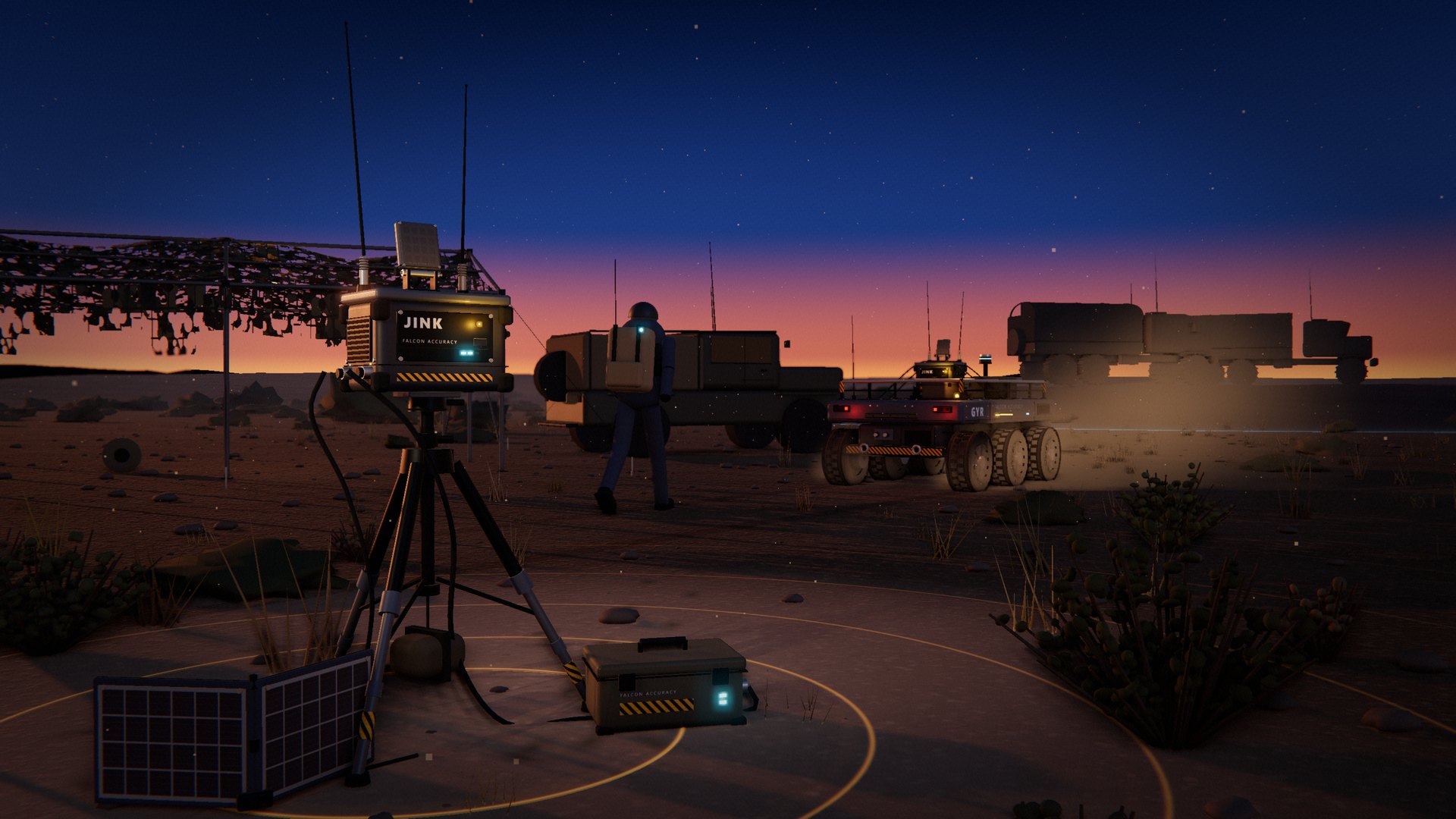
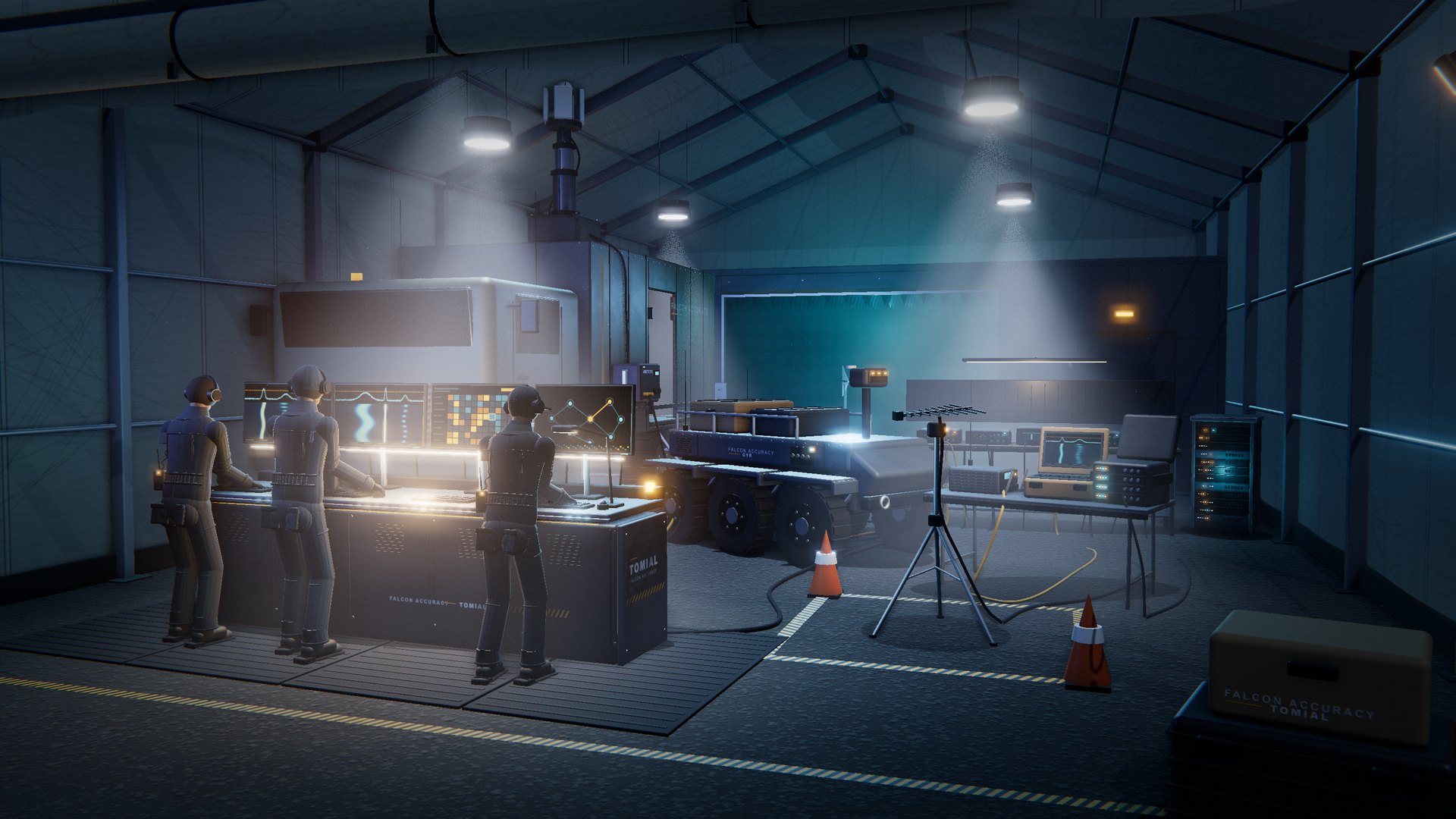
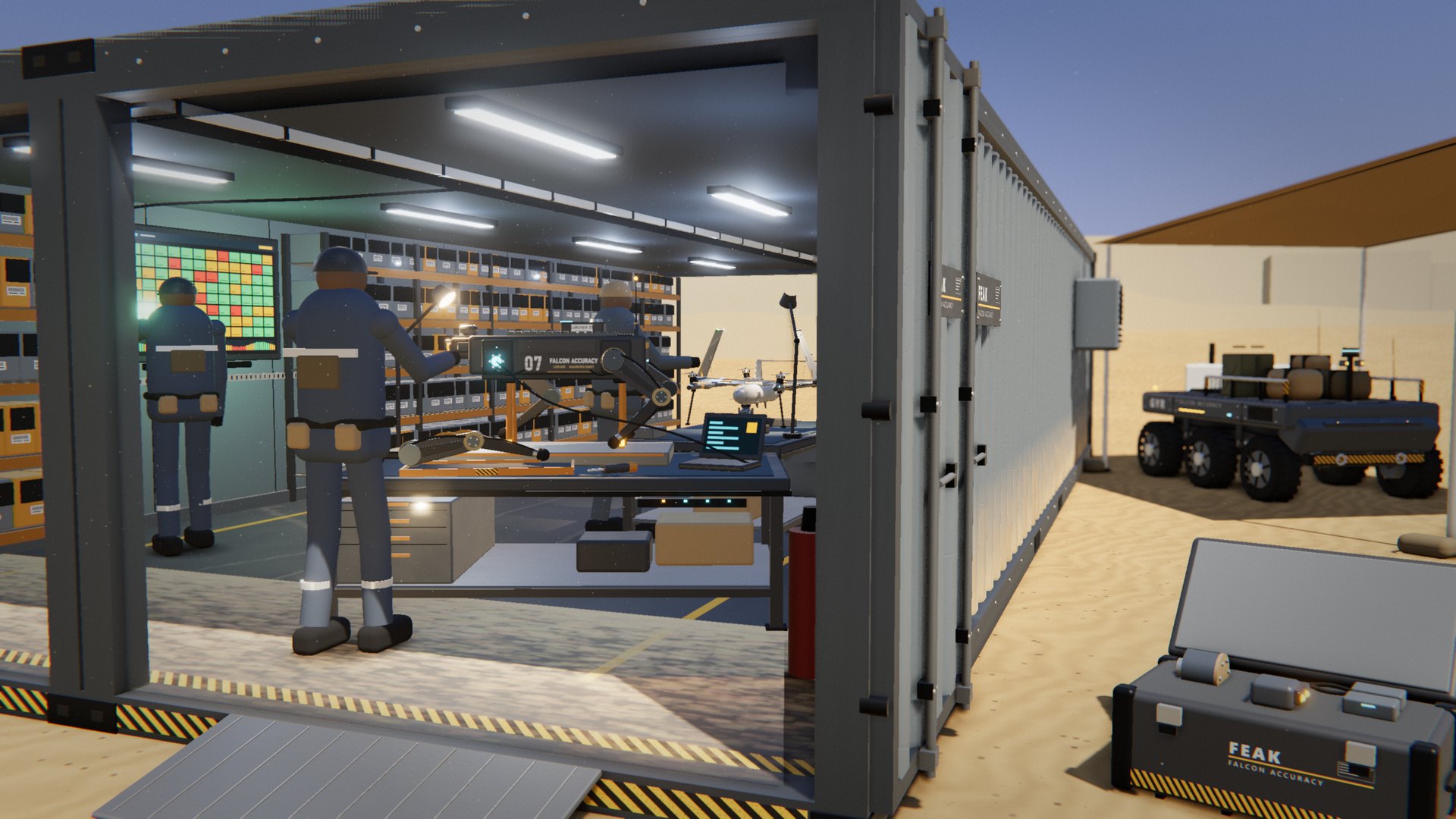
Concept catalog 2026

Tailoring Intelligence to Every Force

Falcon Accuracy builds AI-driven sensing, warning, decision and protection systems, the rockets that put its satellites in orbit and a defense language model that runs on the client's own racks, and tailors each one to the force that fights with it. Every machine is unarmed. A human decides, and every decision is logged inside the client's network.

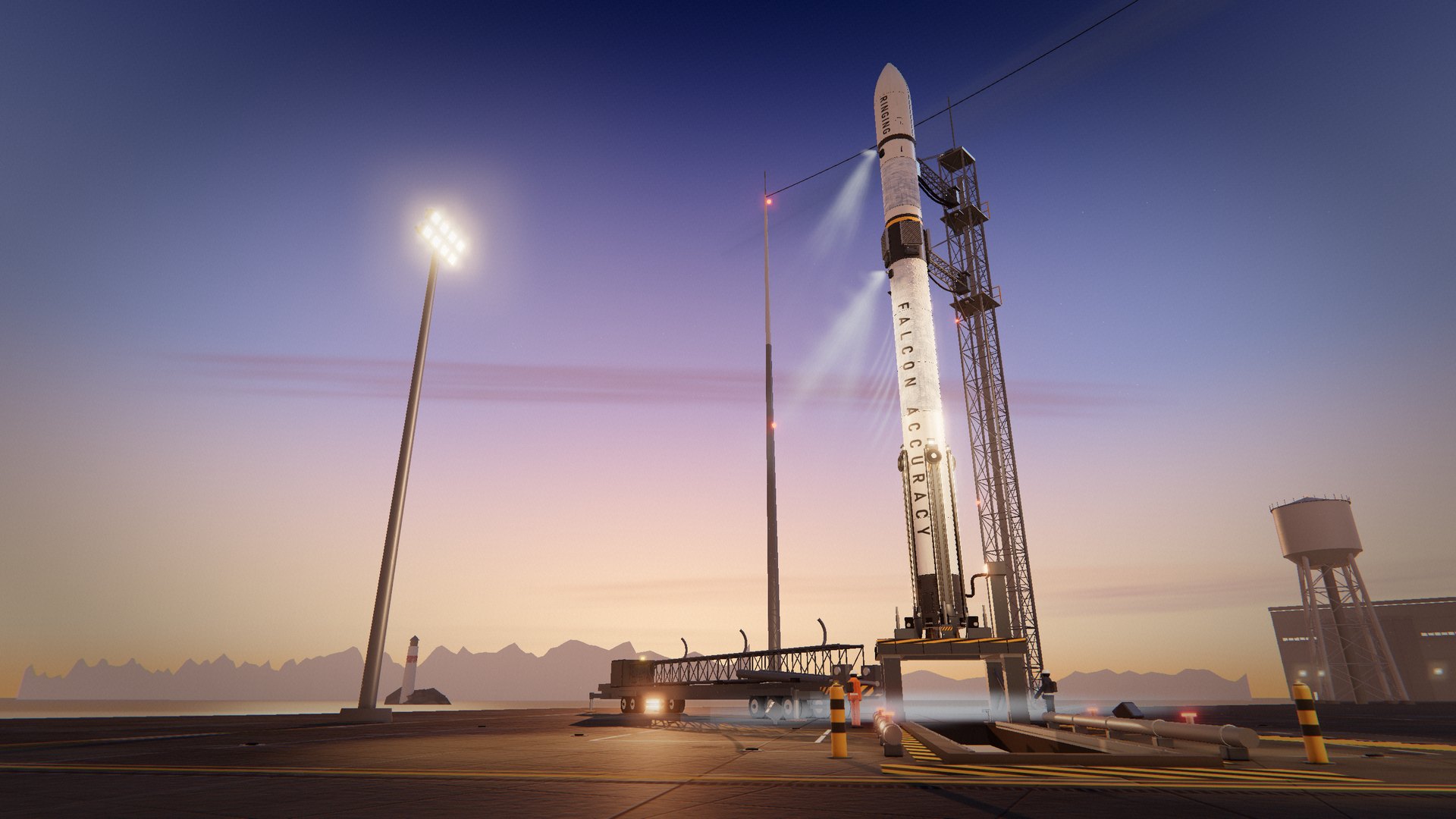
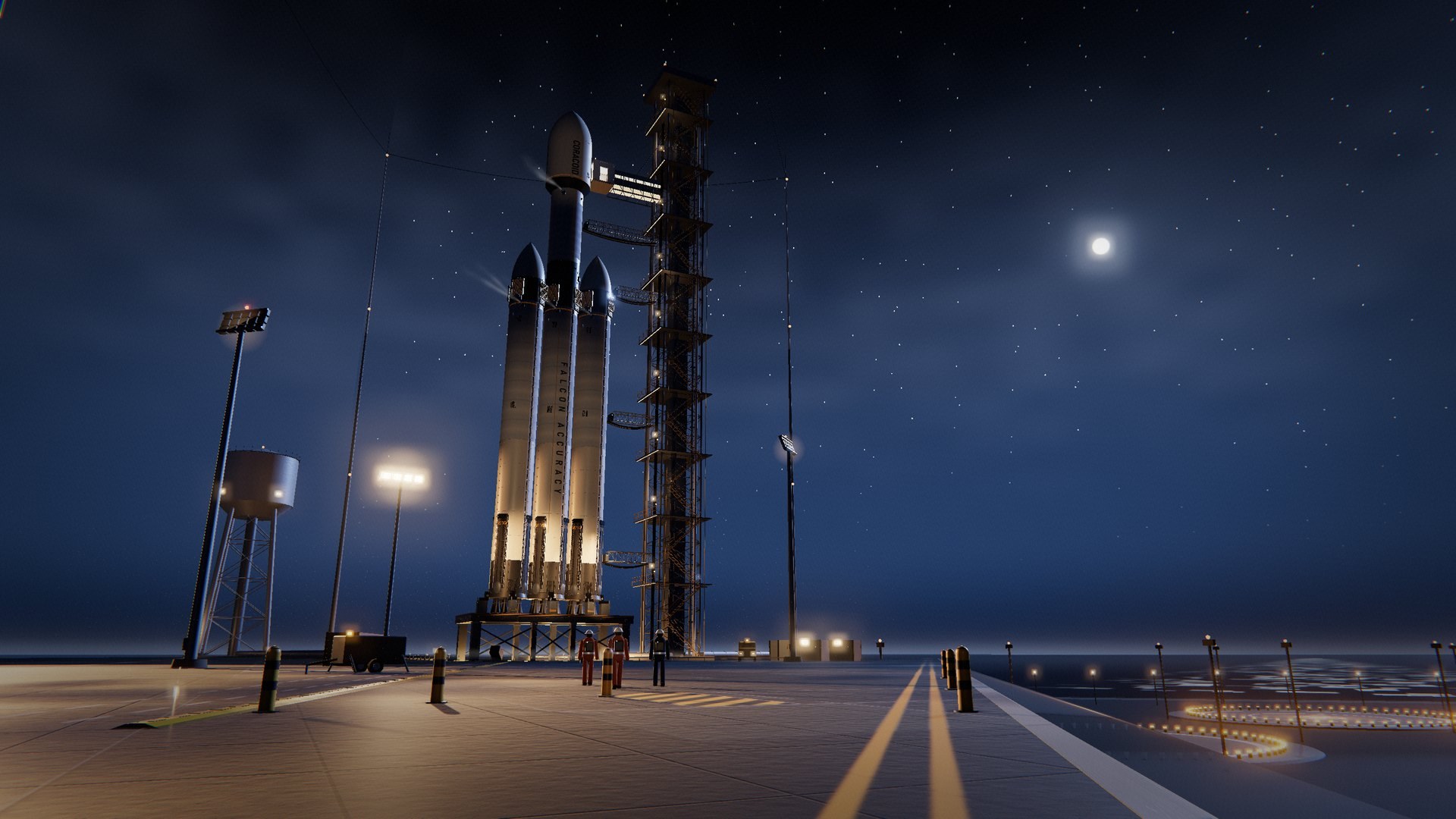
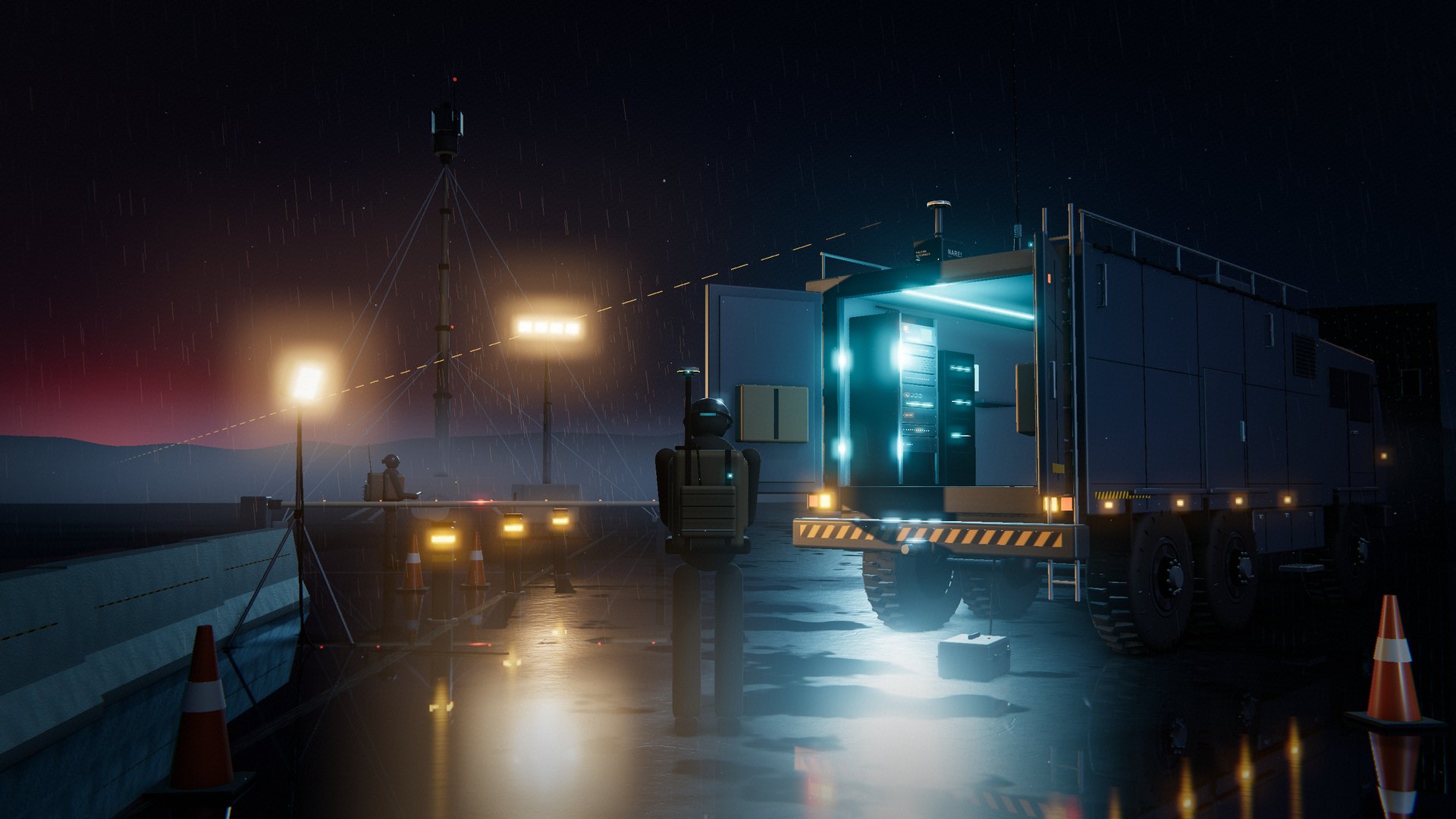
RINGINGConcept render · Launch vehicle
96Products
18Sectors
630Declared links
410Vouch statements
0Weapons carried
How Falcon Accuracy works

Sense. Decide. Protect. Tailor.

Falcon Accuracy builds AI-driven sensing, warning, decision and protection systems and tailors each one to the force, the mission and the theater it serves. The catalog's 96 products in 18 sectors run from the goggles, vest and glove on the operator through radios, aircraft, low-altitude airspace sensors, air and missile warning, ground robots, patrol boats, undersea survey and rescue vehicles, satellites and space tracking, and the launch vehicles, rocket engines, launch sites and range that put satellites in orbit, to the spectrum receivers, cyber defenses, the force's own defense language model and forecasting engine, base security, logistics and training systems around them, with the PITCH decision core at the center and a tailoring program that keeps every model learning on the client's own ground. Every piece of hardware is fitted to the kit the force already carries. Every model is trained on the client's own terrain, threats and language and set to its doctrine and rules. Every machine is unarmed, every decision rests with a human, and every record stays inside the client's network. One system that sees, warns, recommends and protects, while your people decide.

01

SENSE

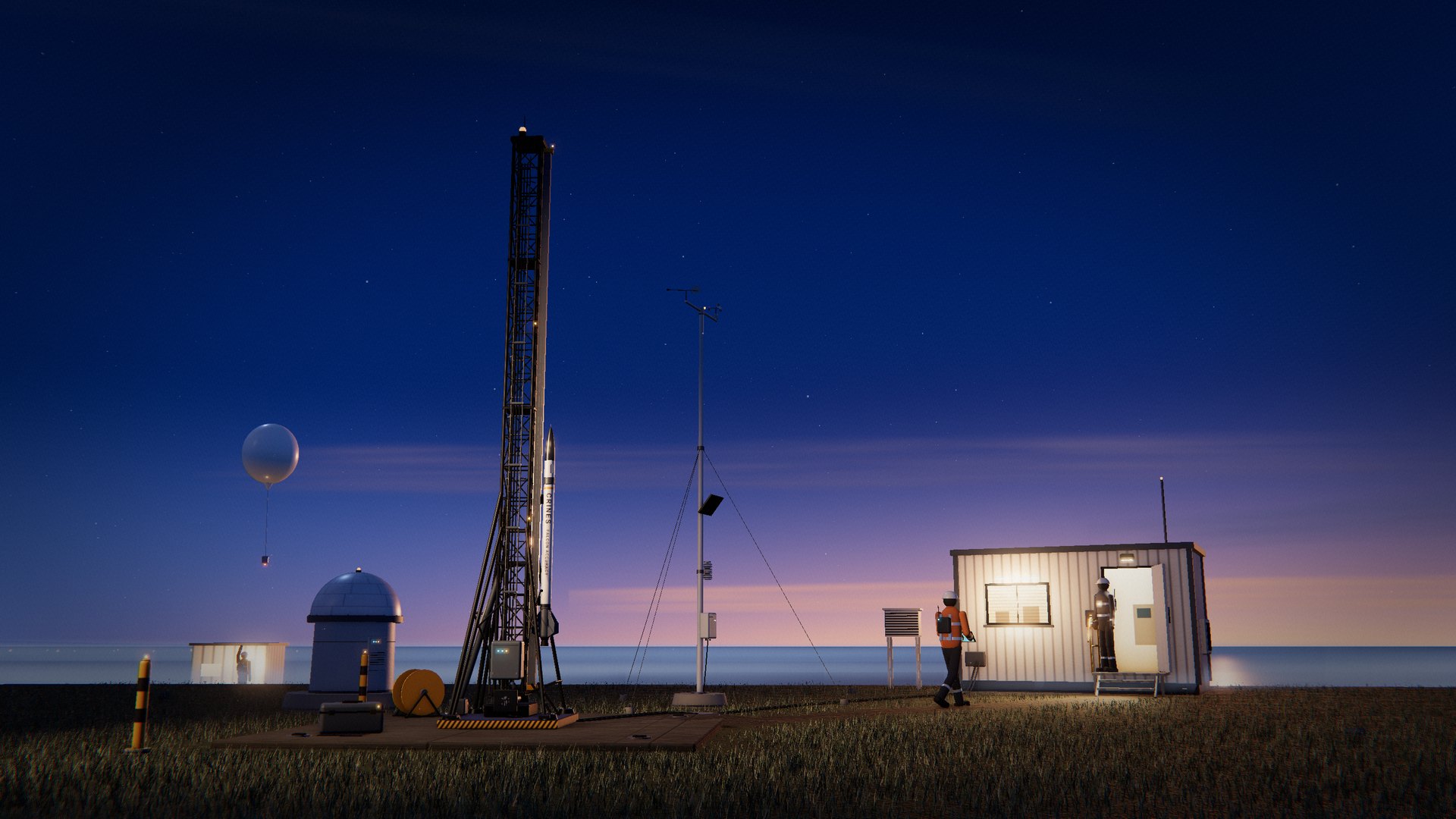
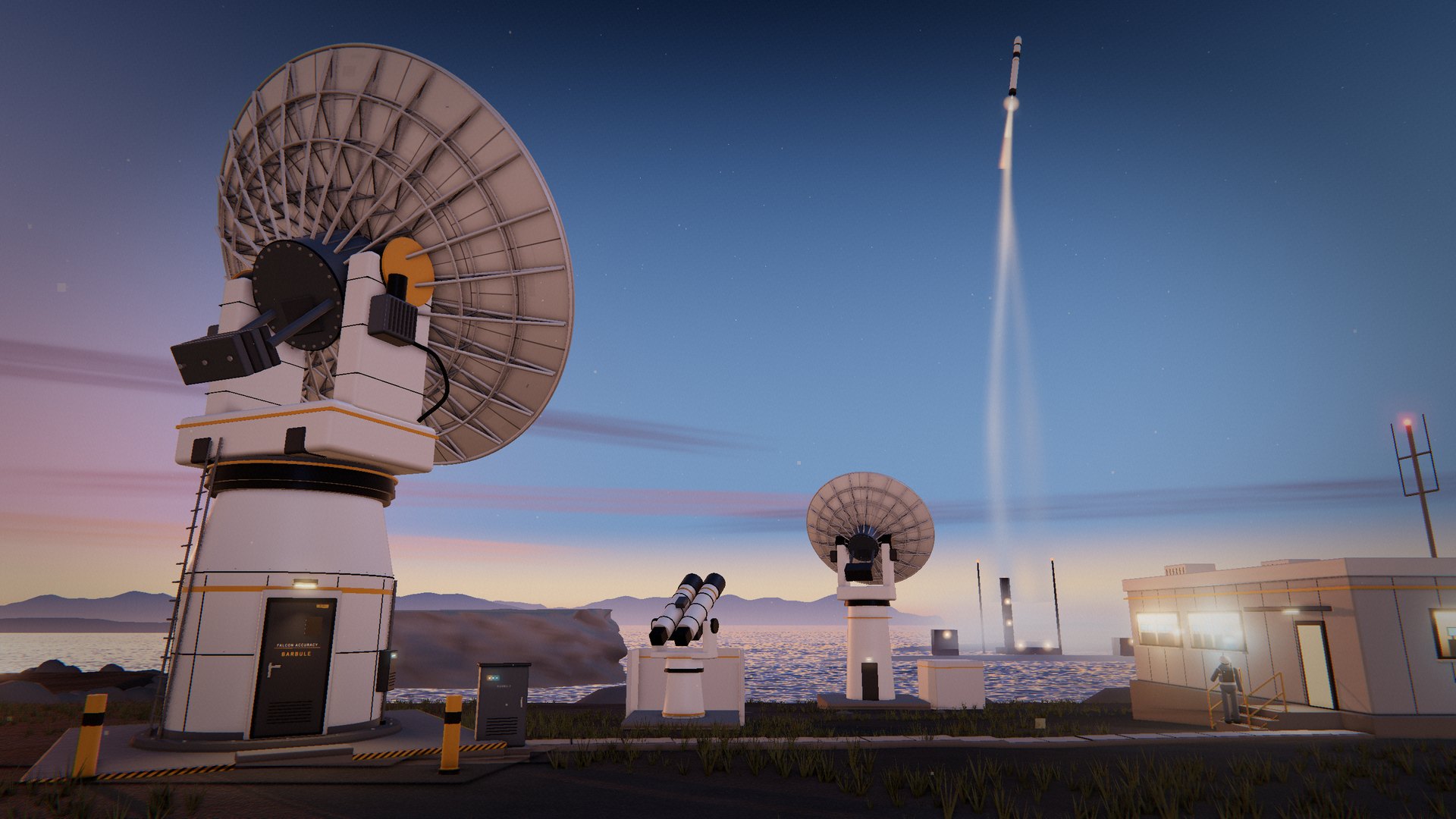
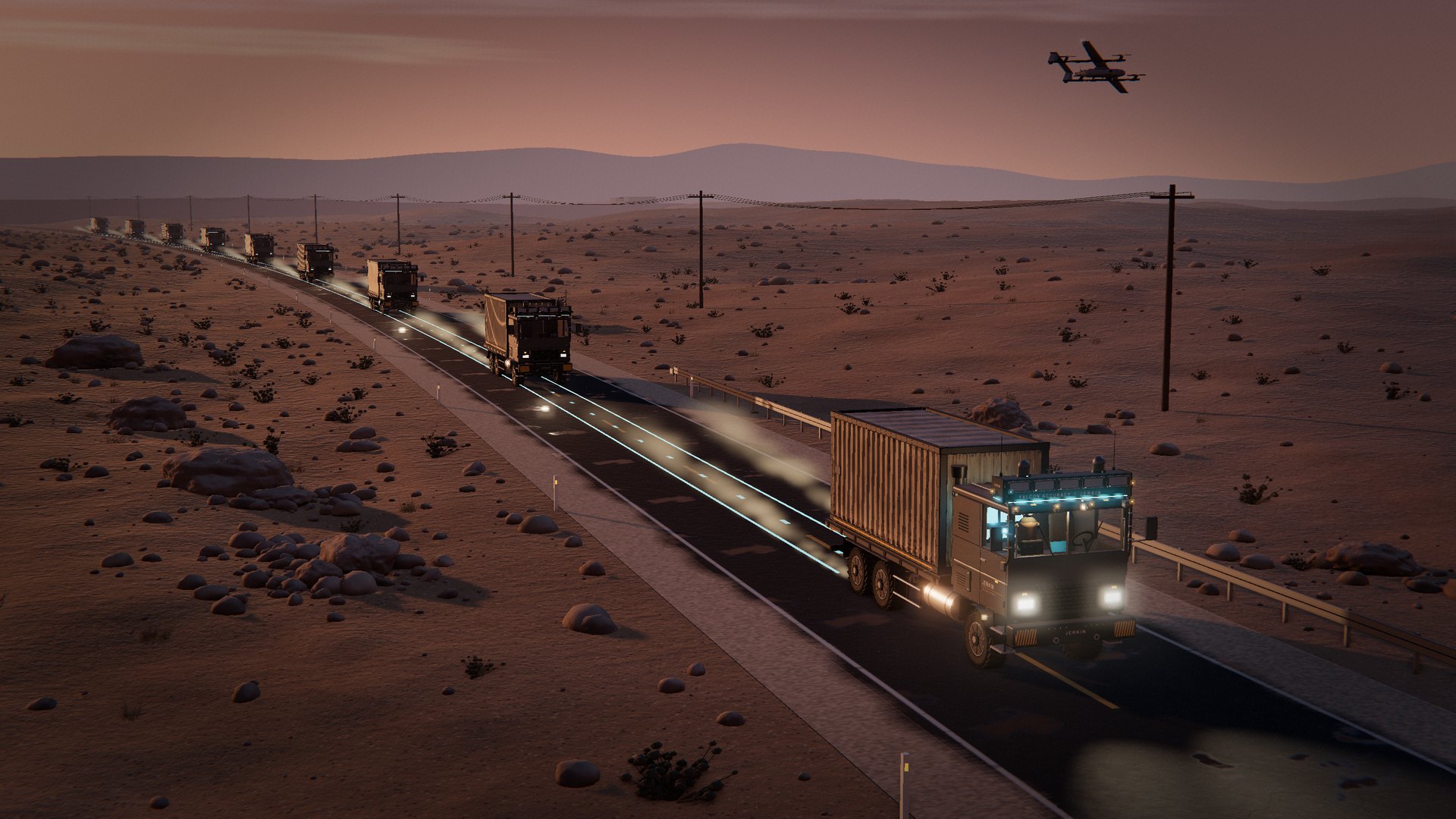
Fused thermal, low-light, infrared, radar, radio, sonar and acoustic sensing on the operator, over the squad, along the road, across the harbor, on the seabed, around the base and in orbit, with detection running on the device itself. LONGWING tracks an aircraft at 400 kilometers, KETTLE sees the heat of a launch from orbit within 10 seconds, RAMAGE hears an anchor drop beside a seabed cable and TOWER keeps orbits on 6,000 objects around the force's satellites. The MALAR goggles, a MAIL buoy and a TAITA satellite each send the detection first and the file second, so the picture exists even when the network does not, and the link carries only what matters. Above the force, CRINES measures winds, temperature and density from 90 kilometers down to 20 every day, and BARBULE fuses radar, optical and telemetry tracks of every launch into one track 20 times a second.

02

DECIDE

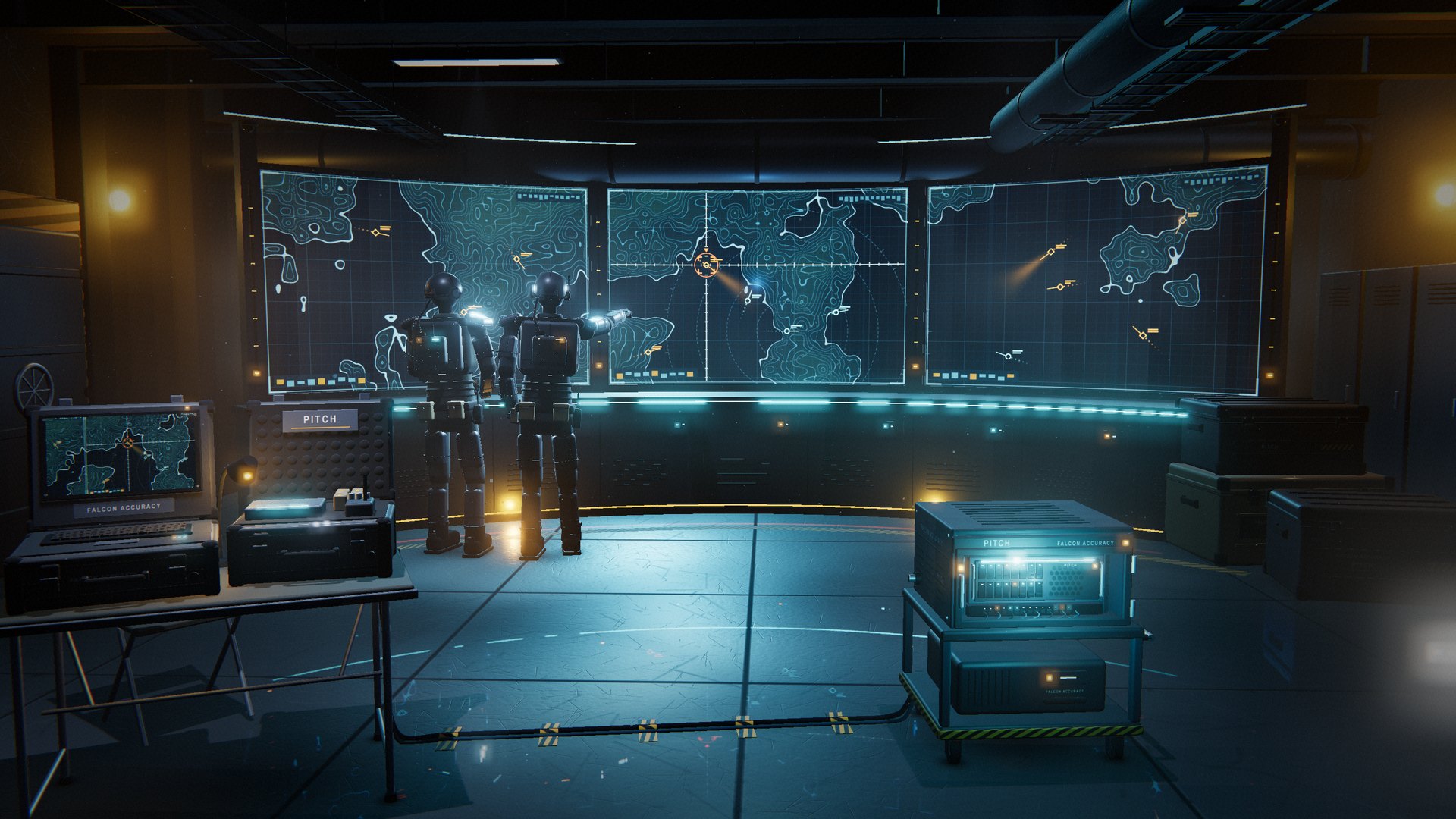
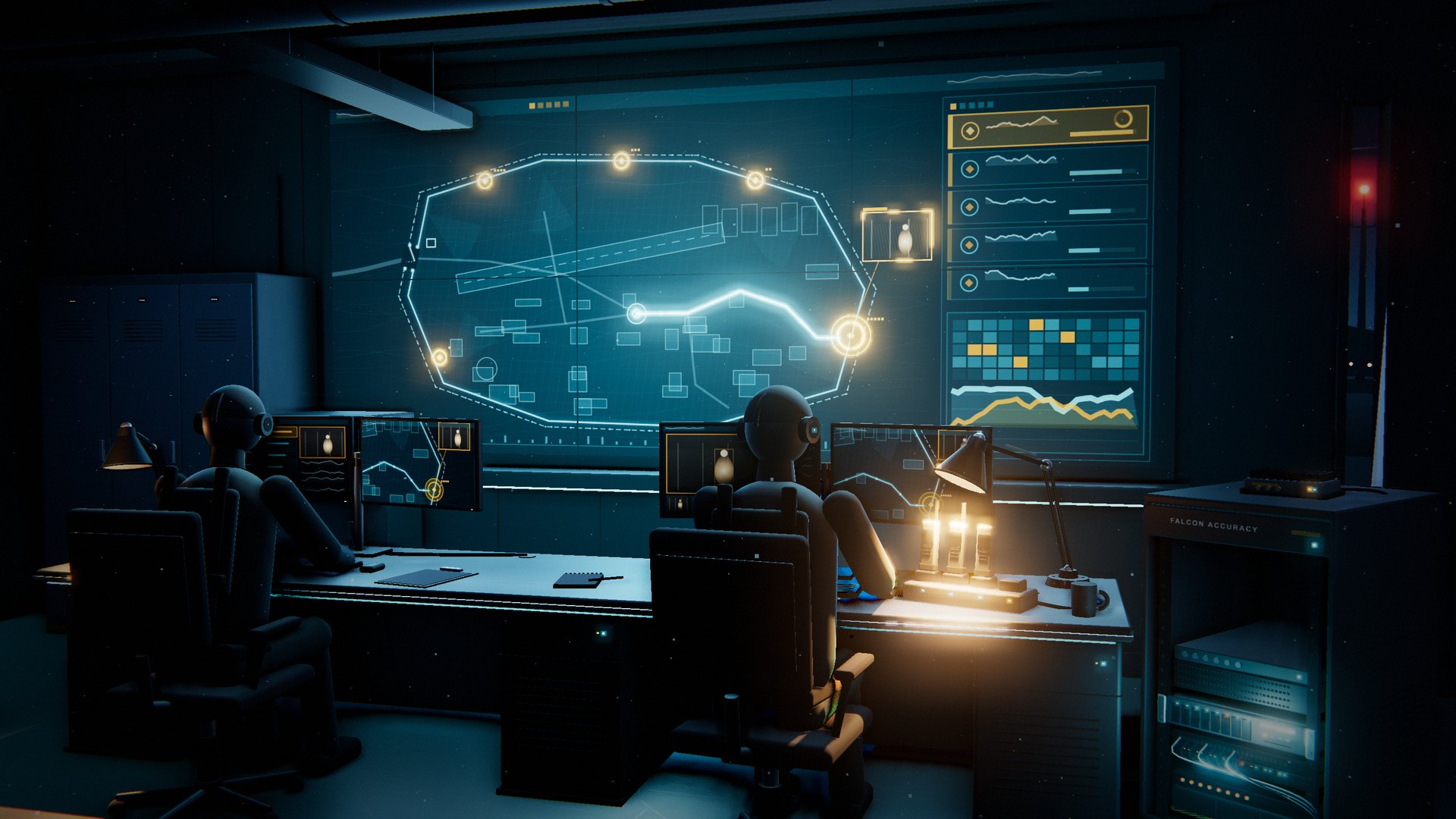
One live track picture in PITCH, fused from every feed the force owns in under 1 second, with predictions that carry calibrated confidence and courses of action run 10,000 times against an adversary that adapts. Every recommendation shows its evidence, and every warning waits for a person: a watch officer confirms each LONGWING and KETTLE warning and an analyst confirms each TOWER collision warning before anyone acts on it. OSSICLE adds calibrated forecasts of supply demand, equipment failure and readiness, each with its 80 and 95 percent bands and its five strongest drivers, and INTERMEW answers the staff from the force's own documents with a citation on every sentence and an AI-generated label on every draft. A human is in the loop and decides, and CALAMUS writes each recommendation, approval and order into one signed record.

03

PROTECT

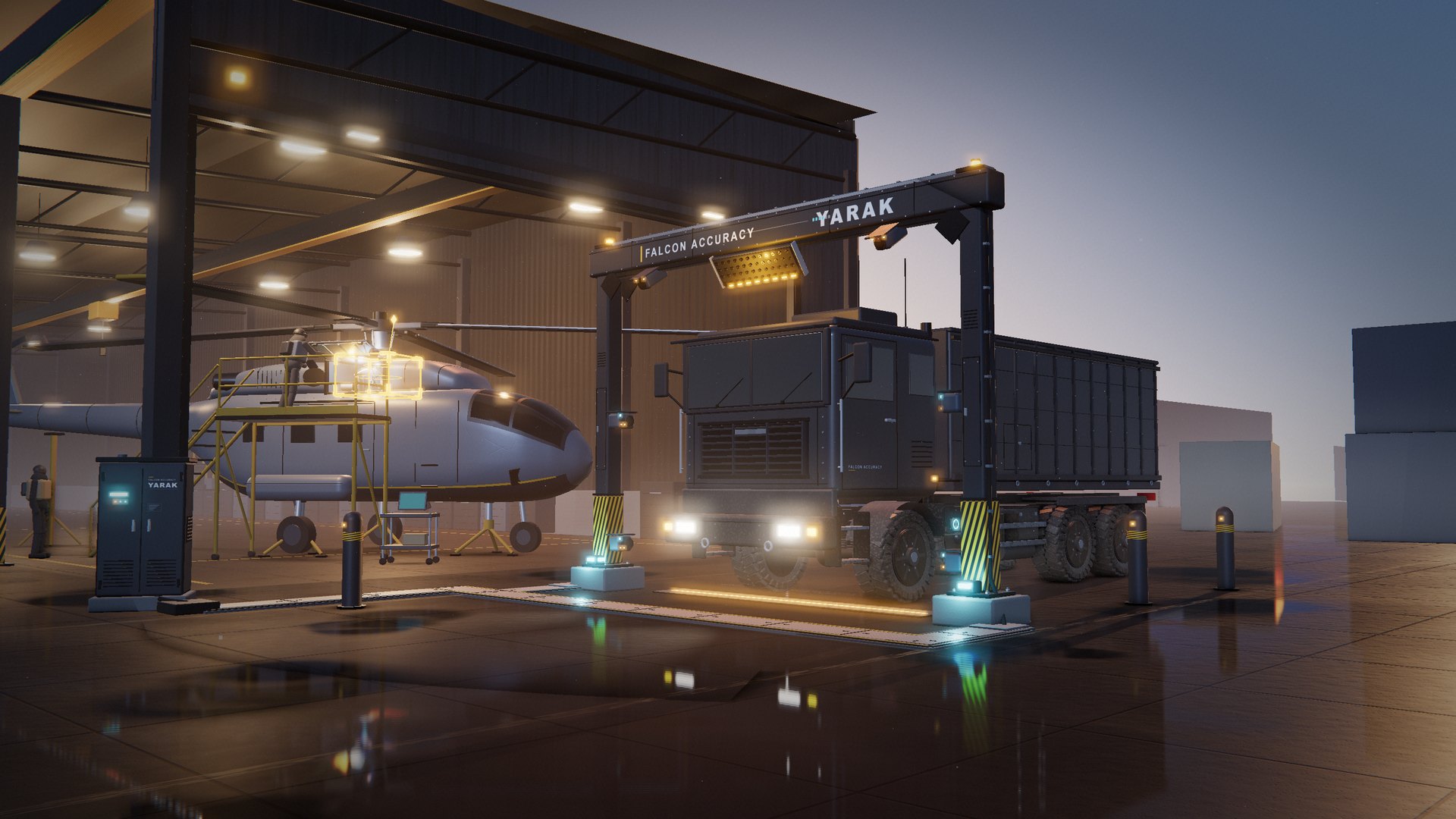
A warning the wearer feels within half a second of the first shot, a casualty alert that reaches the medic within 3 seconds on its own, a camera over the perimeter alarm within 2 minutes, a small drone heard 5 kilometers out with its pilot placed within 50 meters, and a trusted position fix under jamming. Beyond the force, BECK puts a confirmed air warning on every phone, siren, radio and road sign in the region within 10 seconds and names the nearest MEWS shelter, IMPING gets a damaged runway flying again the same day, GONYS brings a submarine crew up from 600 meters, 12 at a time, and PUTOVER lands 10 metric tons of relief supplies on a prepared pad up to 12,000 kilometers away in under 90 minutes. Every machine is unarmed. It senses, warns, shelters, shadows and marks, it destroys and intercepts nothing, and the response stays with the people the force has trained for it.

04

TAILOR

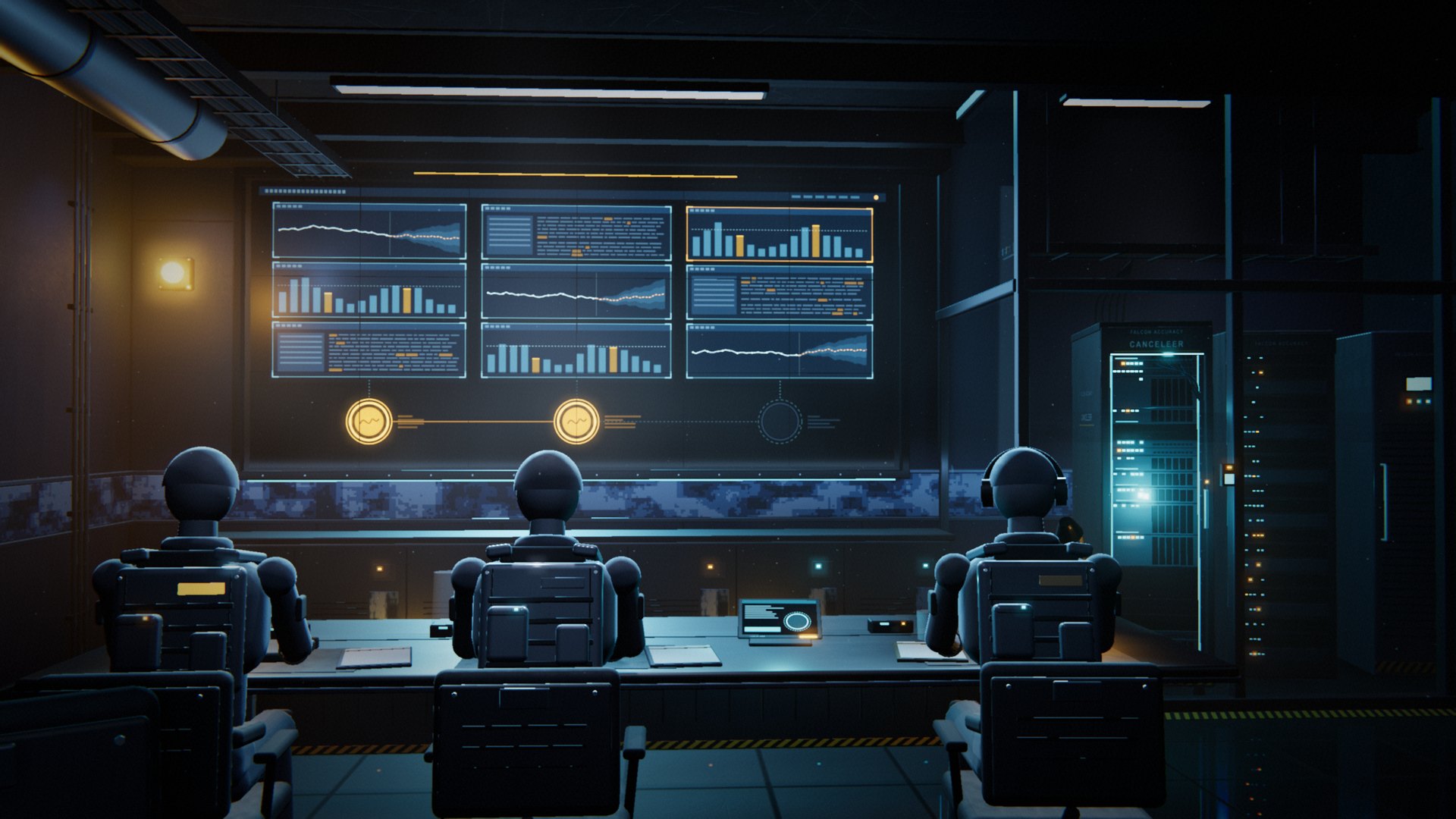
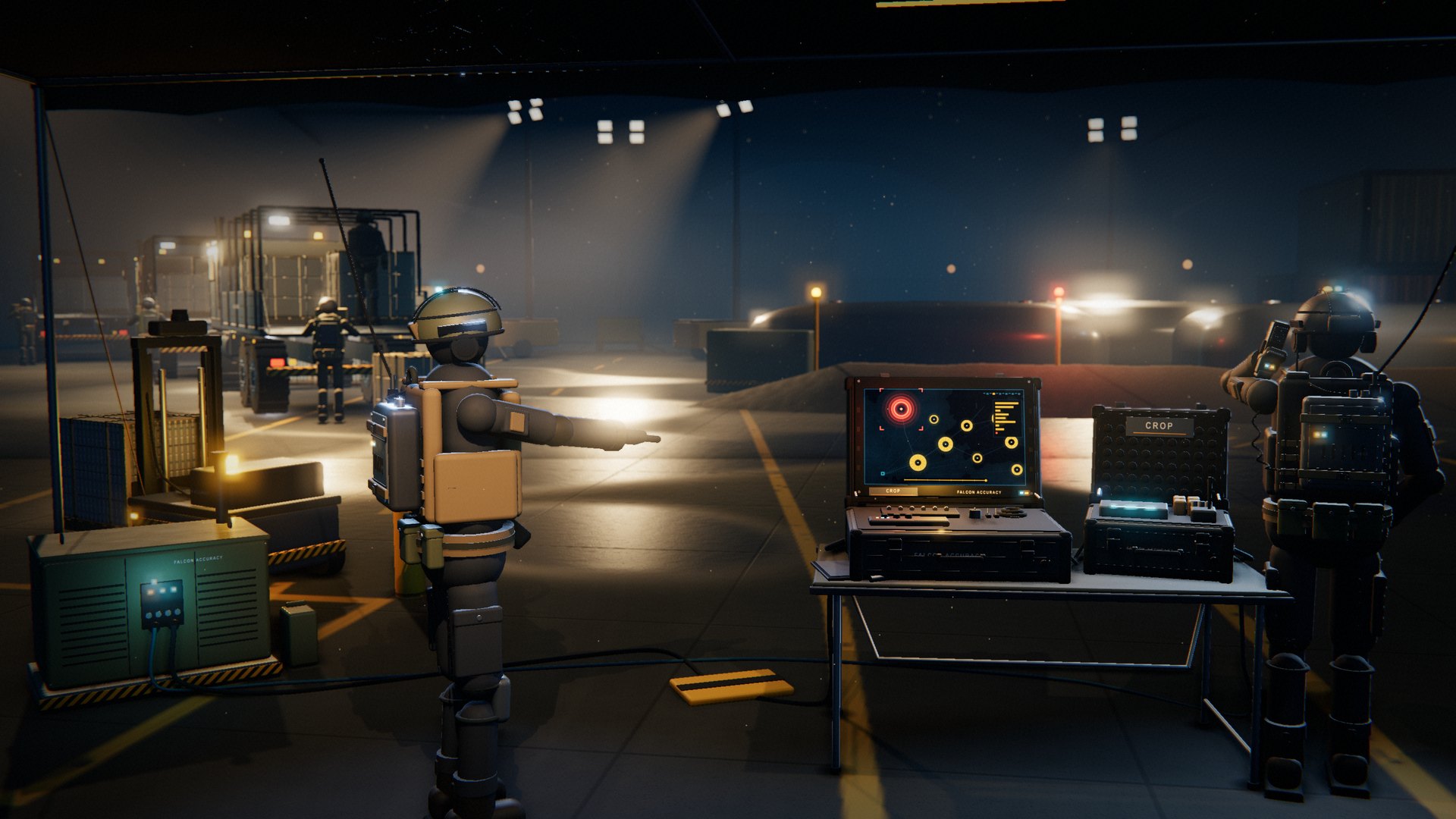
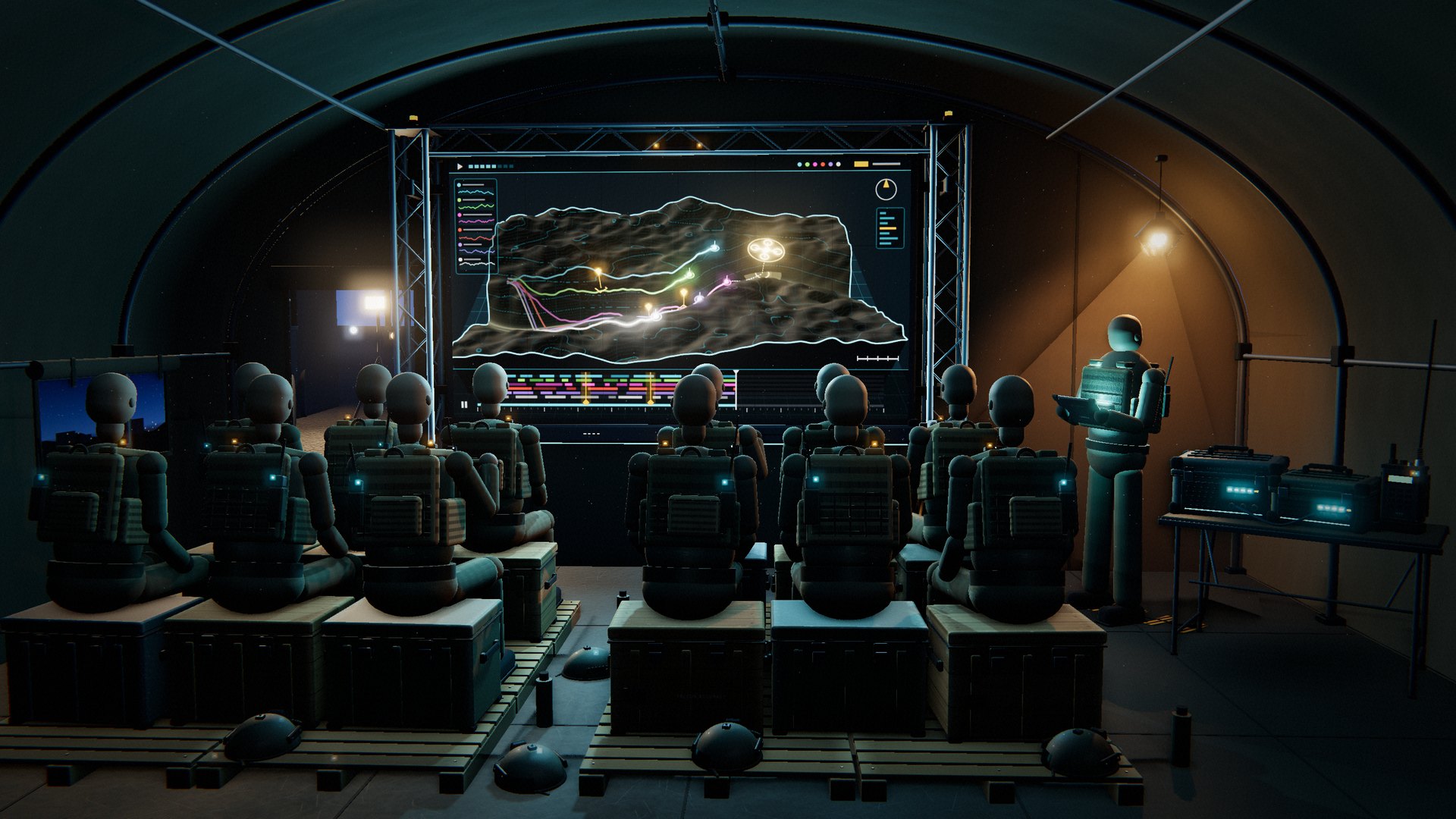
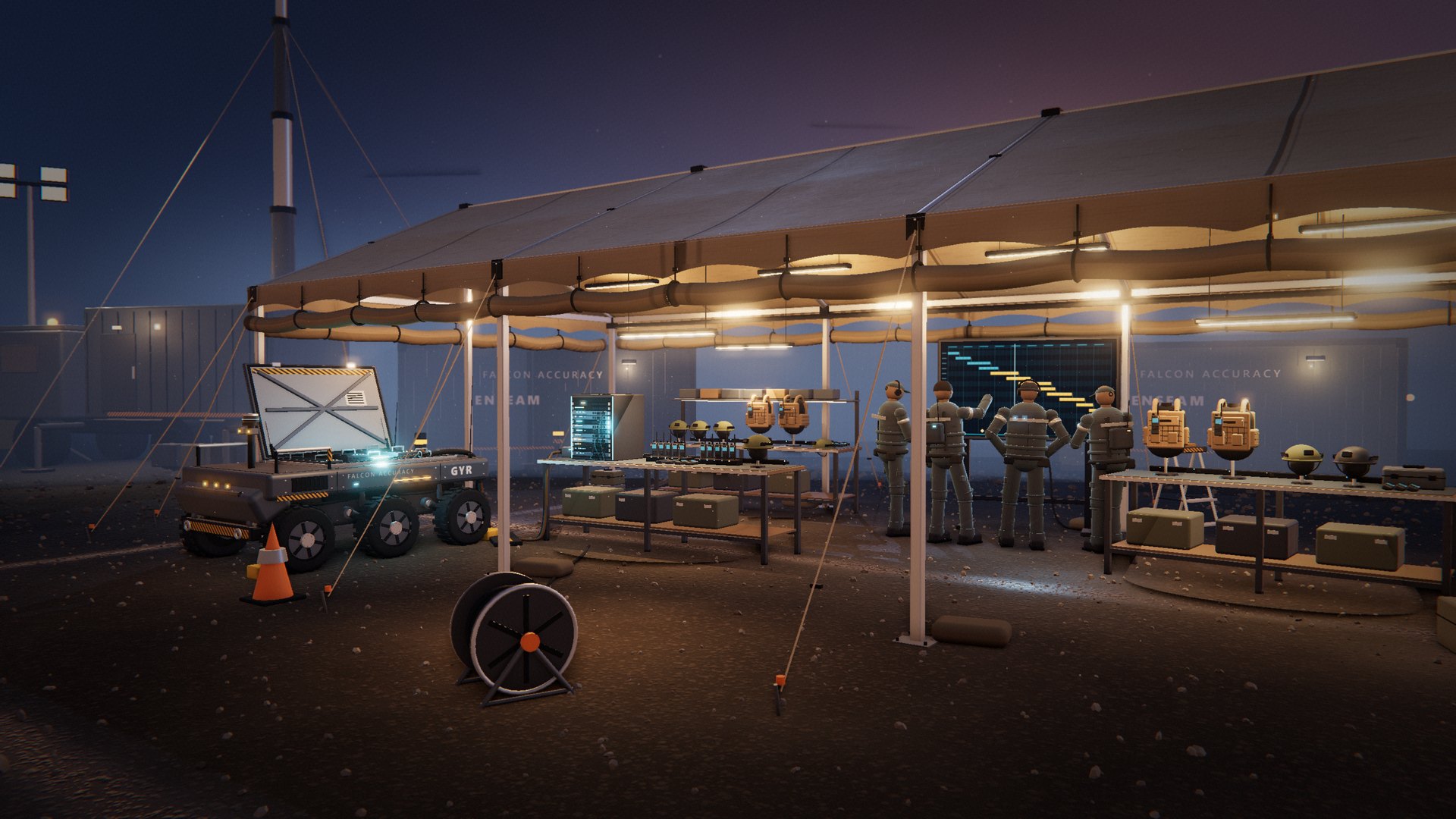
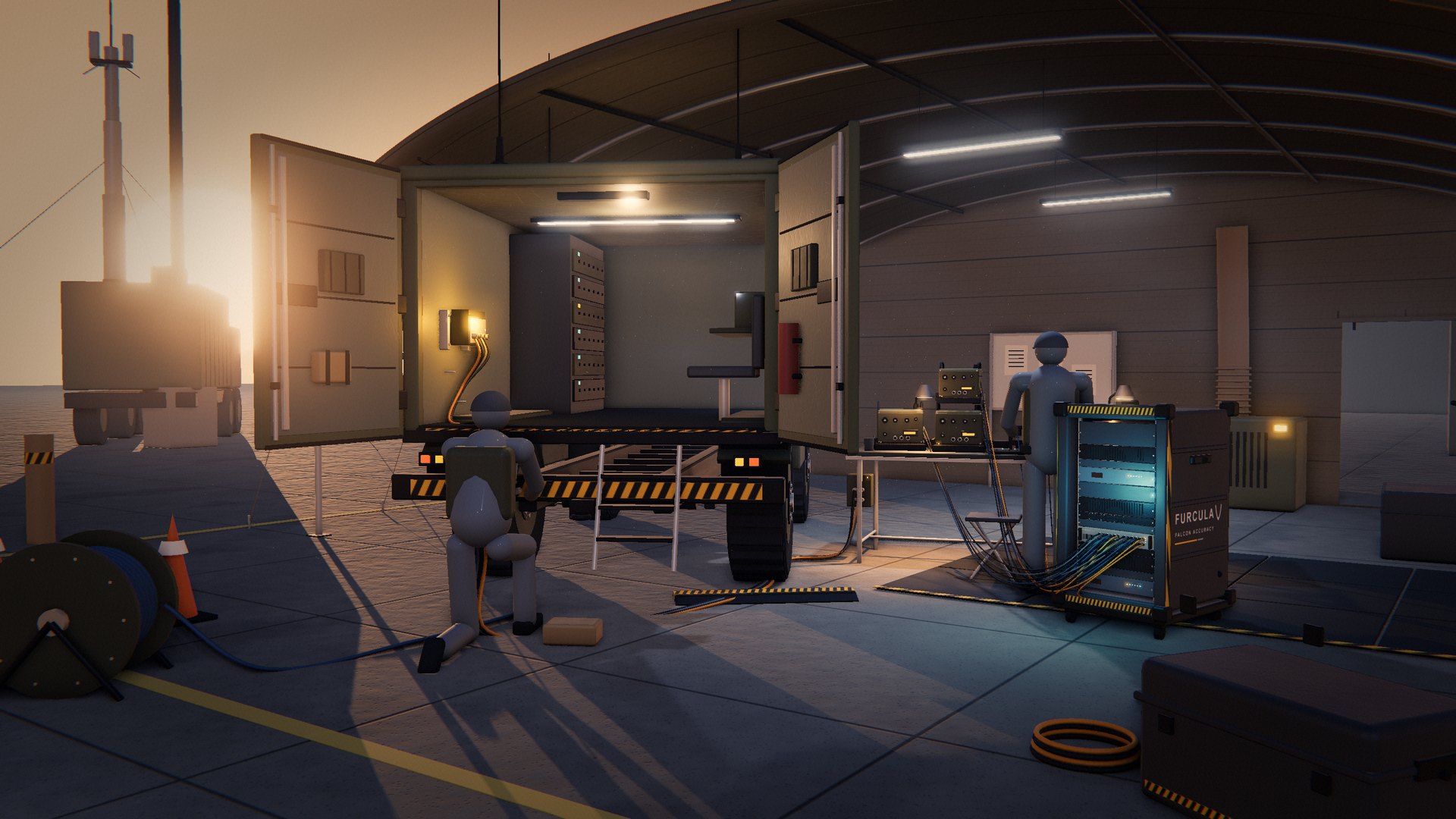
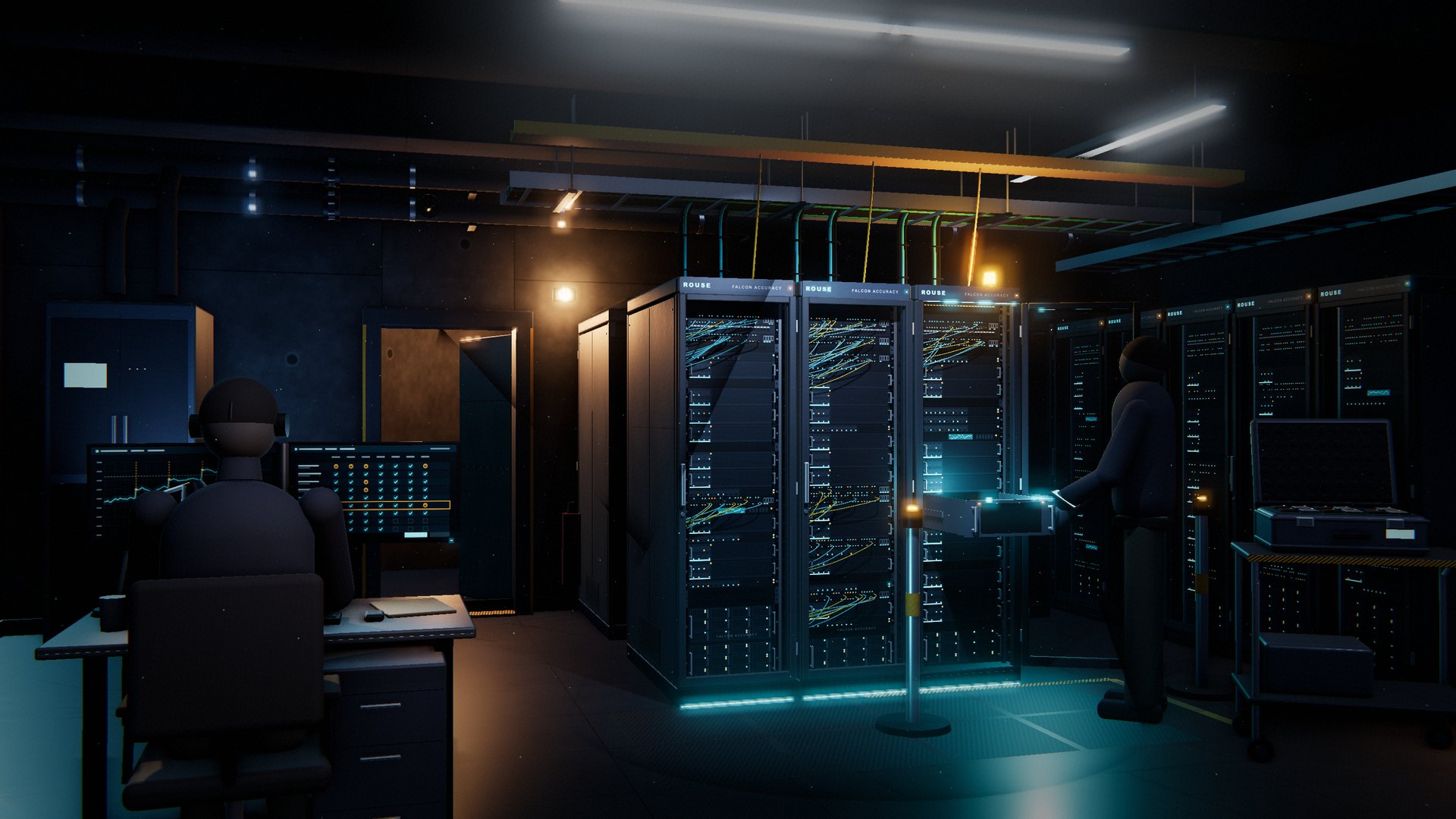
Every system is fitted to the kit, vehicles and sites the force already has, trained on the client's own terrain, threats and language, and set to its doctrine, rules and thresholds, in that order. ENSEAM delivers the program in 40 weeks and closes it with a 10-day acceptance trial on the force's own ground. ROUSE then retrains every model on a 4-week cycle on racks the client owns. CANCELEER holds every language and forecasting model version until a named commander, legal adviser and model officer sign it, and rolls any version back within 10 minutes. Models learn inside the client's network and never leave it.

Sovereign AI

INTERMEW, the force's own defense language model

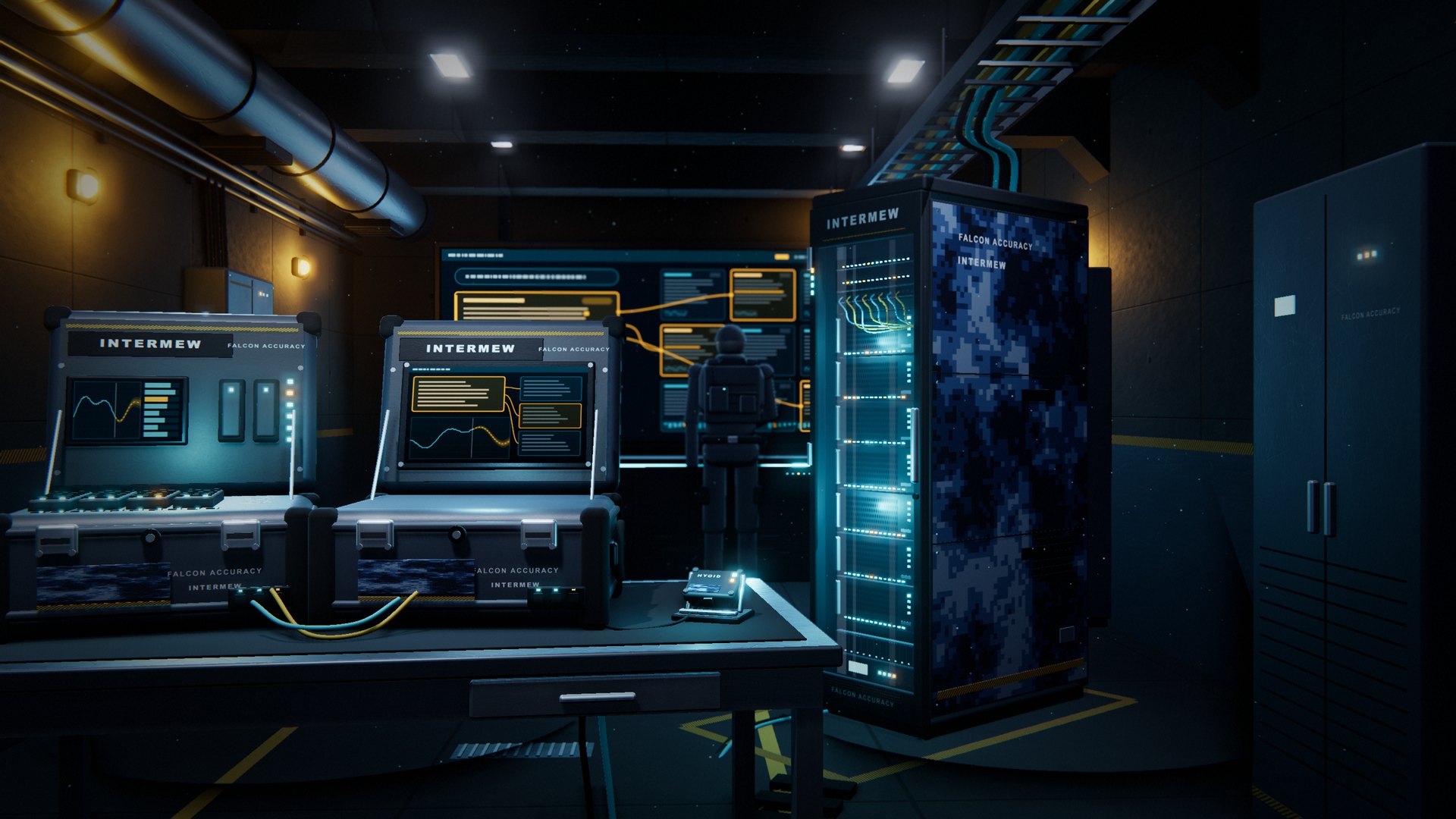
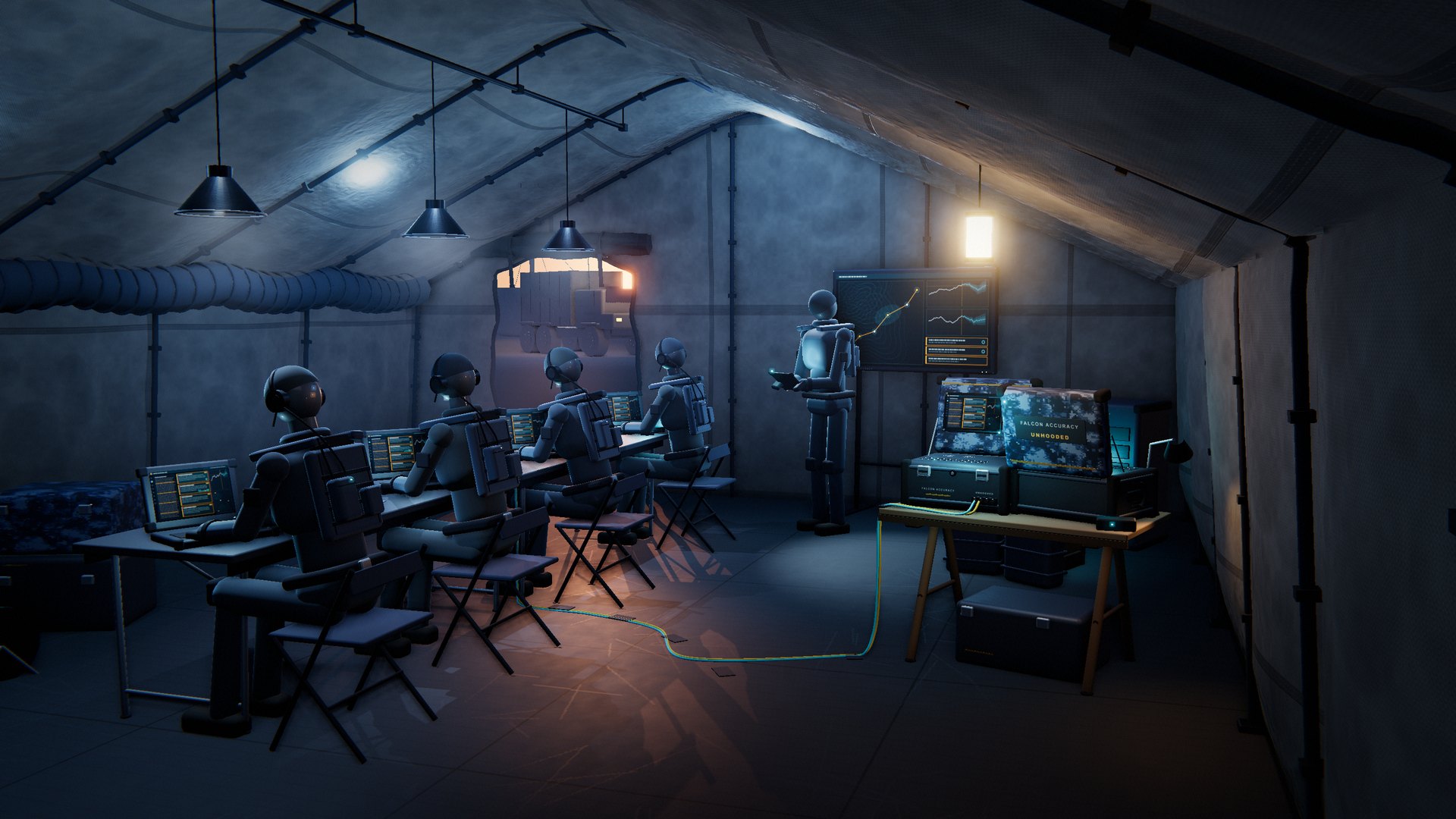
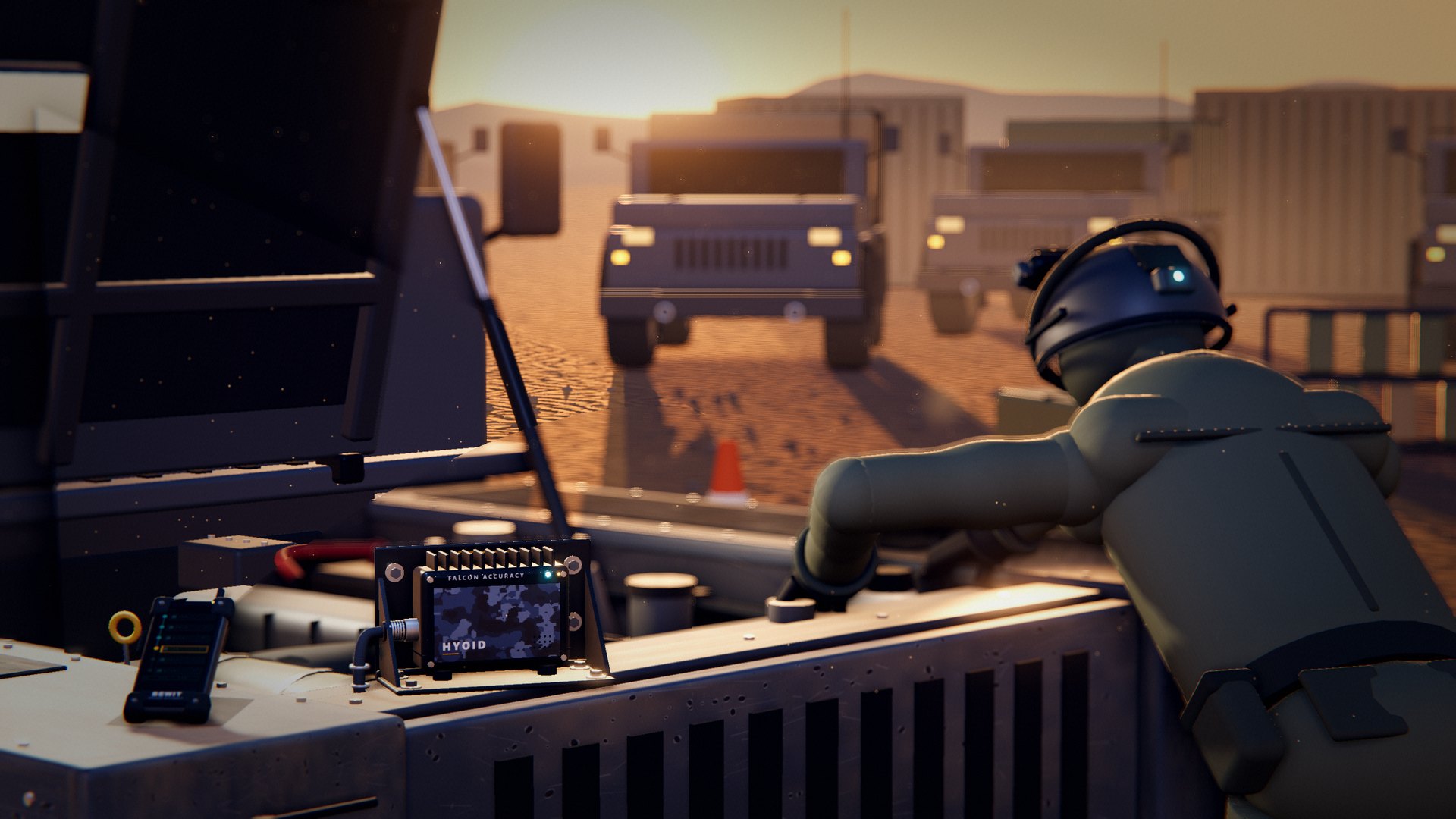
INTERMEW is the Falcon Accuracy defense language model, tuned inside the client's network on its doctrine, manuals, reports and languages. It answers with a citation to the client's own documents on every factual sentence, labels every output as AI-generated and writes text for a person to review, with no path to any machine or order system. Every query and answer is logged, and the weights never leave the client's network.

  1. 01Three sizes: 120 billion parameters at headquarters, 14 billion in the field, 3 billion on a 15 W module
  2. 02256,000-token context, enough for a 350-page manual in one pass
  3. 0390 percent correct and fully cited answers targeted on the client's own 2,000-question set
  4. 0498 percent refusal target outside the policy the commander sets in CANCELEER
  • A human decides
  • Outputs labeled as AI-generated
  • Every query and answer logged
  • Models and data stay inside the client's network
INTERMEW Defense Language ModelConcept design
Sizes
Headquarters 120 billion parameters; Field 14 billion; Edge 3 billion; one tokenizer, policy engine and log format across all three
Context
256,000 tokens Headquarters; 64,000 Field; 16,000 Edge
Hardware
Headquarters on an 8-accelerator 42U rack at 10 kW; Field in a two-case kit, 42 kg, 2 accelerators, 1.4 kW; Edge on the HYOID module at 15 W peak
Latency
first token within 1 s on Field and Headquarters and 2 s on Edge; 30 tokens per second per answer on Field, 25 on Headquarters, 12 on Edge
One system

From the operator to the core

96 products in 18 sectors declare 630 working links between them. The map draws the 204 two-way links, where both products name each other. PITCH sits at the center. It links to almost every product, so its links appear on hover.

System map96 products grouped by sector on a ring, with 204 two-way links drawn and 630 declared links in all; PITCH sits at the center and links to almost every product.Operator Systems, 5 products01Communications and Coordination, 5 products02Air ISR and Autonomy, 5 products03Low-Altitude Airspace Awareness, 2 products04Air and Missile Warning, 6 products05Ground Robotics, 6 products06Maritime and Littoral, 4 products07Undersea Systems, 5 products08Space and Flight, 9 products09Rocket Systems, 10 products10Electronic Warfare and Spectrum, 5 products11Cyber Defense, 5 products12Sovereign AI and Prediction, 5 products13Command and Decision, 5 products (4 on the ring, PITCH at the center)14Perimeter and Base Security, 5 products15Logistics and Sustainment, 4 products16Training and Simulation, 5 products17Tailoring and Services, 5 products18MALARCOVERTMANTLECADGECUFFJESSELEONORAHAMULIPECTENPASSAGEEYASTIERCELWAITONSAILSBARBARYWAKESTANNELLONGWINGKETTLEBECKMEWSSOOTYIMPINGLURCHERFALCONERGYRAPLOMADOVARVELBRAILHAGGARDBOWSEMAILPINIONSARCELTERTIALKITINGRAMAGEGONYSRINGINGCASTINGMAKEHAWKTAITALAGGARTOWERNICTITANSBATELURECORACOIDMOUNTEEPATAGIUMENEWRACHISNANKEENCRINESBARBULETERRETPUTOVERHOODBRANCHERSYRINXJINKNARESKEENHALSBANDCEREQUARRYBEWITINTERMEWOSSICLEUNHOODEDHYOIDCANCELEERLORESSLIPLEASHCALAMUSSCREENBLOCKHALLUXRAKEFORMELYARAKPLUMECROPJERKINCREANCEWEATHERRUFTERRANGLEPANNELENSEAMFURCULAROUSETOMIALFEAKPITCH86 LINKS

The network starts on the body. The MALAR goggles, the COVERT helmet, the MANTLE vest and the CUFF glove sense on the wearer, draw from one battery over one cable bus and compute on the body, so the operator holds a picture before the net does. JESS carries that picture across the squad and re-forms the mesh within 200 milliseconds when a node drops, ELEONORA puts the squad on one shared workspace, HAMULI bonds satellite and cellular links into one path to command and PASSAGE carries the picture across a classification line in one direction only. Above the squad the air layer climbs rung by rung. EYAS flies the room, TIERCEL watches from a backpack launch, WAITON holds 120 meters over the vehicle, SAILS covers a 120 kilometer radius for 12 hours and BARBARY relays the whole net from 20 kilometers for weeks at a time. Behind the air layer the warning chain looks further out. LONGWING tracks aircraft at 400 kilometers and ballistic missiles at 800, KETTLE sees the heat of a launch from orbit, BECK carries the confirmed warning to every phone and siren in the region, MEWS shelters 45 people for 72 hours, SOOTY draws the adversary's surveillance onto full-size decoys and IMPING reopens a damaged runway the same day. On the ground LURCHER walks point, GYR carries 300 kilograms and feeds power to every other machine, APLOMADO reads the road, VARVEL marks the hazard and BRAIL brings the casualty back with vitals in view. On the water MAIL, HAGGARD, BOWSE and PINION hold one picture from the harbor floor to the horizon. Below them SARCEL and TERTIAL survey cable routes and harbor basins, KITING gliders measure the water for months at a time, RAMAGE watches the seabed cables and GONYS stands ready to bring a submarine crew home from 600 meters. At the top of the ladder RINGING lifts 300 kilograms to a 500 kilometer orbit and CASTING lifts 8 metric tons, MAKEHAWK places each satellite in its own slot, TAITA holds 36 cubesats overhead, TOWER watches the orbits around them, NICTITANS brings 150 kilograms of experiments home and LAGGAR brings each pass down beside the command post from two cases. Under the ladder the force owns its own way to orbit. RACHIS engines power every launcher in the family, CORACOID lifts 50 metric tons, MOUNTEE puts a 50-kilogram replacement satellite in orbit from under a stratospheric balloon, PATAGIUM stands up a launch site from 20 containers in 10 days and ENEW launches from the equator with nobody aboard. TERRET releases up to 24 satellites in the order the flight director approved, CRINES measures the upper air every day, NANKEEN gives 200 kilograms of experiments 6 minutes of microgravity, and BARBULE tracks every flight against its corridor for the range safety officer. When roads and runways are cut, PUTOVER lands 10 metric tons of relief on a prepared pad within 90 minutes.

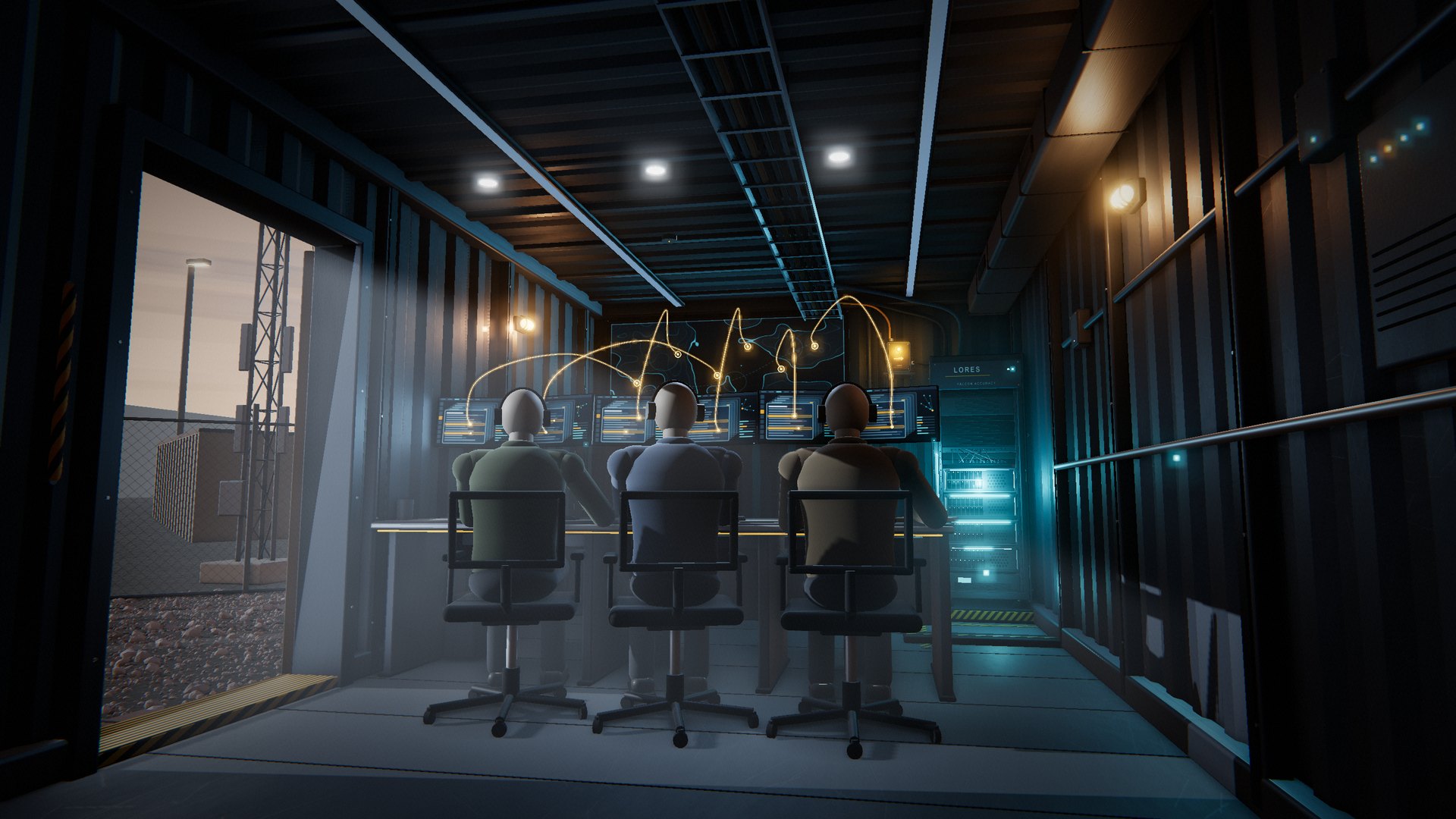
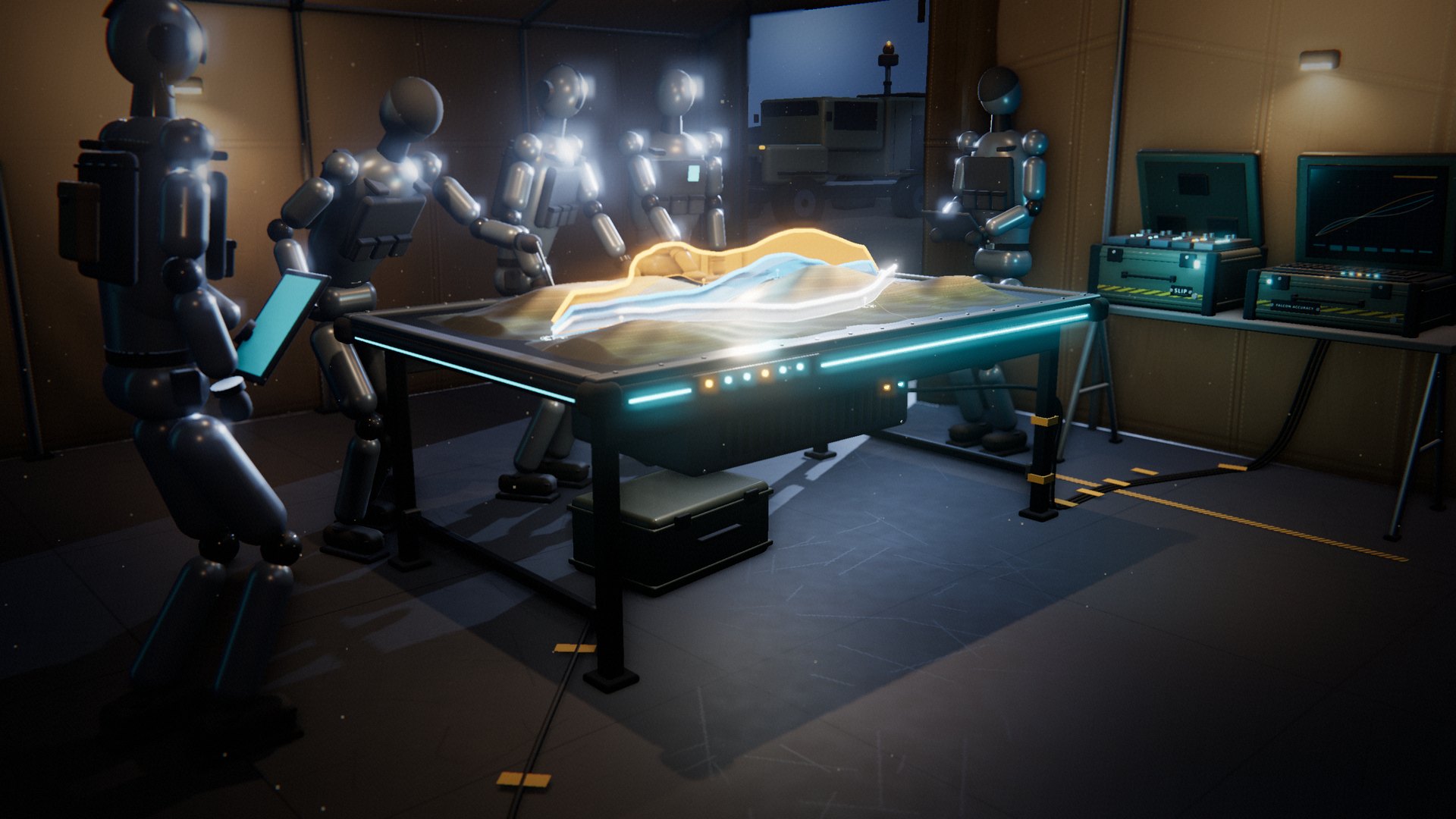
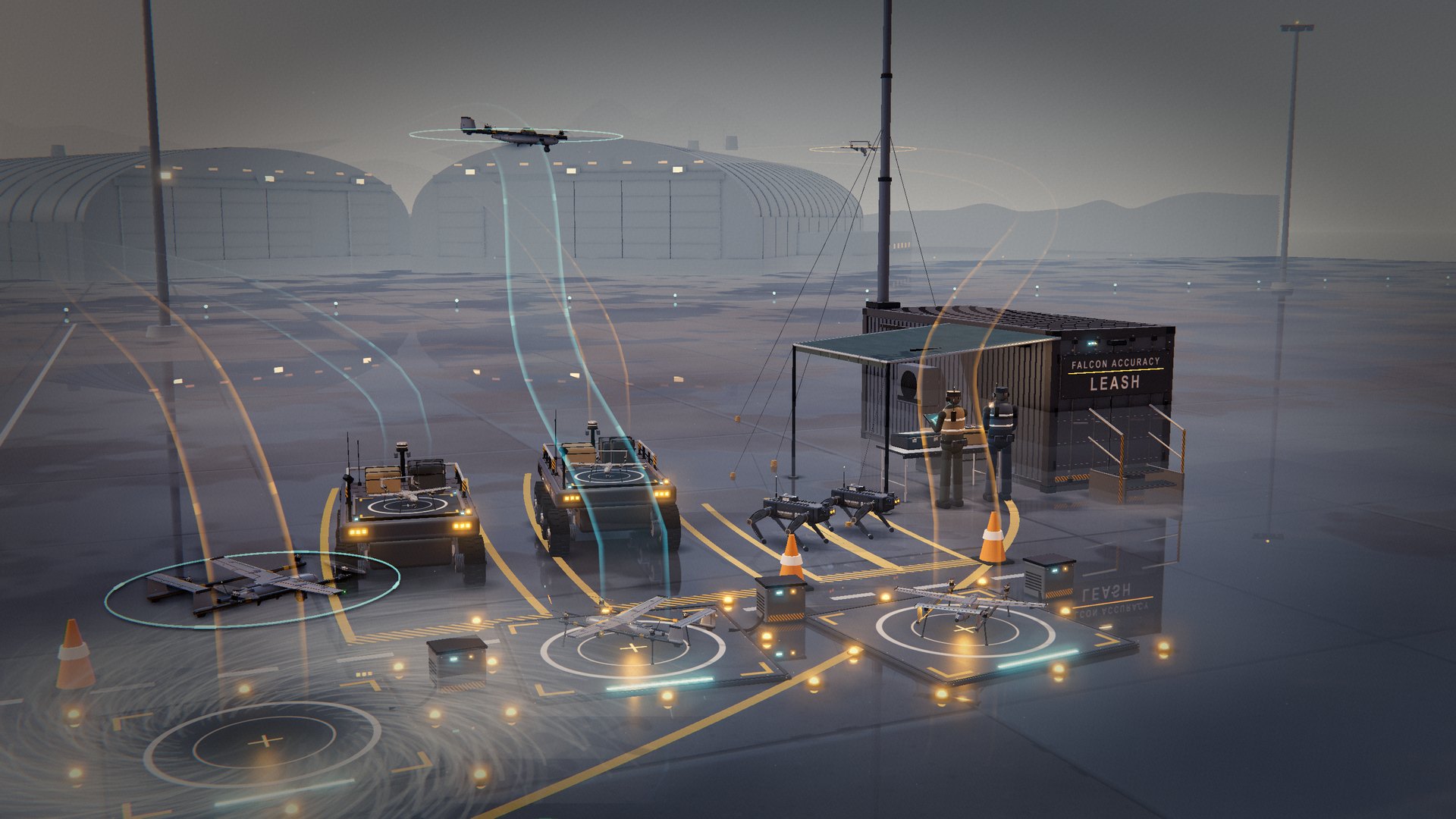
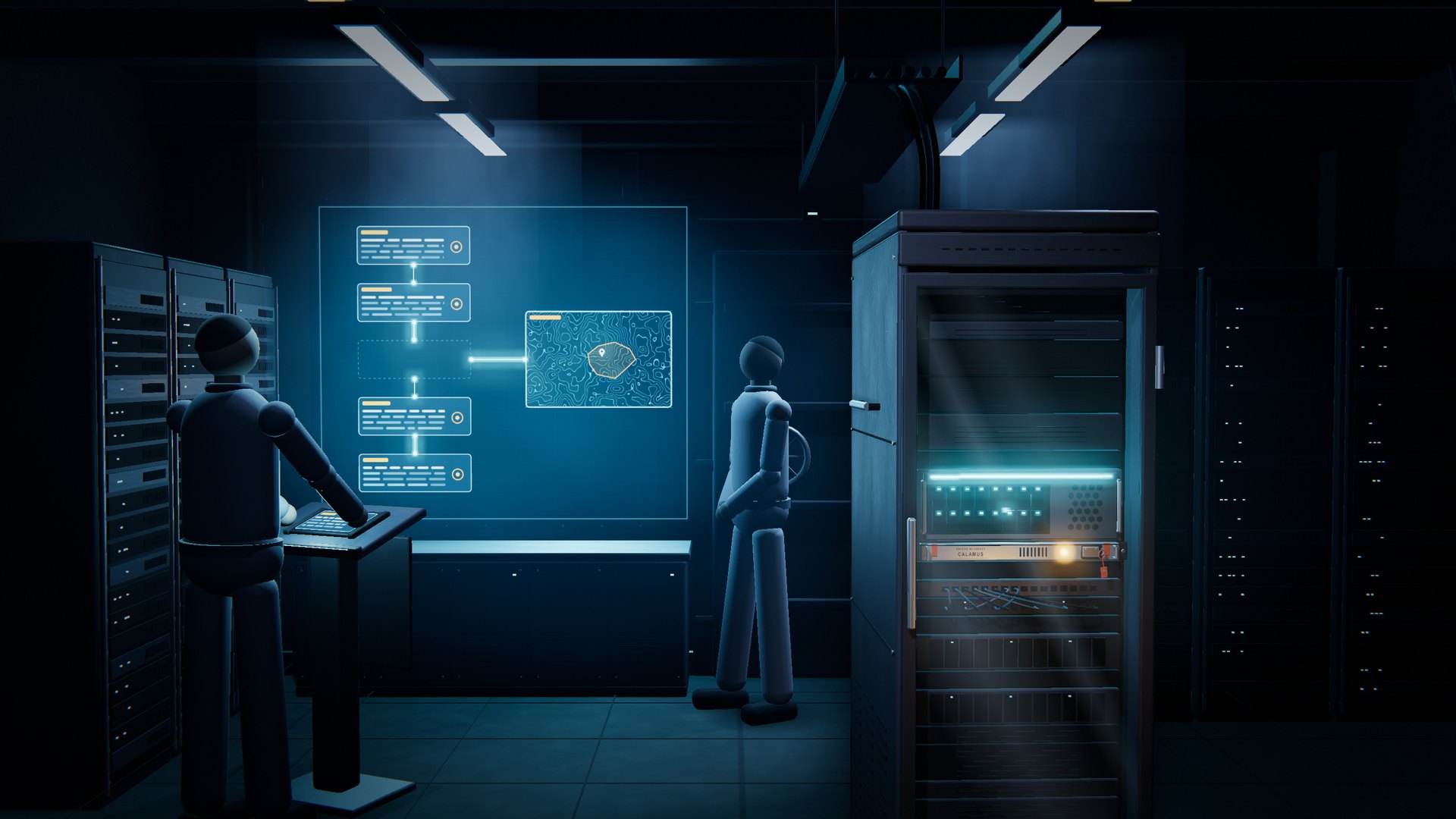
Every detection on that ladder lands in PITCH, which fuses the feeds into one picture in under 1 second, flags threats across all of them, predicts what happens next and ranks courses of action with the evidence behind each. LORES reads the reports with a citation on every claim, SLIP tests each plan against an adversary that adapts, LEASH turns the chosen plan into assigned, separated machines and CALAMUS binds every recommendation, approval and order into one signed record. Beside them the force runs its own defense language model. INTERMEW answers the staff from the force's own doctrine, manuals and reports with a citation on every sentence, UNHOODED drafts each brief for a named reviewer to sign, HYOID carries the same model offline to the operator and the motor pool on 15 watts, OSSICLE forecasts supply demand, equipment failure and readiness with calibrated bands, and CANCELEER holds every model version until a commander, a legal adviser and a model officer sign it. The picture then flows back down the same links. The watch officer tasks a TAITA satellite from the PITCH display and the image returns within a median of 70 minutes. FORMEL ranks the alarm and RAKE is over it within 2 minutes. WAKE names a small drone within 2 seconds and STANNEL fuses it with SCREEN radar and HOOD receivers into one air picture, with the evidence attached for the operator who decides. LONGWING estimates when and where an inbound track arrives, a watch officer confirms the warning, and BECK puts it on every phone, siren, radio and road sign in the region within 10 seconds with the nearest shelter named. RAMAGE tells the watch officer within 60 seconds when a vessel anchors over a seabed cable, and TOWER warns a satellite operator up to 72 hours before a close approach. The wearer who started the chain feels the direction of danger pulse through the MANTLE vest within half a second of the first shot. Underneath all of it, HOOD and NARES keep the network quiet and its position fix trustworthy, KEEN, HALSBAND and CERE prove every device on it, and ROUSE retrains every model on what the network saw, inside the client's network. A human decides at every step. Nothing executes on its own, and nothing leaves the client's network.

Catalog 2026

96 products in 18 sectors

From the goggles on the operator to the sensors on the seabed, the rockets on the pad and the satellites overhead, every product is fitted to the kit the force already issues, trained on its own theater and set to its own doctrine. The force's own language model, INTERMEW, runs inside the client's network and answers from the client's own documents with a citation on every sentence. Filter by sector, kind and readiness, or search any codename, role or capability. Every card opens a dossier with the rationale, specifications, tailoring notes, the links to related products and what Falcon Accuracy can demonstrate today. Press / to search.

96 of 96
Sector 01 · 5 products

Operator Systems

From head to hands, one operator, one picture.

  1. 01MALAR
  2. 02COVERT
  3. 03MANTLE
  4. 04CADGE
  5. 05CUFF

The dismounted operator is the most heavily loaded node in any force and the least connected. An operator carries 40 to 60 kg, sees a 45 degree cone through one eye at night, loses hearing to the first loud impulse, guesses the bearing of a shot and reports by voice when the net allows. Every other node in the force, such as a vehicle, an aircraft or a radar mast, has a picture, a power supply and a log. The operator has none of the three, and when an operator goes down nobody knows until somebody shouts.

Operator Systems puts those three things on the body. Every product in this sector fits the helmet, carrier, gloves and packs the force already issues, draws from one battery over one cable bus and computes on the body, so the picture exists when the network does not. The wearer decides, and every alert and command is logged inside the client's network. From head to hands, the sector holds five products, MALAR Smart Goggles, COVERT Smart Helmet, MANTLE Smart Vest, CADGE Load-Carriage Exoskeleton and CUFF Haptic Command Glove.

01Operator Systems

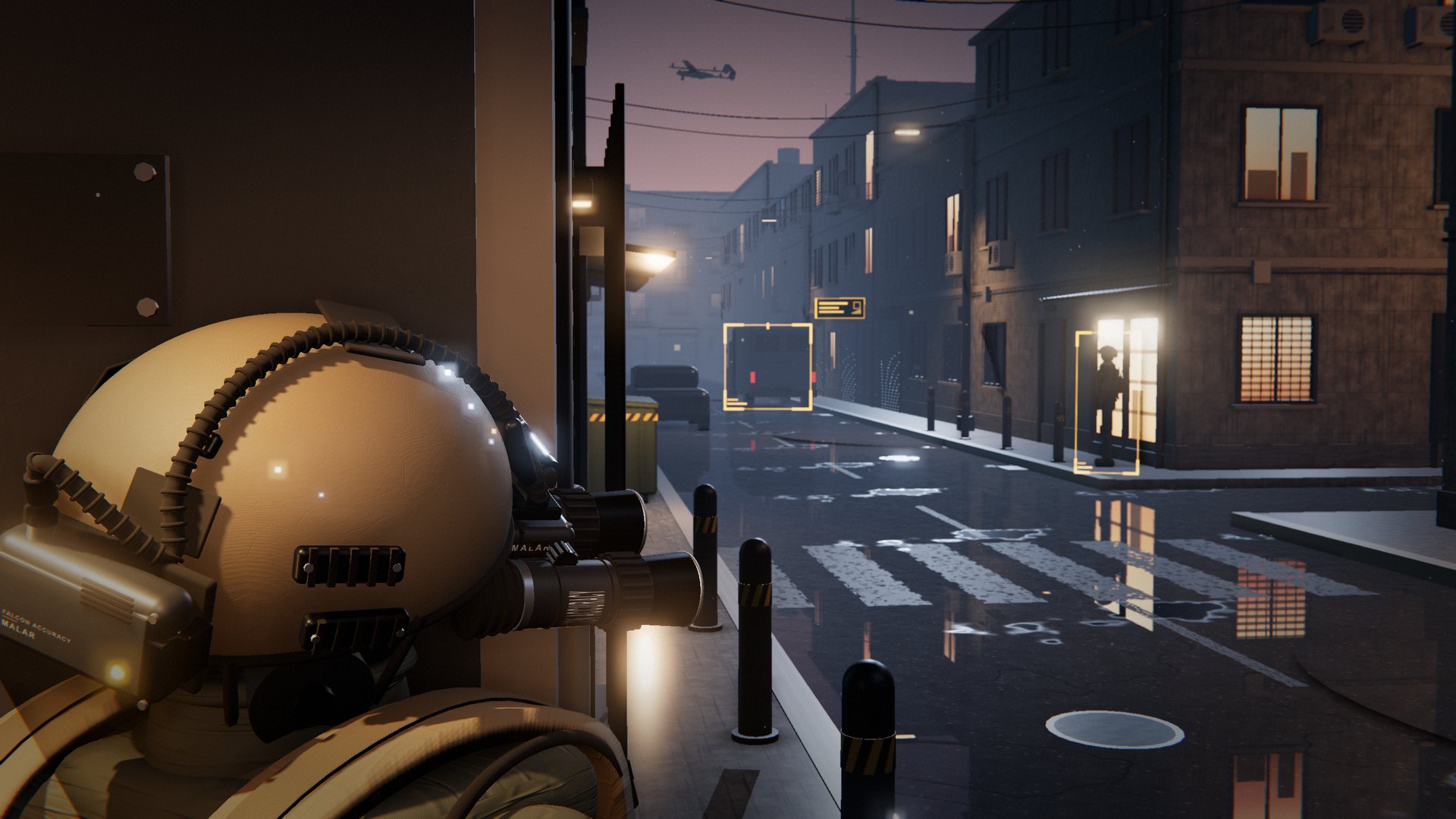
MALAR

MALAR Smart Goggles

The dark stripe beneath a falcon's eye that cuts glare and keeps its sight sharp in hard light; the goggles keep the operator's sight sharp at night.

See the night. Read the street. Keep both hands free.

MALAR fuses thermal and low-light video into one clear picture, then draws the command picture, drone video and live captions of nearby voices and signs on the real world. The operator keeps both eyes up and both hands free.

hardwareConcept design8 links
Open dossier
02Operator Systems

COVERT

COVERT Smart Helmet

Coverts are the rows of small, tough feathers that overlap and shield the roots of a falcon's flight feathers; the helmet shields the head and everything the operator carries on it.

Eyes all around, ears protected, every impact on record.

COVERT turns the helmet shell a force already issues into a sensing crown. Four cameras and six microphones watch and listen through 360 degrees, ear cups protect hearing and pass voices through, and a liner records every impact for the medic.

hardwareConcept design7 links
Open dossier
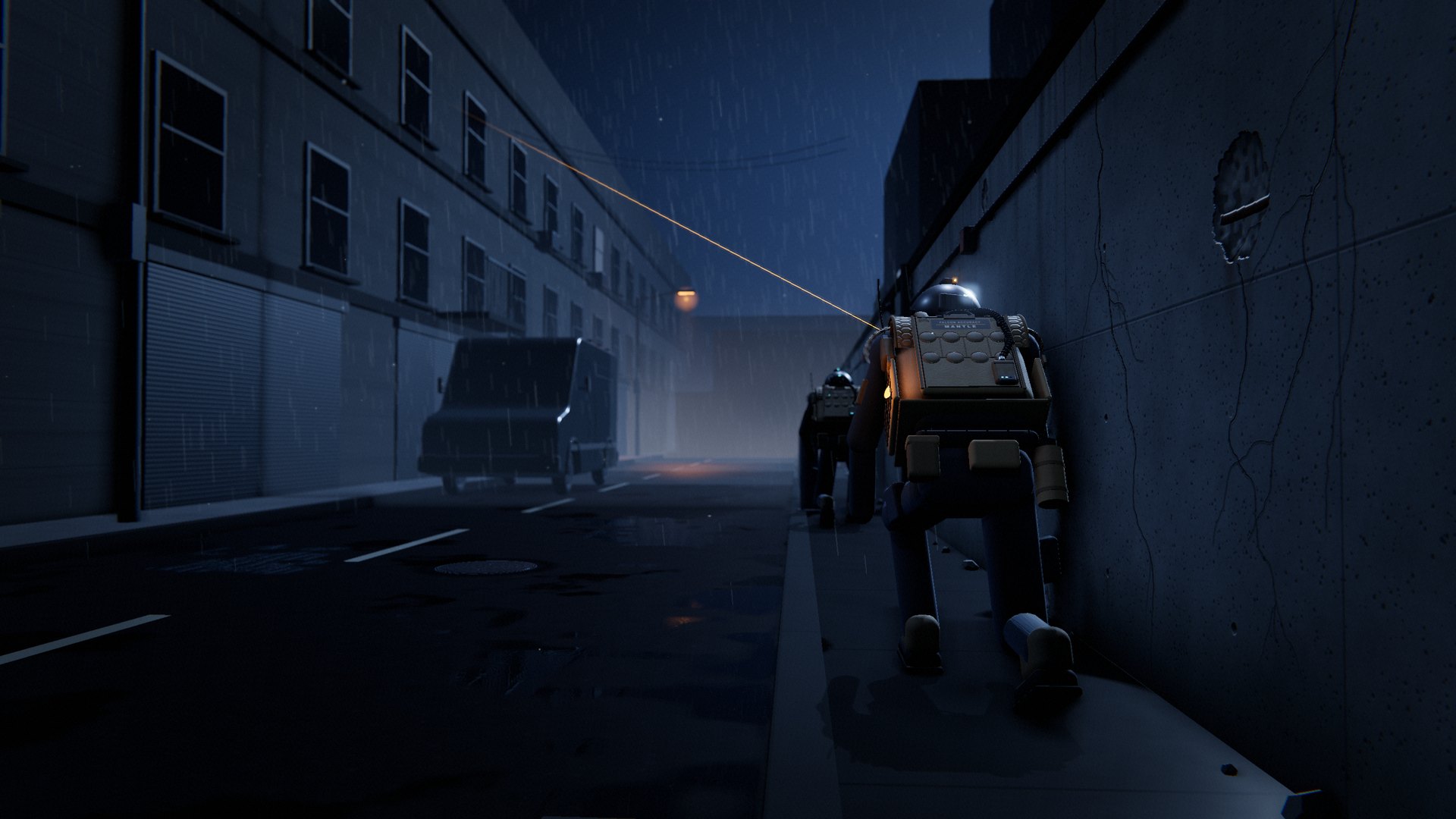
03Operator Systems

MANTLE

MANTLE Smart Vest

A raptor mantling spreads its wings over what it guards; the vest spreads sensing over the wearer and warns first.

The carrier that senses the threat and warns you first.

MANTLE turns the plate carrier a force already issues into a sensing node. It locates hostile fire, senses hostile drones and lasers, watches the wearer's vitals and pulses the direction of danger into the body within half a second of the first shot.

hardwareConcept design9 links
Open dossier
04Operator Systems

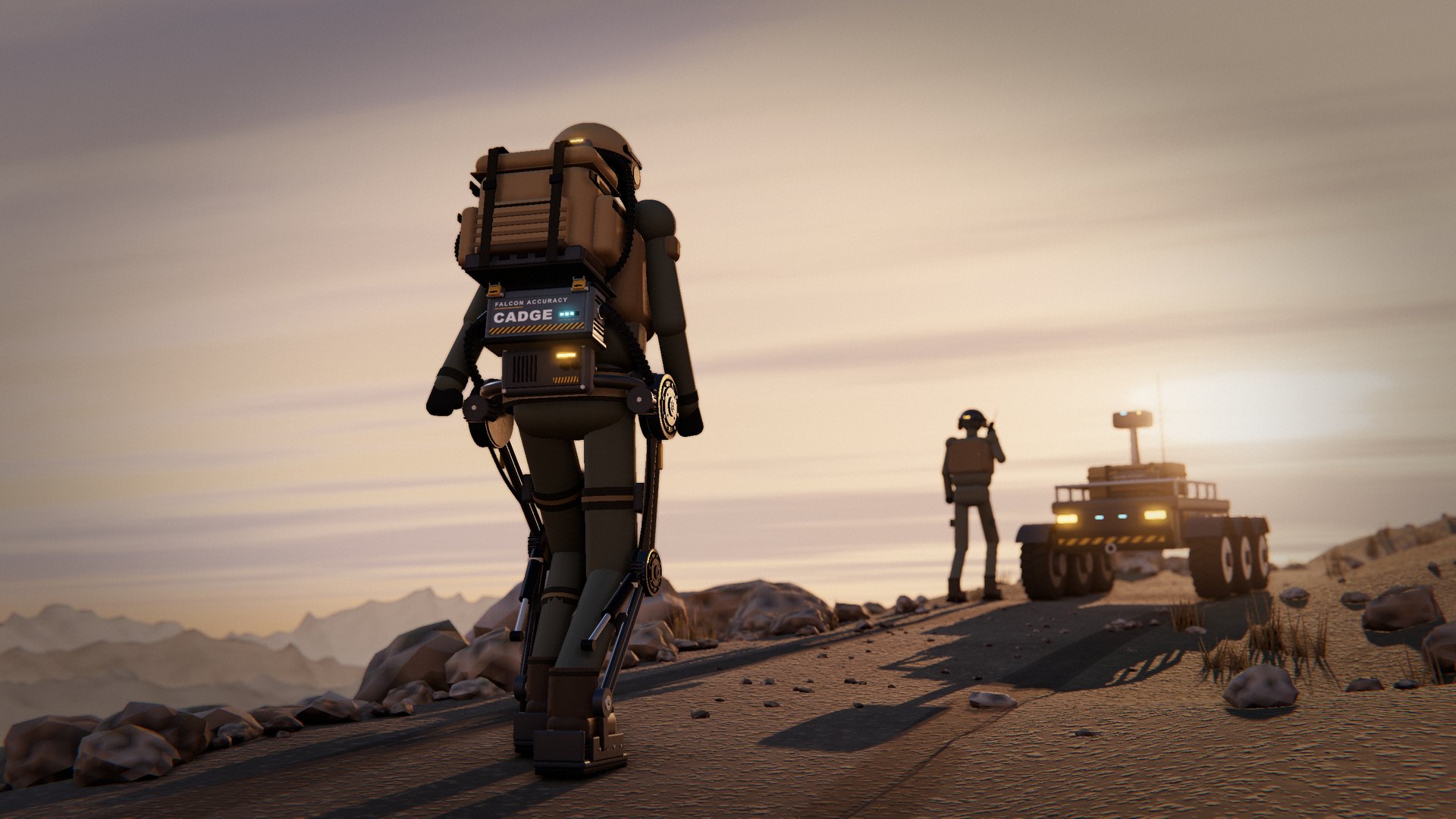
CADGE

CADGE Load-Carriage Exoskeleton

The padded frame on which several hawks are carried to the field at once; the exoskeleton is the frame that carries the operator's load.

Puts 45 kilograms on the ground, not on the spine.

CADGE is a powered hip-and-knee exoskeleton with a load frame. It carries 45 kg of pack, battery and plates to the ground, assists the wearer uphill and under load, runs 10 h on one battery and feeds every wearable on the operator over the cable bus.

hardwareConcept design8 links
Open dossier
05Operator Systems

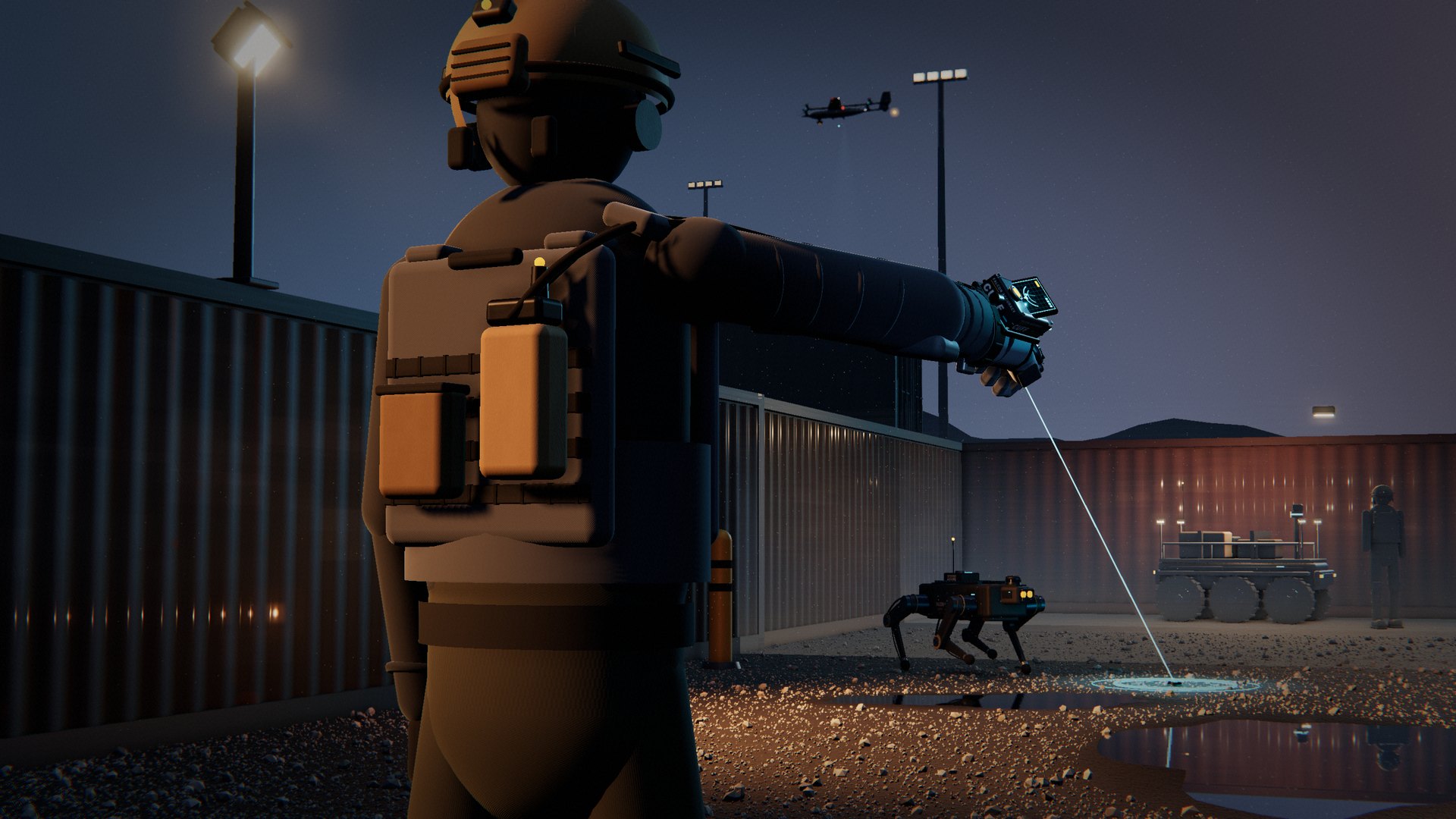
CUFF

CUFF Haptic Command Glove

The cuff is the long leather sleeve of the falconer's glove, the part that takes the bird's grip; CUFF is the glove through which the operator takes hold of the machines.

Point, and the robot goes. Close your fist, it stops.

CUFF is a sensing glove and wrist unit that commands LURCHER, FALCONER, GYR and TIERCEL by pointing, gesture and touch. Fingertip and palm haptics bring the robot's grip, footing and link back into the hand, and every command is confirmed, logged and reversible.

hardwareConcept design10 links
Open dossier
Sector 02 · 5 products

Communications and Coordination

Voice, picture and data to command, on whatever link holds.

  1. 06JESS
  2. 07ELEONORA
  3. 08HAMULI
  4. 09PECTEN
  5. 10PASSAGE
  6. 01MALAR
  7. 03MANTLE

Communications decide whether the rest of the system exists. MALAR draws the command picture only if the picture reaches the goggles, a MANTLE casualty alert saves a life only if it reaches the medic, and PITCH fuses only what the network delivers. In the theaters your force works in, the link is contested on four fronts at once. Terrain masks it, jammers find it, every transmission marks the position of the transmitter, and the data that matters often sits on a network of a different classification from the one the operator is on. Falcon Accuracy treats these as one engineering problem. Each product in this sector removes one single point of failure from the path between the operator's voice and the commander's display, and each one measures itself so a signaler can see where the path is thin.

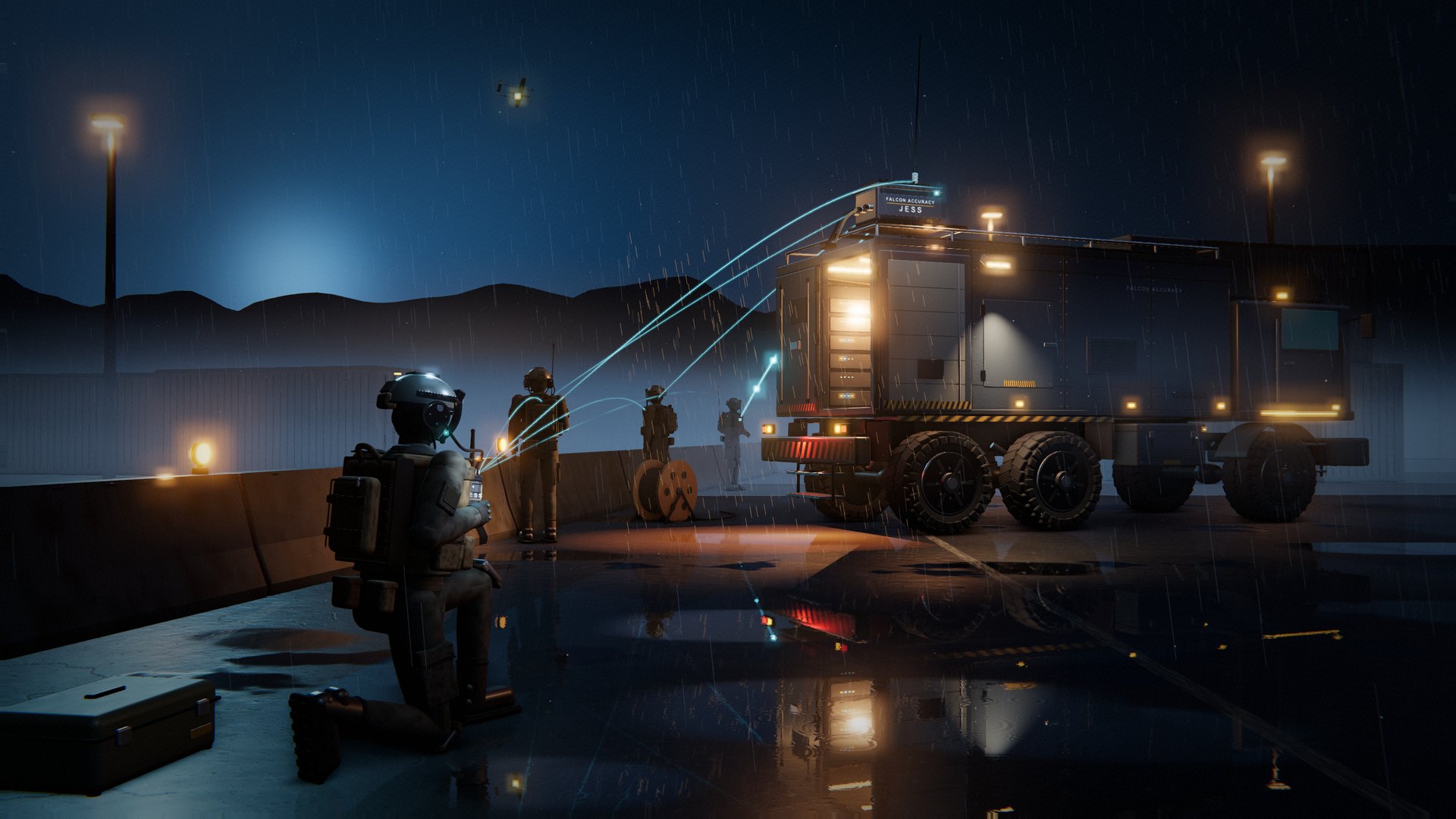
The chain runs from the squad outward. JESS forms the squad net, cleans voice, turns speech into structured reports and moves away from jamming within 2 s. ELEONORA gives the squad one shared picture on that net, with tasks, translated chat, positions and medevac requests that reach the medic within 3 s. HAMULI bonds satellite and cellular links into one path to command and shifts traffic within 500 ms when a link fades. PECTEN carries 10 Gbps between a command post and its emitters on an infrared beam, so the post itself radiates no backhaul signal. PASSAGE moves the picture across classification lines in one direction, enforced in hardware, with a human deciding every release downward. All five keep data inside the client's network and keep a human in every decision that matters. The sector holds five products. They are JESS Tactical Mesh Radio, ELEONORA Squad Coordination App, HAMULI Bonded Backhaul Terminal, PECTEN Optical Link Terminal and PASSAGE Data Diode Gateway.

06Communications and Coordination

JESS

JESS Tactical Mesh Radio

The jess is the soft leather strap on the falcon's leg through which the falconer holds the bird; JESS is the link between the operator and command.

Clear voice under fire. The net re-forms in 200 milliseconds.

JESS is the line between the operator and command. A self-healing mesh radio with speech intelligence in the handset, it cleans voice of battle noise, writes the report while the operator speaks, and moves the net to a clear channel within 2 s of detecting a jammer.

hardwareConcept design10 links
Open dossier
07Communications and Coordination

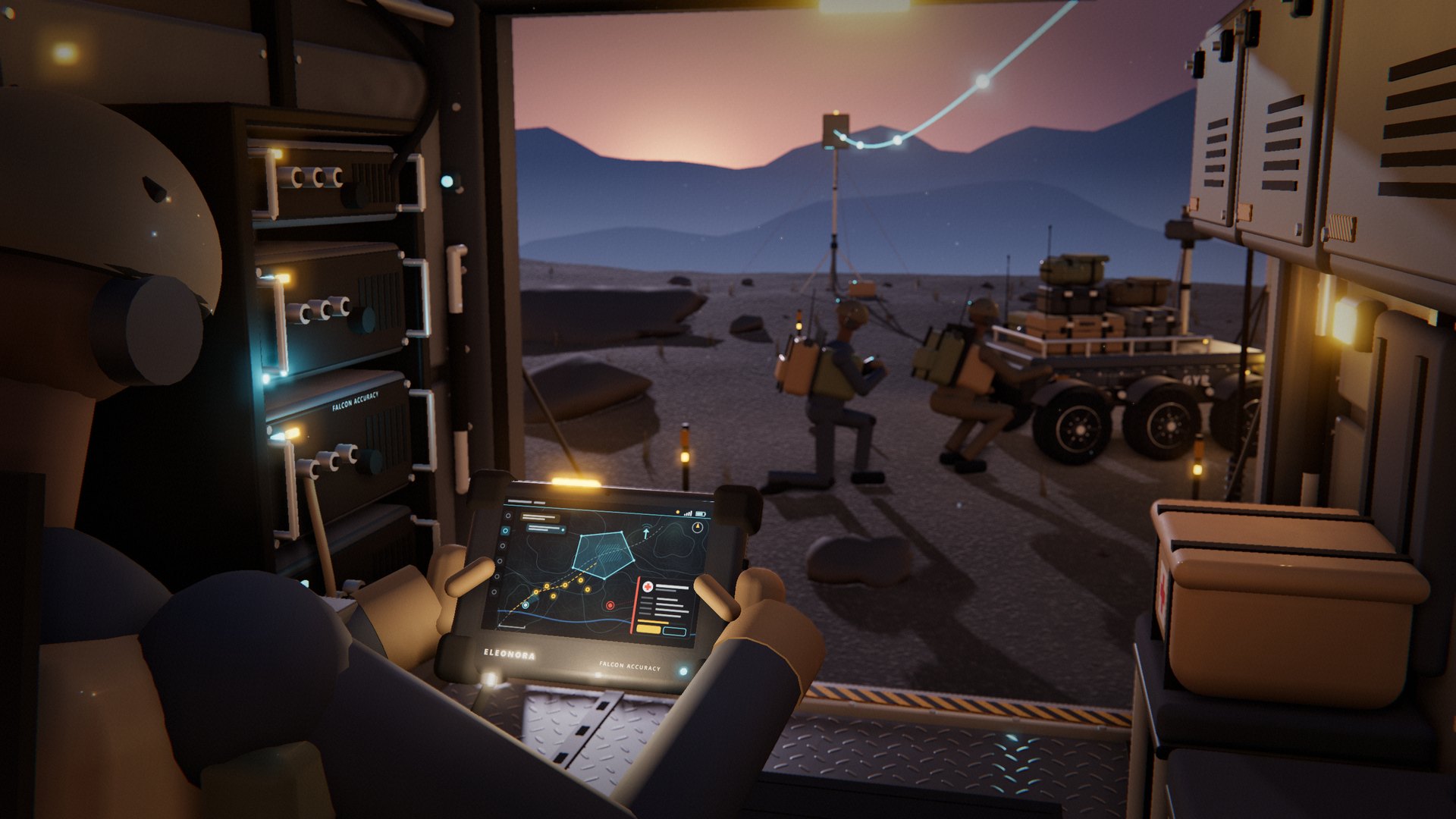
ELEONORA

ELEONORA Squad Coordination App

Eleonora's falcon nests in colonies on sea cliffs and hunts in company, many birds working one stretch of air as a team; ELEONORA puts the whole squad on one shared picture.

One picture for the squad. Shared tasks, translated chat, positions, medevac.

ELEONORA is the squad's shared workspace on the JESS mesh. Team leaders assign tasks, operators see each other's positions, chat crosses languages within 1.5 s, and a medevac request reaches the medic and command within 3 s of the first tap. It runs on the handset, the MALAR display and a vehicle tablet with no server beyond the squad.

softwareConcept design9 links
Open dossier
08Communications and Coordination

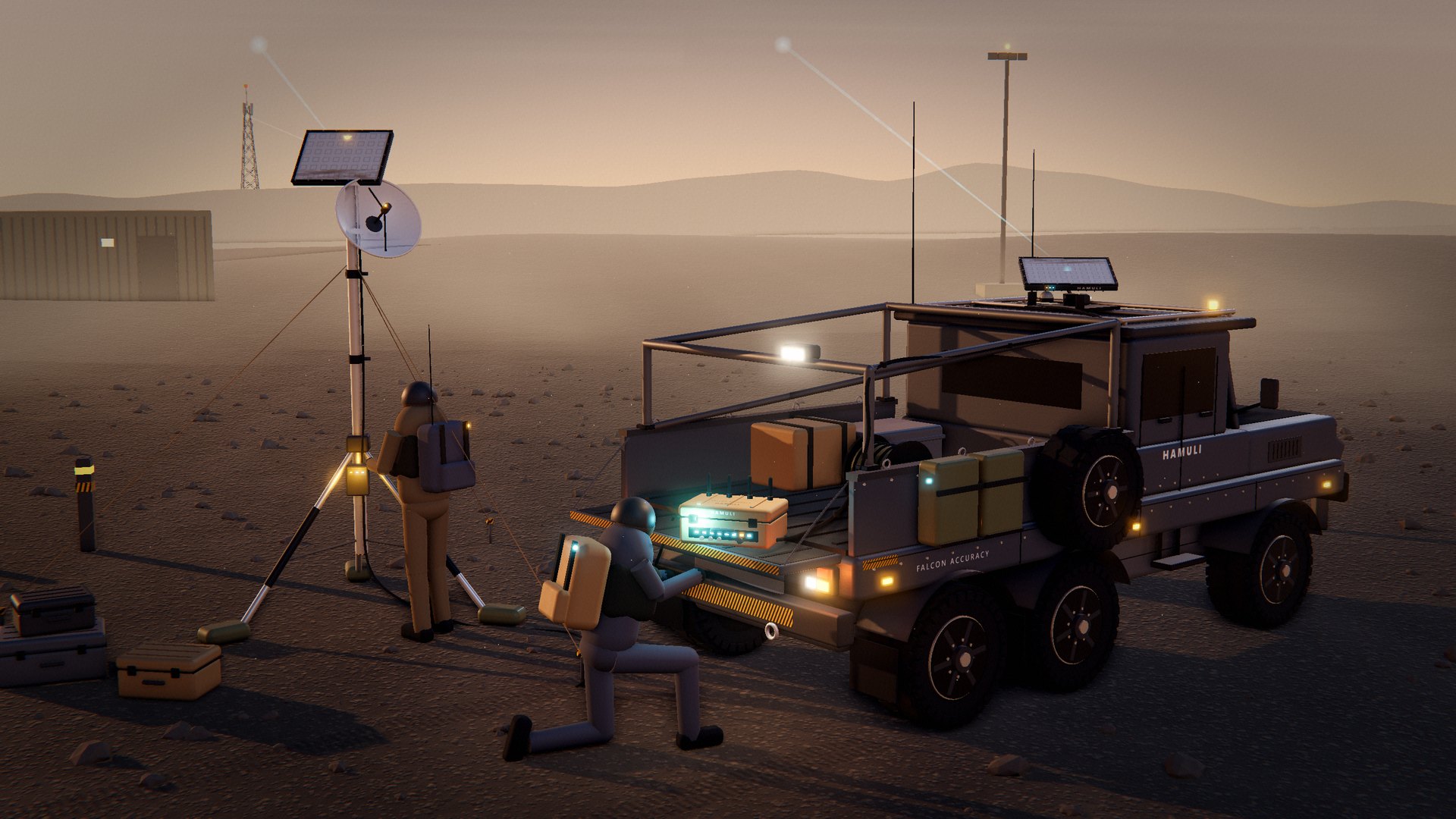
HAMULI

HAMULI Bonded Backhaul Terminal

Hamuli are the small hooks along each barb of a feather that lock it to the barb beside it, so a thousand barbs hold as one vane; HAMULI locks six links into one path to command and holds that path when a link fades.

Satellite and cellular, bonded into one line to command.

HAMULI carries the squad's JESS mesh and ELEONORA picture beyond line of sight. It bonds two satellite links and up to four cellular links into one encrypted path, moves traffic between them within 500 ms when one degrades, and sets up on a vehicle roof or a tripod in 8 min.

hardwareConcept design8 links
Open dossier
09Communications and Coordination

PECTEN

PECTEN Optical Link Terminal

The pecten is the comb of vessels inside a falcon's eye that feeds the retina and lets the eye hold a distant target; PECTEN holds an infrared beam on a terminal kilometers away.

Ten gigabits between posts. No radio for anyone to hear.

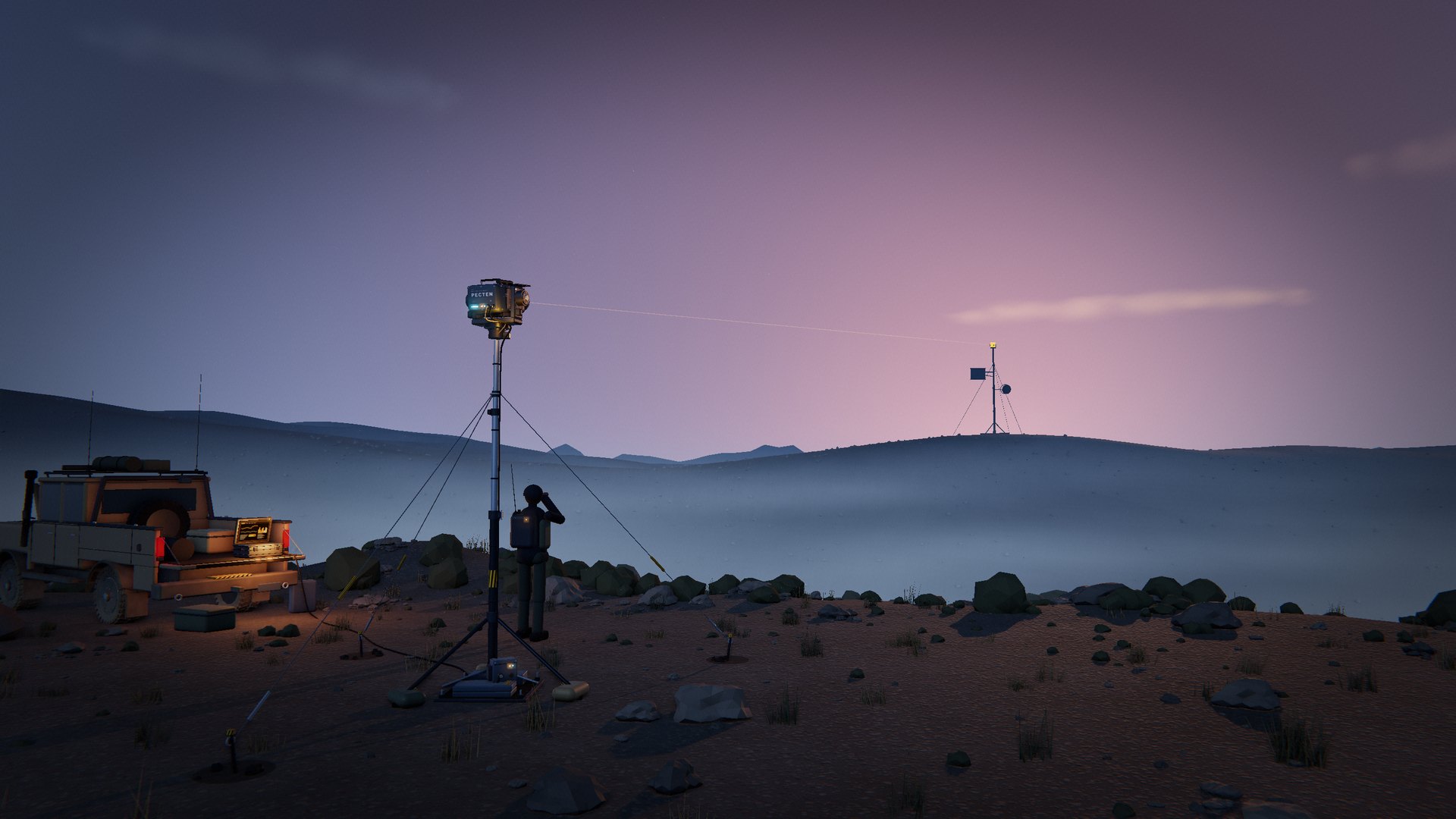
PECTEN is a pair of free-space optical terminals that carry 10 Gbps between a command post and its antenna site, relay mast or neighbor up to 5 km away. The infrared beam emits no radio energy and is received only inside its 30 cm footprint, so a command post can push its radiating terminals kilometers away and stay quiet.

hardwareConcept design6 links
Open dossier
10Communications and Coordination

PASSAGE

PASSAGE Data Diode Gateway

A passage falcon is a young wild bird taken on its first migration, in transit one way; PASSAGE moves data between networks in one direction only.

Data crosses the classification line one way, enforced in hardware.

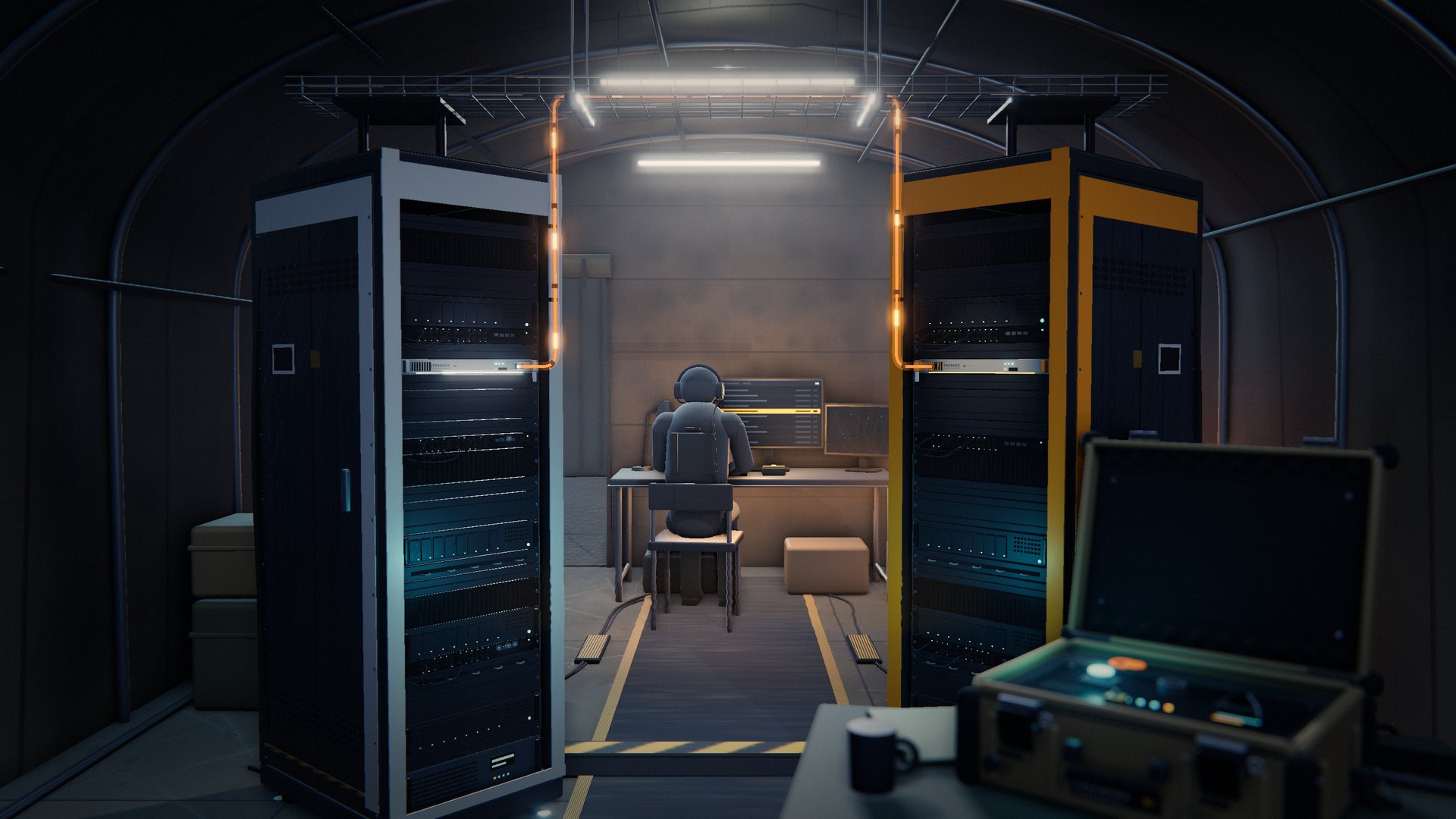
PASSAGE moves data between networks of different classification in one direction only, with the return path absent in hardware. It carries the coalition picture into the national network, or a sanitized picture outward, within 50 ms, checks every item against the force's own release rules, and logs each transfer for a human reviewer.

hardwareConcept design7 links
Open dossier
Sector 03 · 5 products

Air ISR and Autonomy

Eyes above the force, from the doorway to the stratosphere.

  1. 11EYAS
  2. 12TIERCEL
  3. 13WAITON
  4. 14SAILS
  5. 15BARBARY

Air ISR is where a force buys time. A patrol that sees the crossing 90 minutes before it arrives plans the approach. A convoy with a camera 120 meters above the lead vehicle sees the second bend. A brigade with a relay at 20 kilometers keeps its radios talking across 300 kilometers of broken ground. Falcon Accuracy builds this sector as a ladder of altitude and endurance rather than a single aircraft. Every rung carries only sensors, radios and computers. Every aircraft detects on board and sends detections first, so the picture reaches PITCH over a thin link and an operator chooses what to look at next. A human approves every tasking, every decision is logged, and video and models stay inside the client's network.

The five products share one autonomy stack, one payload interface and one operator display, so an operator trained on one converts to the next in 2 days. EYAS Indoor Reconnaissance Drone flies the rooms and tunnels the larger aircraft cannot enter. TIERCEL ISR Drone Pair gives the squad 90 minutes of wide and close view from a backpack. WAITON Tethered Overwatch Drone holds a camera 120 meters above a vehicle for as long as the vehicle has power. SAILS Long-Endurance ISR Aircraft covers 12 hours and a 120 kilometer radius from a trailer catapult. BARBARY High-Altitude Relay Glider closes the sector from 20 kilometers, carrying the JESS net and the SAILS feed across a theater for weeks at a time. Together they are the air layer of one system that sees, recommends and protects, while your people decide.

11Air ISR and Autonomy

EYAS

EYAS Indoor Reconnaissance Drone

An eyas is a young falcon still in the nest, the smallest of the family and the one that has not yet flown in the open; EYAS is the smallest aircraft in the catalog and flies indoors.

Flies the room before the team enters it.

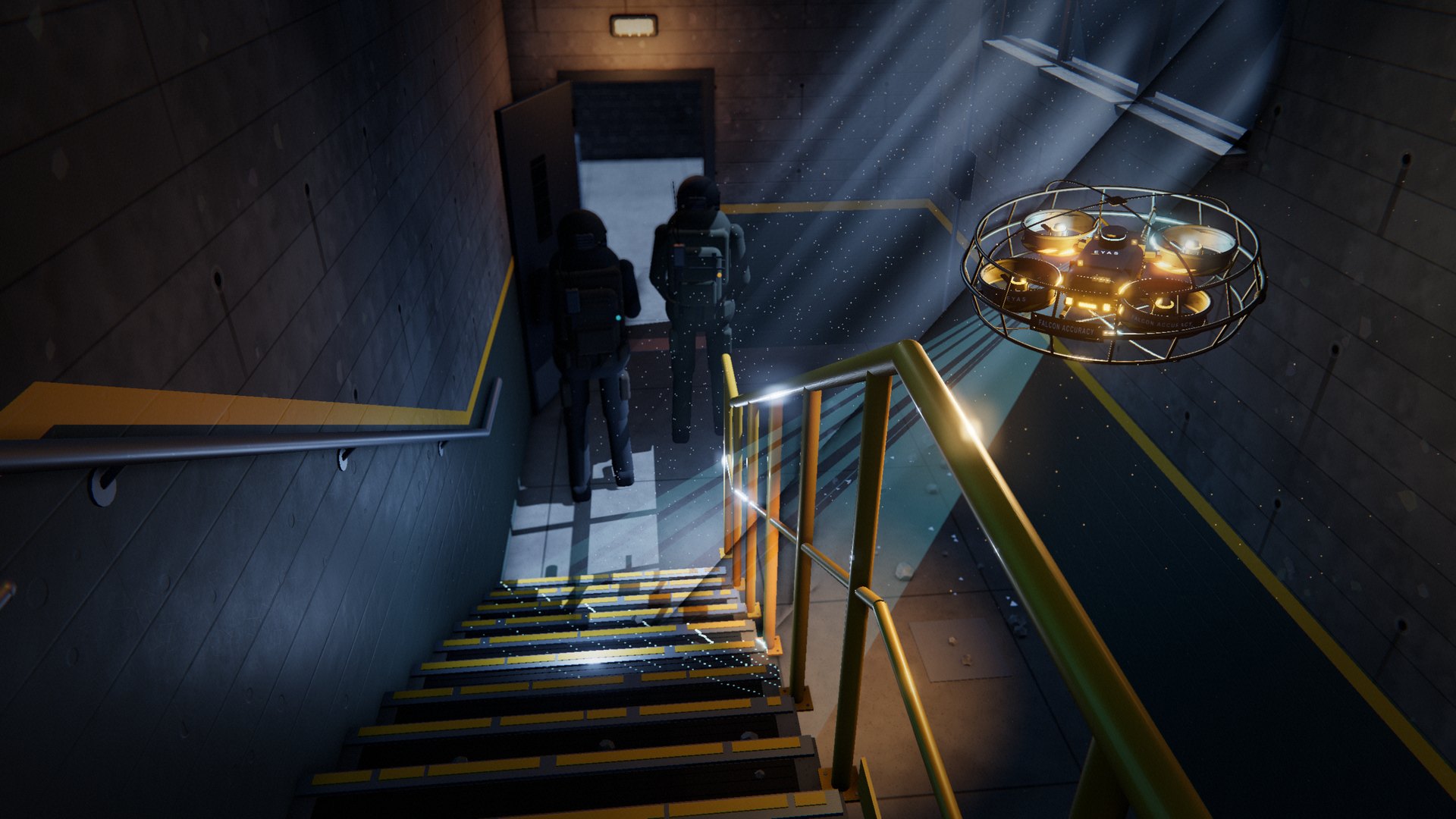
EYAS is a 180 gram ducted quadcopter that flies through doorways, stairwells, tunnels and culverts and maps them as it goes. It detects people and open routes on board and sends a floor plan, not a video stream, to the operator's MALAR display. The operator decides whether the team goes in.

hardwareConcept design6 links
Open dossier
12Air ISR and Autonomy

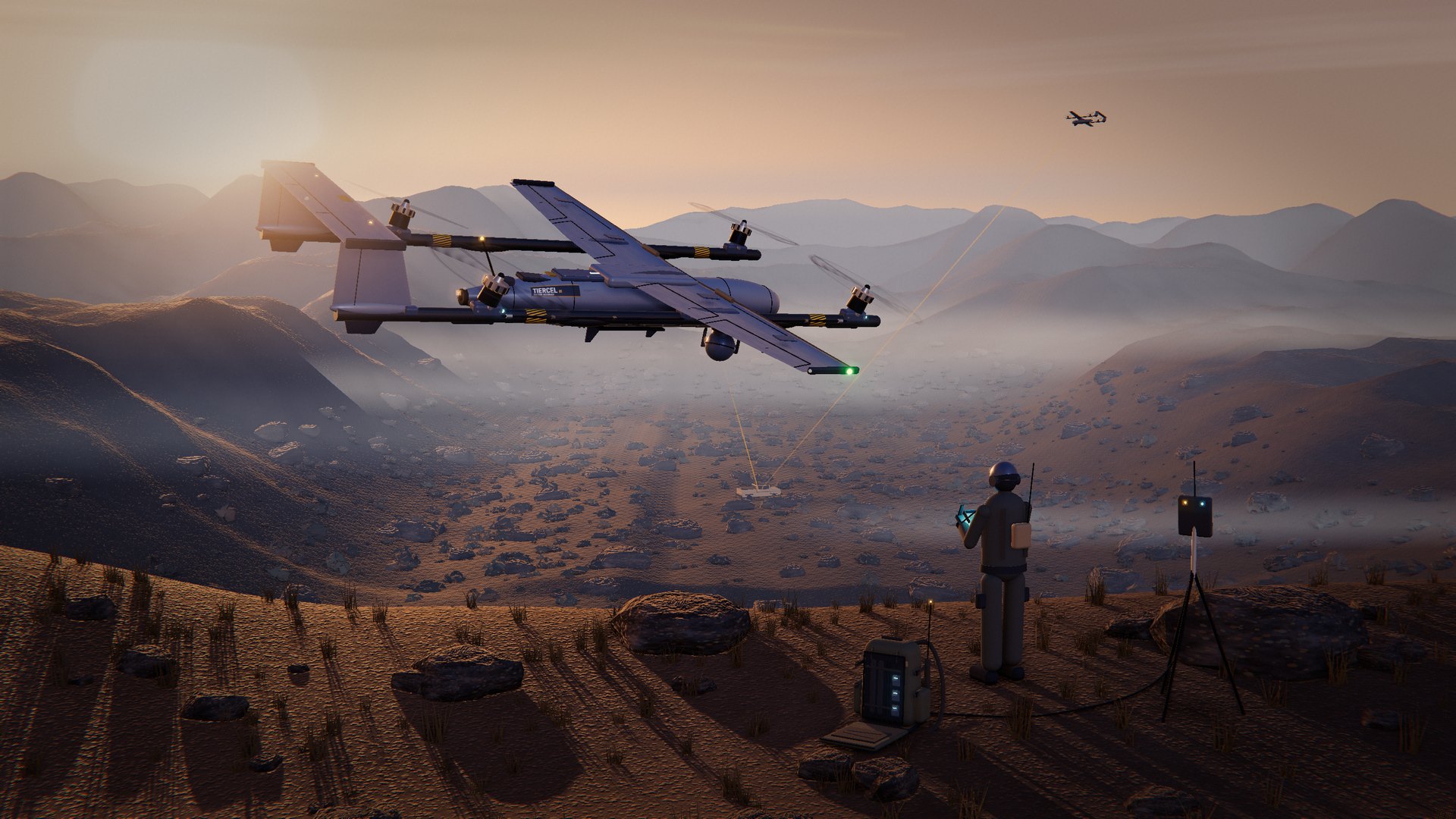
TIERCEL

TIERCEL ISR Drone Pair

The tiercel is the male falcon, a third smaller than the female and quicker in the air; it names the small, fast surveillance aircraft.

Two aircraft, one mind, launched from a backpack in two minutes.

TIERCEL is a pair of small vertical take-off aircraft that fly as a team, one high to watch wide and relay the net, one low to read detail. Give them a task, not a flight plan, and they send back only what matters. The operator decides what they look at next.

hardwareConcept design9 links
Open dossier
13Air ISR and Autonomy

WAITON

WAITON Tethered Overwatch Drone

Waiting on is the falcon holding station high above the falconer until the game is flushed below it; WAITON holds station above its vehicle for as long as the vehicle has power.

Eyes 120 meters up, powered by the vehicle below.

WAITON is a tethered multirotor that rises from a roof-mounted box to 120 meters and stays there while the vehicle drives at up to 40 km/h. Power and data run down the tether, so it never lands for a battery and its video travels on fiber rather than radio. It sees 8 kilometers, classifies on board and hands flagged tracks to TIERCEL and PITCH.

hardwareConcept design8 links
Open dossier
14Air ISR and Autonomy

SAILS

SAILS Long-Endurance ISR Aircraft

The sails are the falconer's word for the falcon's long wings, the surfaces that carry it for hours on the wind; SAILS is the aircraft that stays up for 12 hours on a 5.2 meter wing.

Twelve hours over the area from a catapult on a trailer.

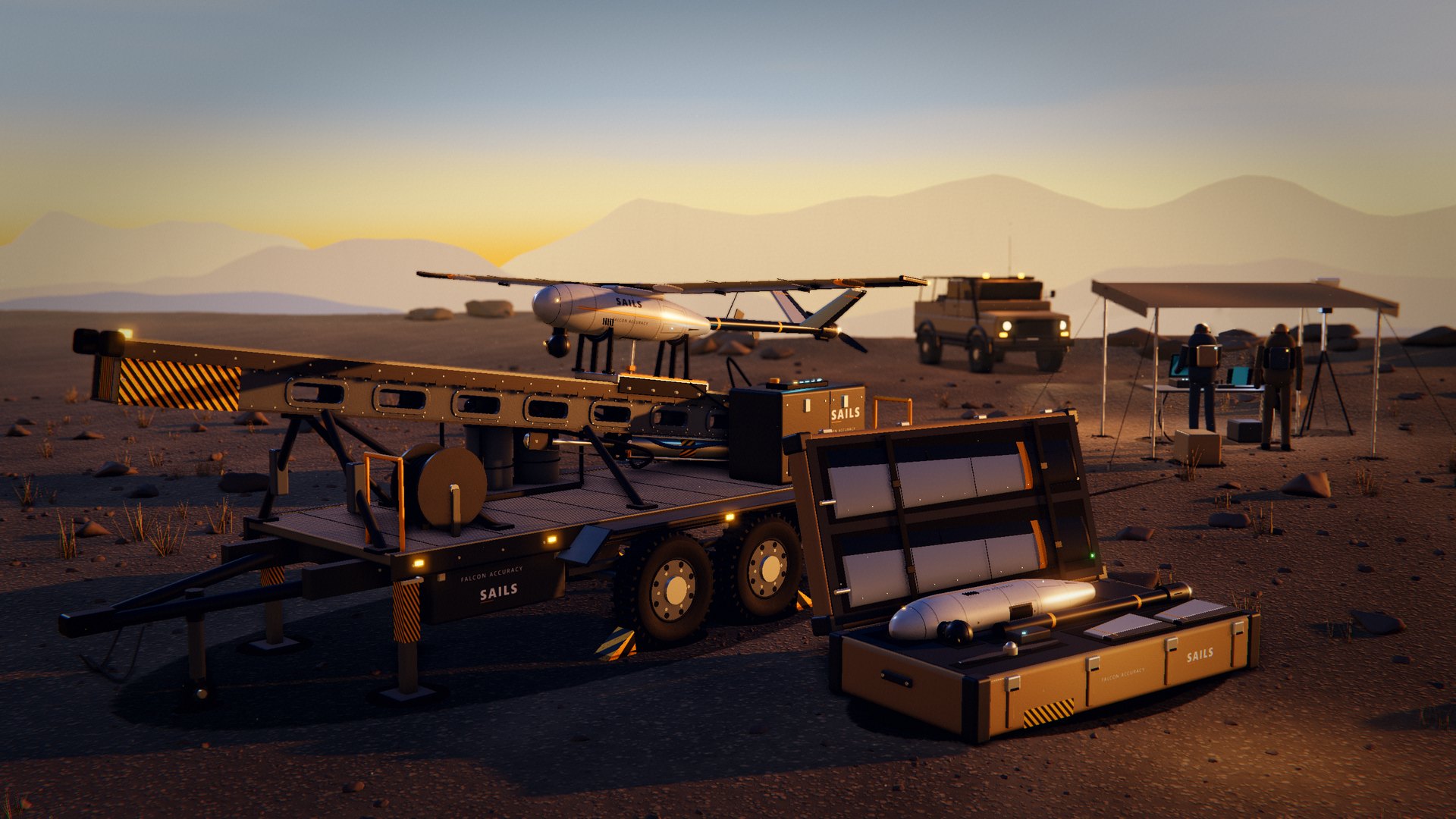
SAILS is a 55 kilogram fixed-wing aircraft launched from a trailer catapult and recovered by parachute or net, with 12 hours of endurance and a 120 kilometer radius. It carries a stabilized camera turret and a wide-area mapping camera, detects on board and sends tracks to PITCH. A crew of two flies it, and a watch officer decides what it looks at.

hardwareConcept design8 links
Open dossier
15Air ISR and Autonomy

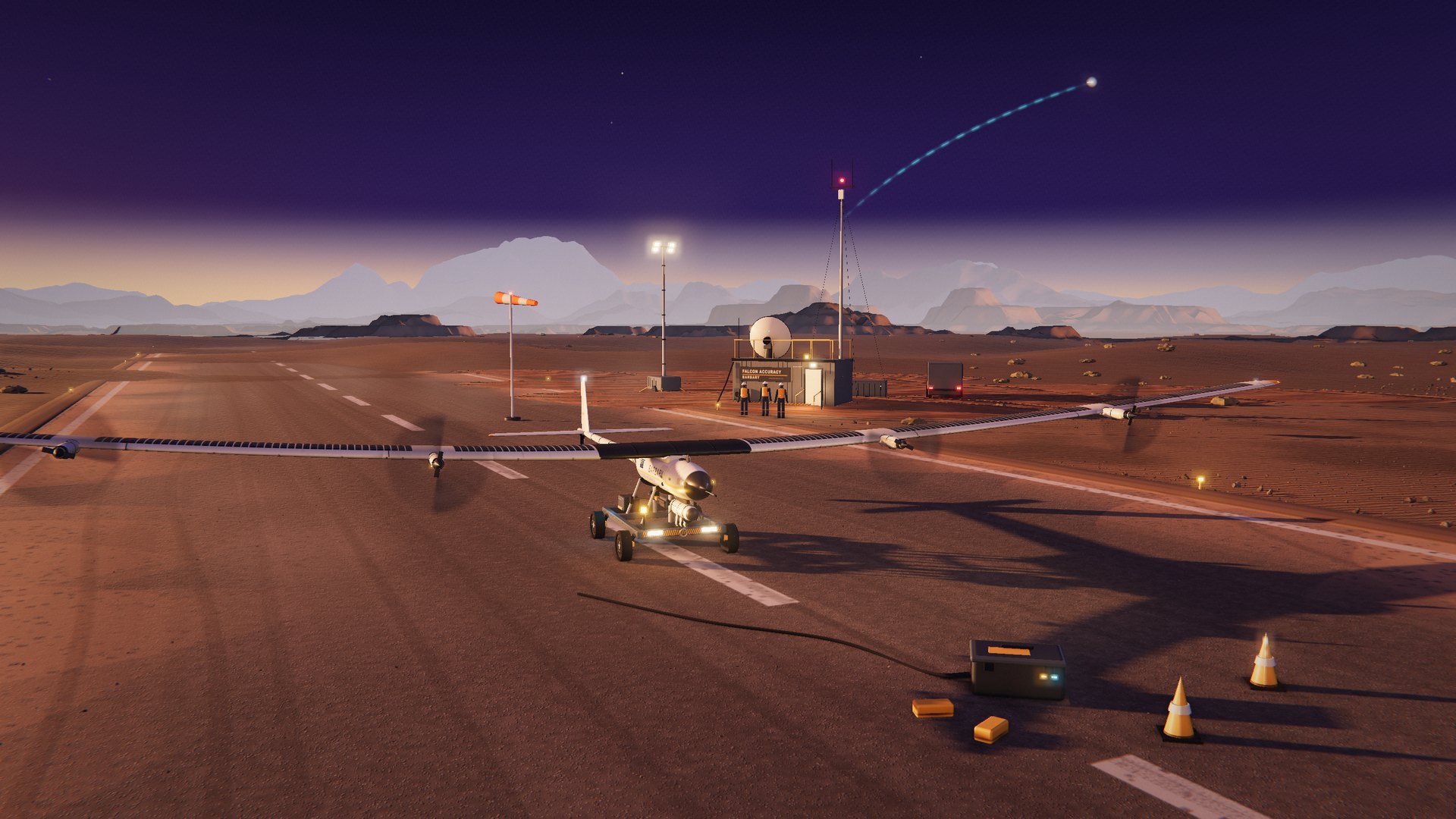
BARBARY

BARBARY High-Altitude Relay Glider

The Barbary falcon holds the high desert cliffs of North Africa and hunts above the heat and haze where little else flies; BARBARY holds station at 20 kilometers, above the weather and the horizon.

A relay at 20 kilometers that stays up for weeks.

BARBARY is a solar-electric glider with a 32 meter wing that climbs to 20 kilometers and holds station for 30 days in summer on sunlight alone. It carries 12 kilograms of relay and sensing payload that joins JESS vehicle nodes, SAILS links and PITCH kits across a 400 kilometer circle. Three operators launch it from a 300 meter strip, and it relays only what the force's own nodes send through it.

hardwareConcept design7 links
Open dossier
Sector 04 · 2 products

Low-Altitude Airspace Awareness

See the small sky. Know what is in it. Tell the right person in two seconds.

  1. 16WAKE
  2. 17STANNEL

Small drones changed what a base, a port and a patrol have to watch. A quadcopter bought for 600 dollars flies at 60 km/h, carries a camera that reads a license plate at 300 m and is heard, if at all, 200 m out. The guard force that handles it today uses a pair of binoculars, a radio and good luck, and learns about most flights when a video appears online the next day. Falcon Accuracy treats the air below 1,000 m as one more layer of the perimeter, with sensors that detect and a picture that classifies, locates the pilot and tells the watch officer what is there.

The sector runs in that order. WAKE Drone Detection Mast hears a drone's radio link out to 5 km and sees its airframe on radar out to 3 km, then confirms the type with a camera. STANNEL Low-Altitude Air Picture turns those detections into a small number of classified tracks, keeps the force's own aircraft apart from unknown ones, and hands the watch officer the evidence, the pilot location and the people to notify. Both feed PITCH, so the low sky sits in the same picture as the ground and the spectrum.

16Low-Altitude Airspace Awareness

WAKE

WAKE Drone Detection Mast

Waking is the falconer's all-night watch beside a newly taken hawk; WAKE is the mast that keeps the all-night watch over the low sky.

Hears the link. Sees the airframe. Names the type in two seconds.

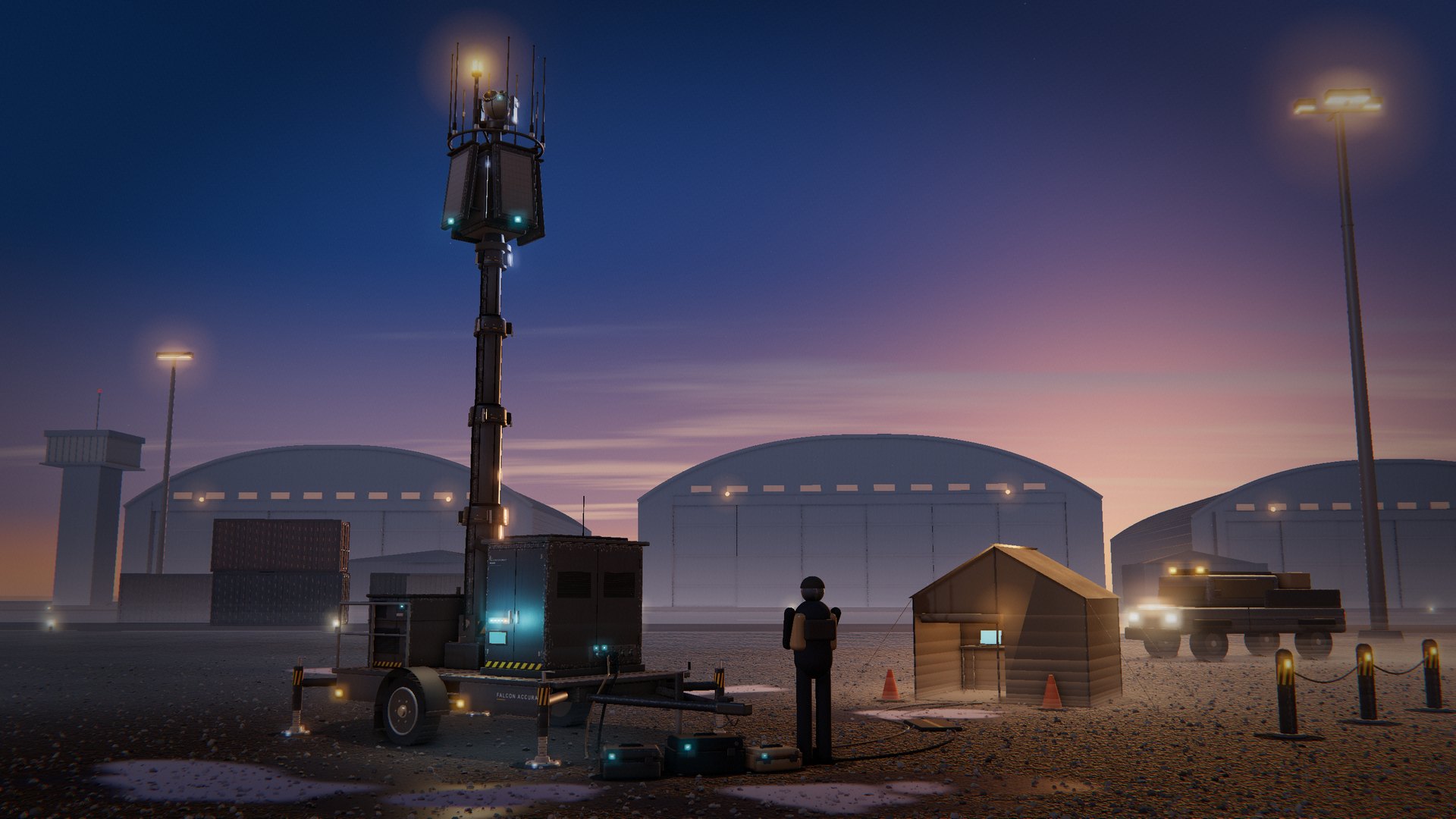
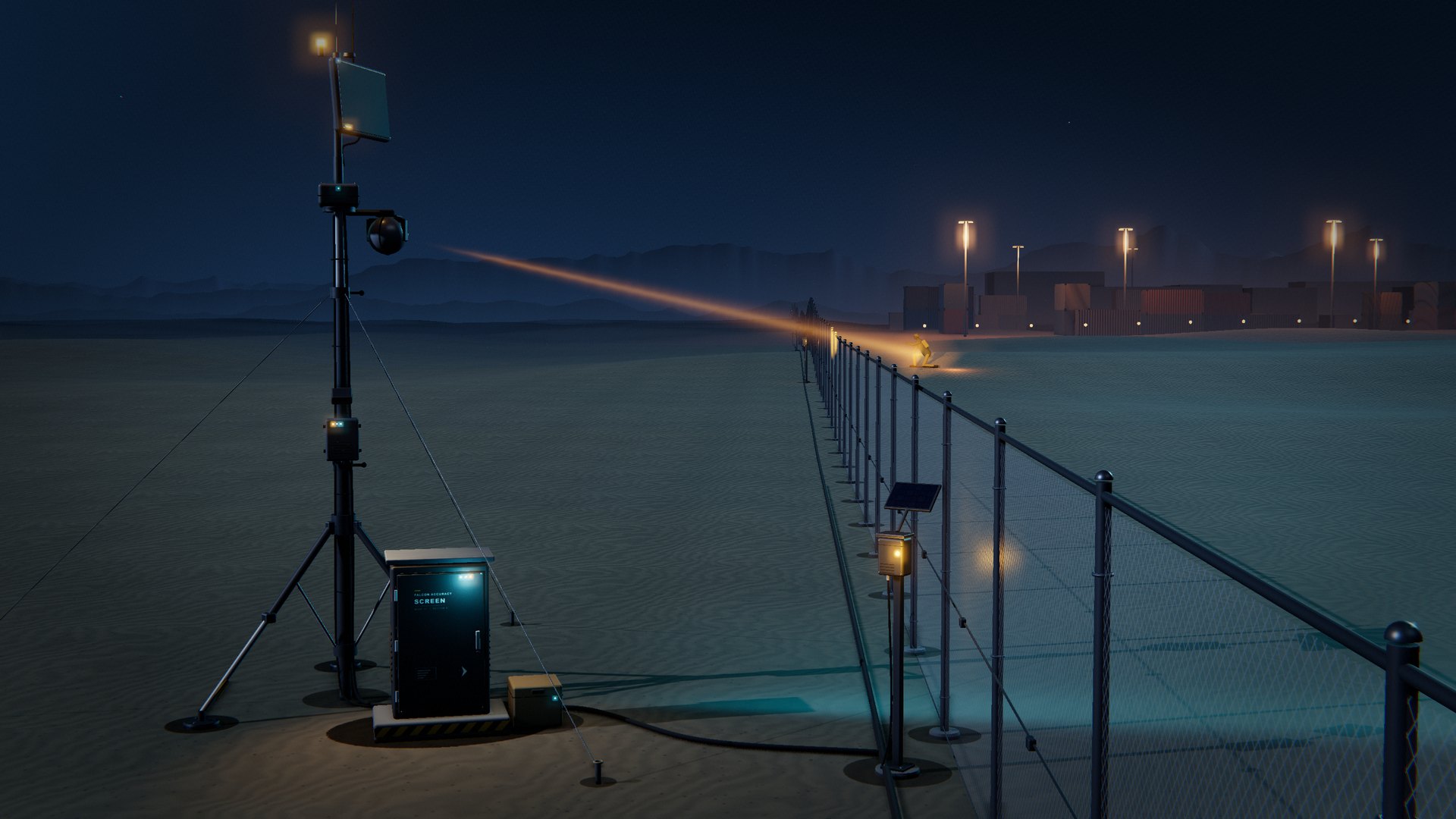
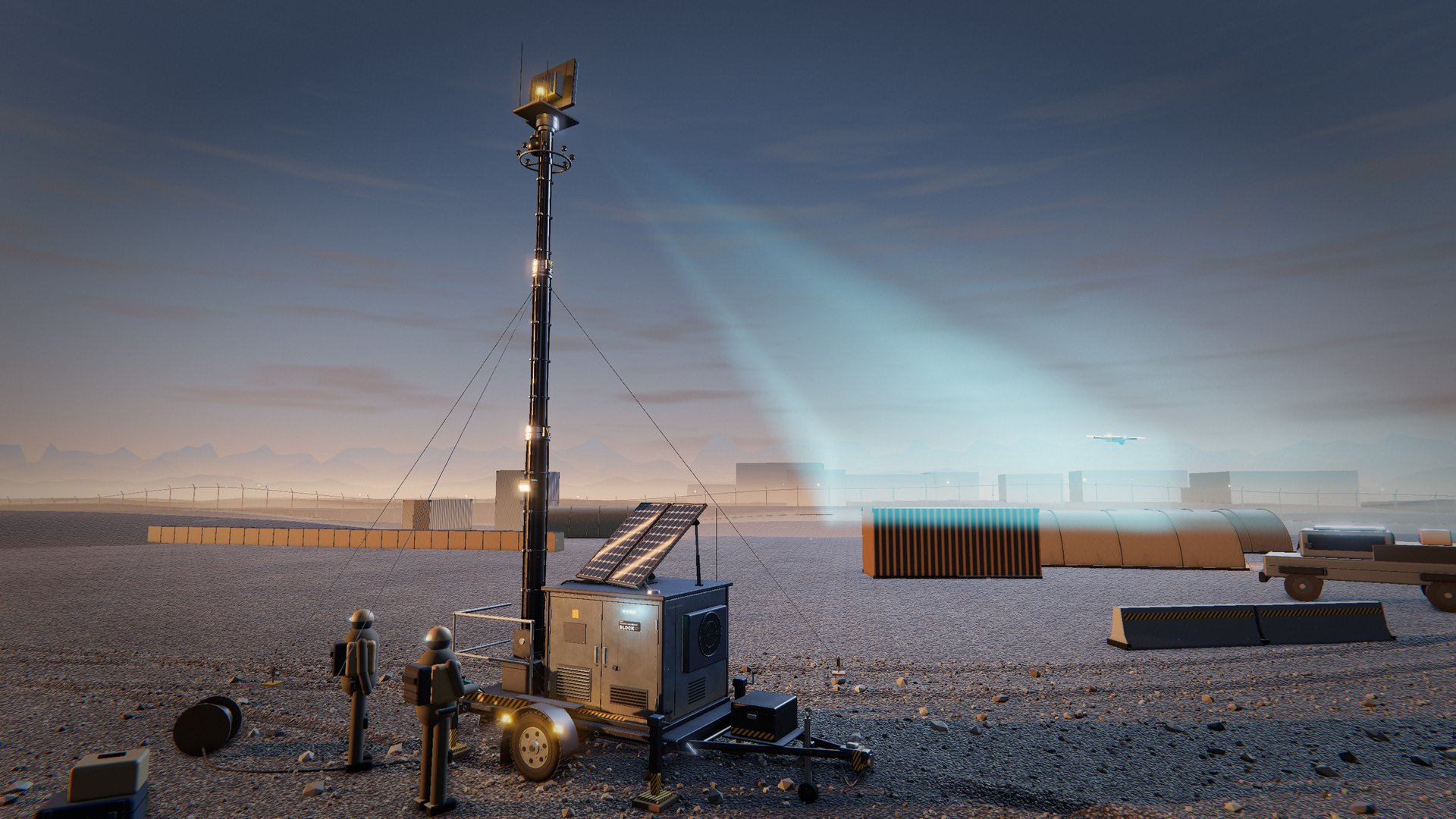
WAKE is a trailer or tripod mast that detects small drones by their radio links out to 5 km and by radar out to 3 km, confirms them with a thermal camera and names the type within 2 s. It stands in 20 min and feeds STANNEL and PITCH over JESS.

hardwareConcept design6 links
Open dossier
17Low-Altitude Airspace Awareness

STANNEL

STANNEL Low-Altitude Air Picture

Stannel is the old English name for the small falcon that hangs on the wind over one field, head held still, and reads everything that moves beneath it; STANNEL holds the low sky the same way.

Three hundred detections. Three tracks. One clear picture.

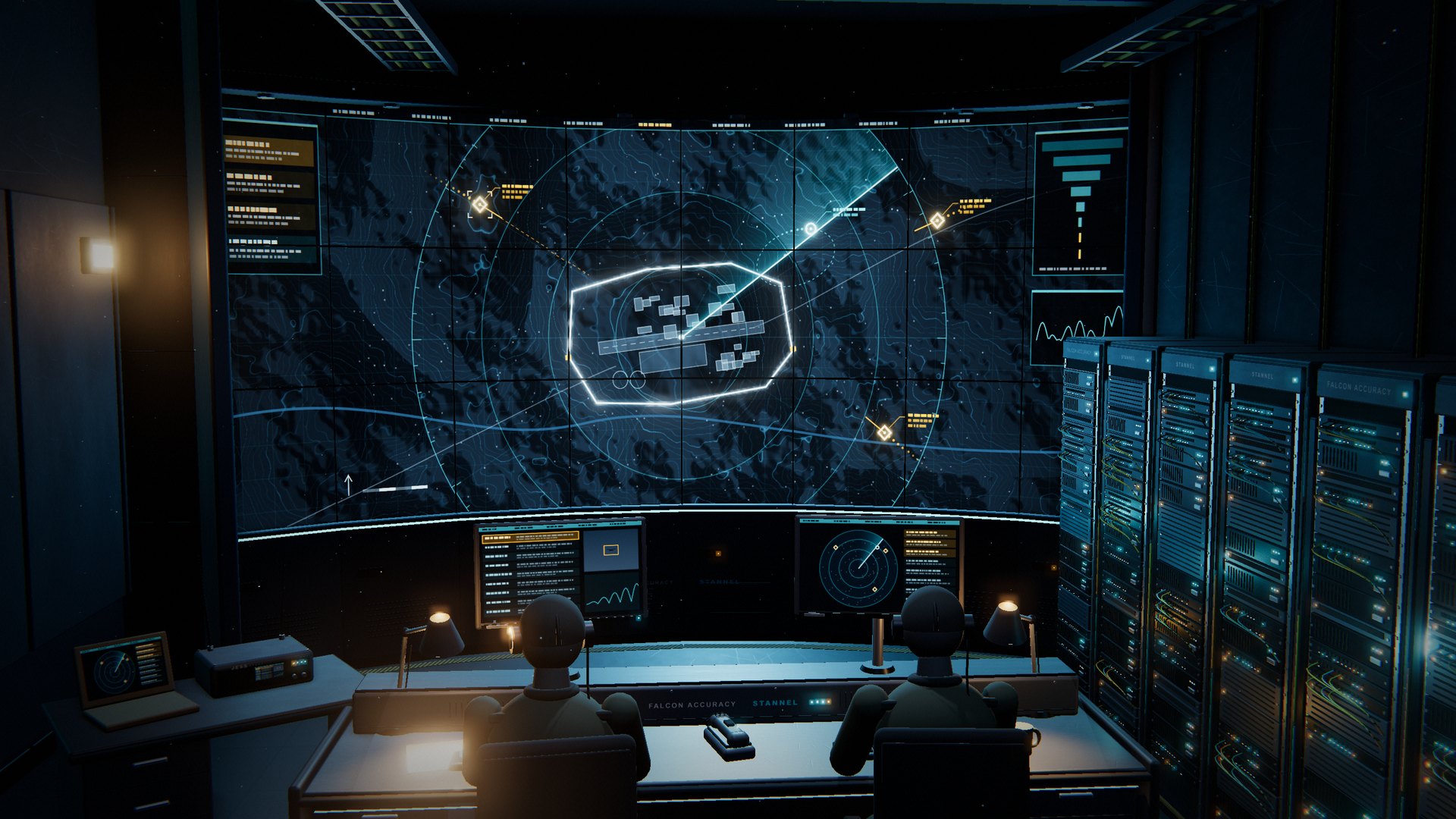
STANNEL fuses WAKE masts, SCREEN radar, HOOD receivers and sightings from MALAR and TIERCEL into one picture of the air below 1,000 m. It classifies each track, estimates where the pilot stands, keeps the force's own aircraft apart from unknown ones and tells the right people with the evidence attached.

softwareConcept design11 links
Open dossier
Sector 05 · 6 products

Air and Missile Warning

See early, warn fast, shelter people, recover the same day.

  1. 18LONGWING
  2. 19KETTLE
  3. 20BECK
  4. 21MEWS
  5. 22SOOTY
  6. 23IMPING

Against aircraft, drones and missiles, the time between detection and arrival is measured in minutes, sometimes fewer than 5, and what a force does with those minutes decides who is hurt. Most warning chains lose the minutes in hand-offs. A radar sees the track, one office phones another, a siren sounds without saying where to go, and the nearest shelter is a 10 minute walk away. After an attack, a runway can stay closed for a day while engineers walk it. Falcon Accuracy builds the protective half of air and missile defense. Every product in this sector is unarmed. It senses, warns, shelters, misleads the adversary's surveillance and recovers, and it destroys and intercepts nothing.

The products work as one chain. LONGWING Early Warning Radar tracks aircraft, drones and missiles from the ground and estimates time of arrival and the area at risk. KETTLE Launch Warning Constellation sees the heat of a launch from orbit before any ground radar can. BECK Civil Alert Network turns a confirmed warning into an alert on every phone, siren, radio and road sign in the region within 10 seconds and names the nearest shelter. MEWS Protective Shelter Module puts that shelter within reach in a day. SOOTY Decoy and Camouflage Kit hides the force's real equipment and shows full-size copies elsewhere, so the adversary's effort lands on fabric. IMPING Airfield Recovery System surveys a damaged runway in 30 minutes and gets aircraft flying again. A watch officer confirms every warning, two people release every public alert, every decision is logged, and all data stays inside the client's network.

18Air and Missile Warning

LONGWING

LONGWING Early Warning Radar

Longwing is the falconer's name for the true falcons, the long-winged birds that hunt the open sky and see their quarry from the greatest range; LONGWING is the radar that sees farthest.

Sees 400 km out. Buys the minutes that fill the shelters.

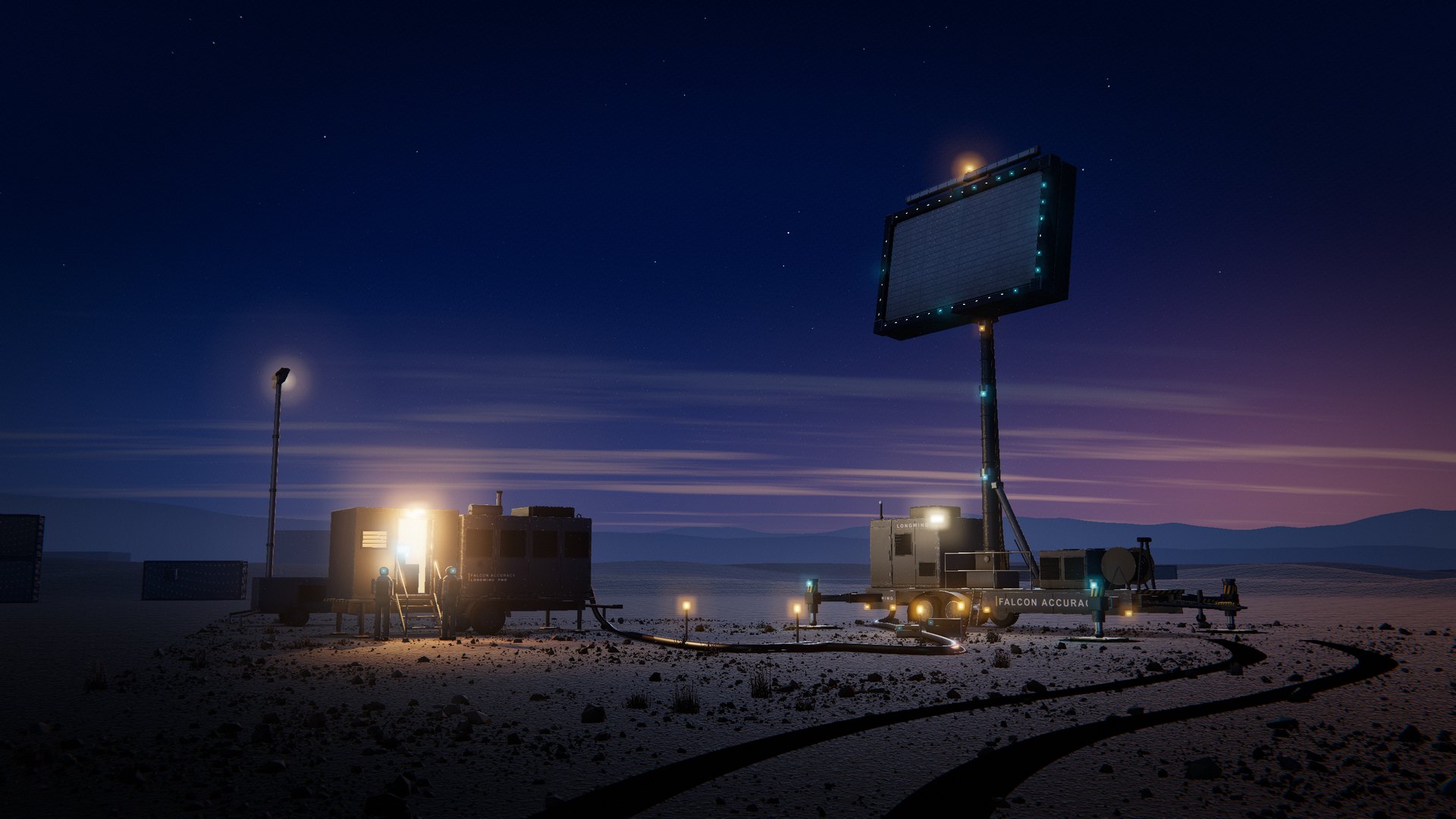
LONGWING is a transportable long-range early-warning radar on two trailers, one carrying the antenna and one the power. It tracks aircraft at 400 km, ballistic missiles at 800 km and drones and cruise missiles to the radar horizon, estimates when each will arrive and which area is at risk, and hands every confirmed track to PITCH and BECK. A watch officer confirms every warning before it leaves the cabin.

hardwareConcept design10 links
Open dossier
19Air and Missile Warning

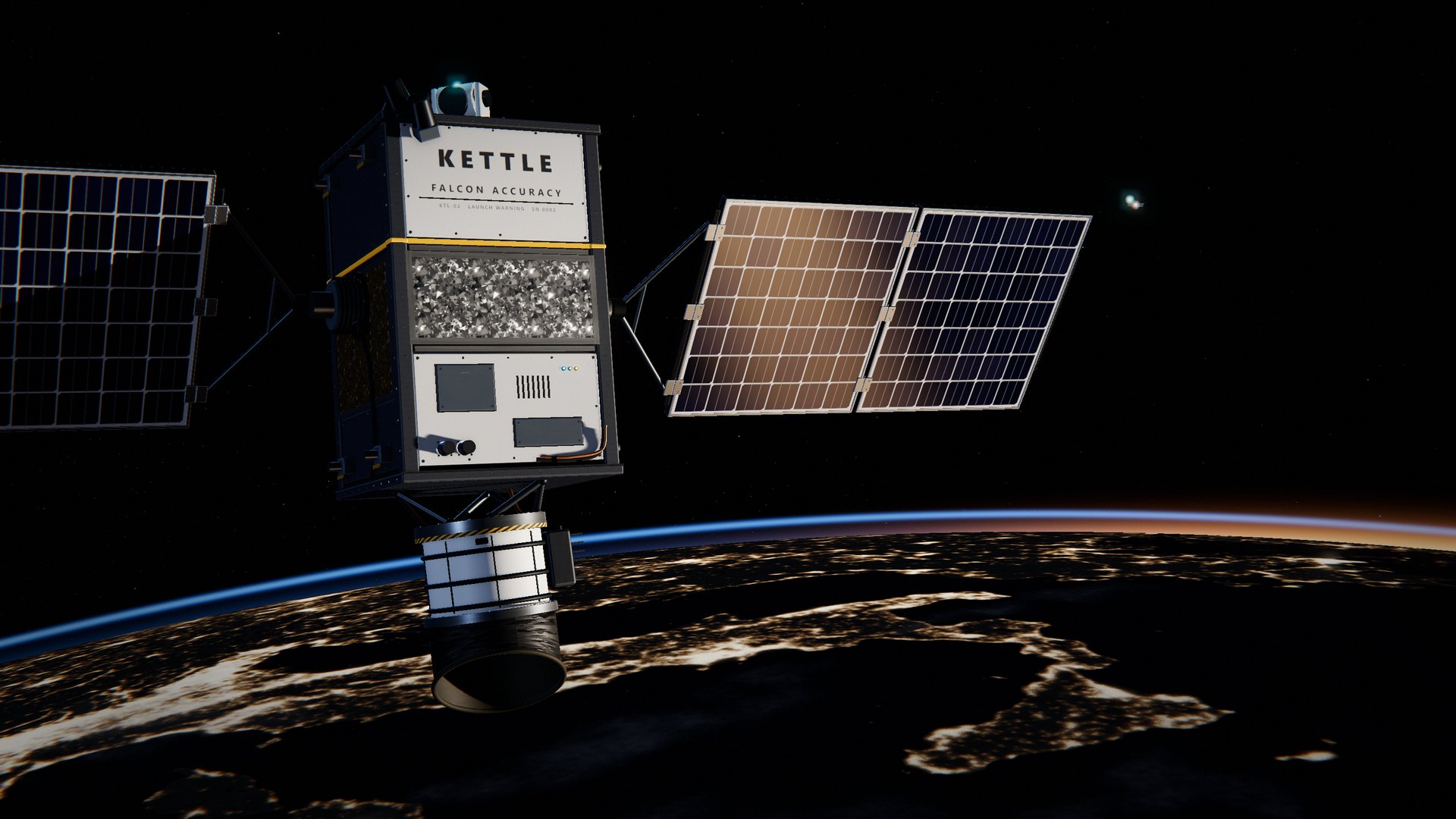
KETTLE

KETTLE Launch Warning Constellation

A kettle is a flock of raptors circling high on a column of rising warm air; KETTLE is the ring of satellites that circles high above the theater and watches for heat rising from the ground.

Sees the heat of a launch from orbit. Warns within 30 seconds.

KETTLE is a constellation of 24 small infrared satellites that watch a theater for the heat of a rocket launch or a large fire. It reports the point, time and heading of a launch to a watch officer within 30 seconds, through LAGGAR ground stations the force owns. The same data feeds wildfire and industrial fire alerts to civil protection through BECK.

hardwareConcept design8 links
Open dossier
20Air and Missile Warning

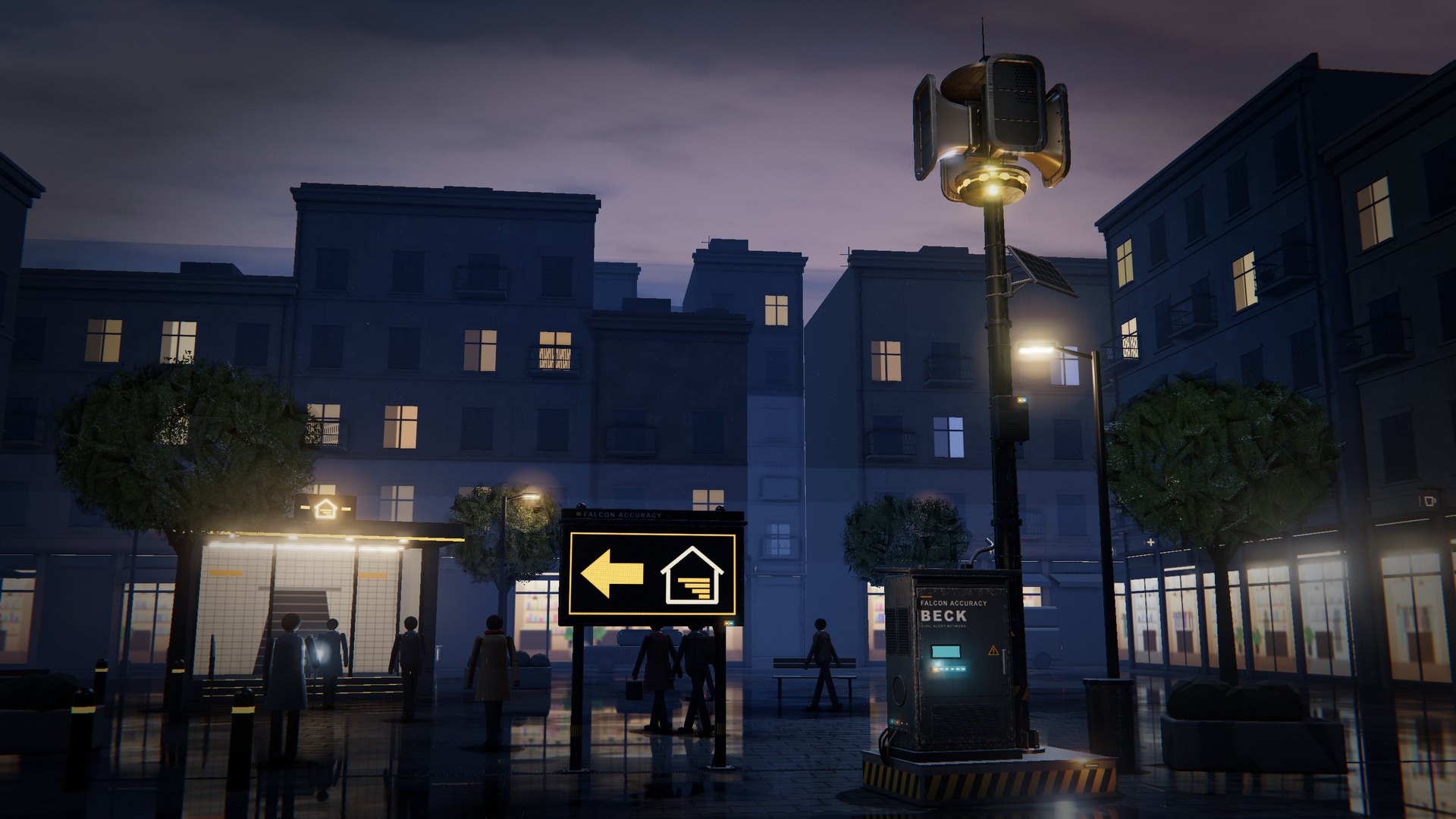
BECK

BECK Civil Alert Network

A beck is the small signal of the hand that calls a hawk back to the fist at once; BECK is the signal that calls people to shelter within seconds.

Every phone, siren, radio and road sign, within 10 seconds.

BECK is the software and siren network that turns one confirmed warning into an alert on every phone, siren, radio and road sign in a region within 10 seconds. It names the nearest shelter, speaks the region's languages and reaches people who cannot hear or cannot read a standard alert. Two authorized people release each alert, and every alert is logged.

softwareConcept design8 links
Open dossier
21Air and Missile Warning

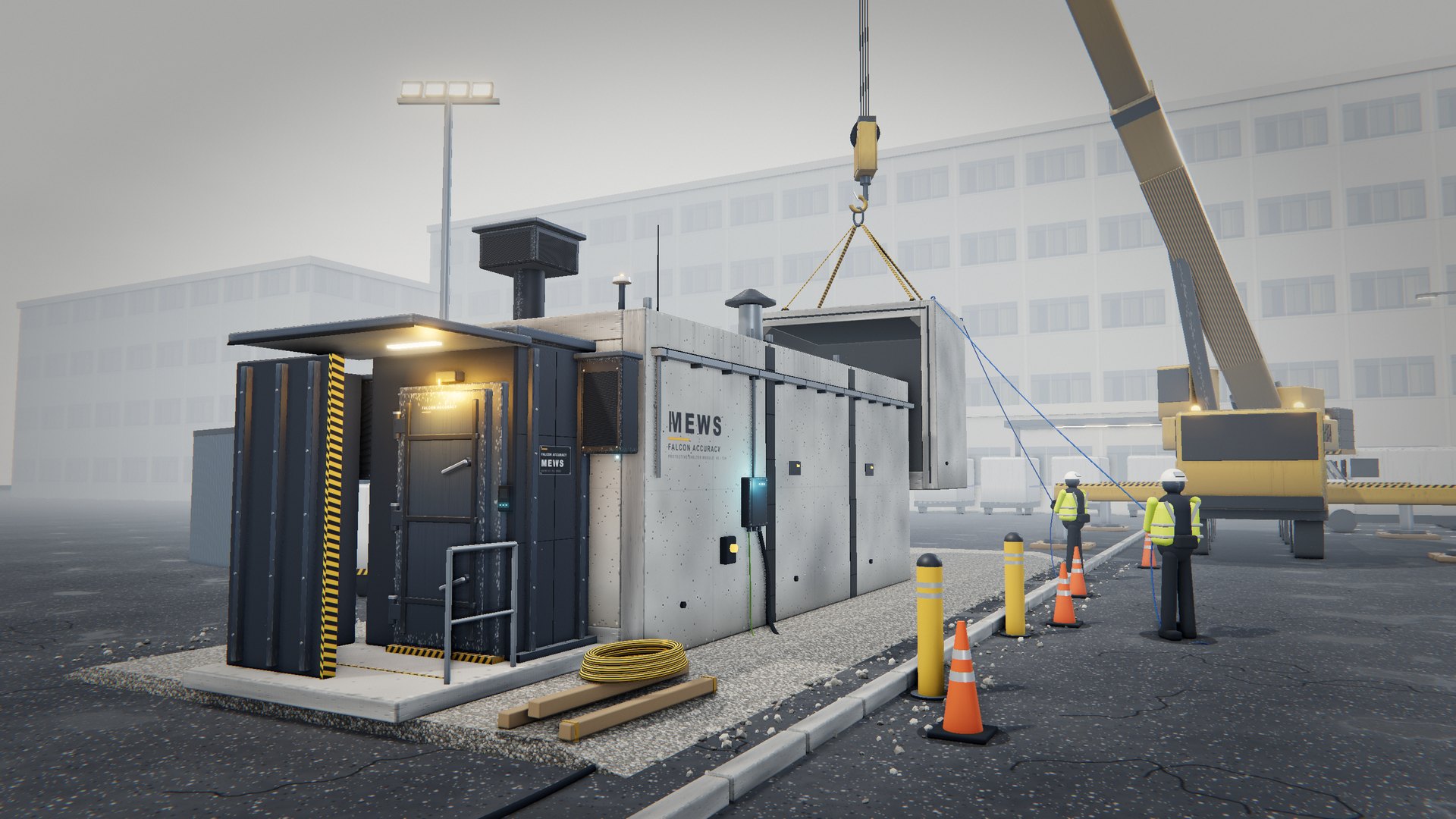
MEWS

MEWS Protective Shelter Module

The mews is the building where falconers keep their hawks safe through the molt and the weather; MEWS keeps people safe for as long as the warning lasts.

Placed by crane in a day. Shelters 45 people for 72 hours.

MEWS is a factory-built protective shelter, precast or in container format, that protects people from blast and fragments and keeps them supplied with filtered air, power, water and communications for 72 hours. A crane places it in a day at a base, a hospital or a school, and its occupancy count reaches the watch officer and BECK.

hardwareConcept design8 links
Open dossier
22Air and Missile Warning

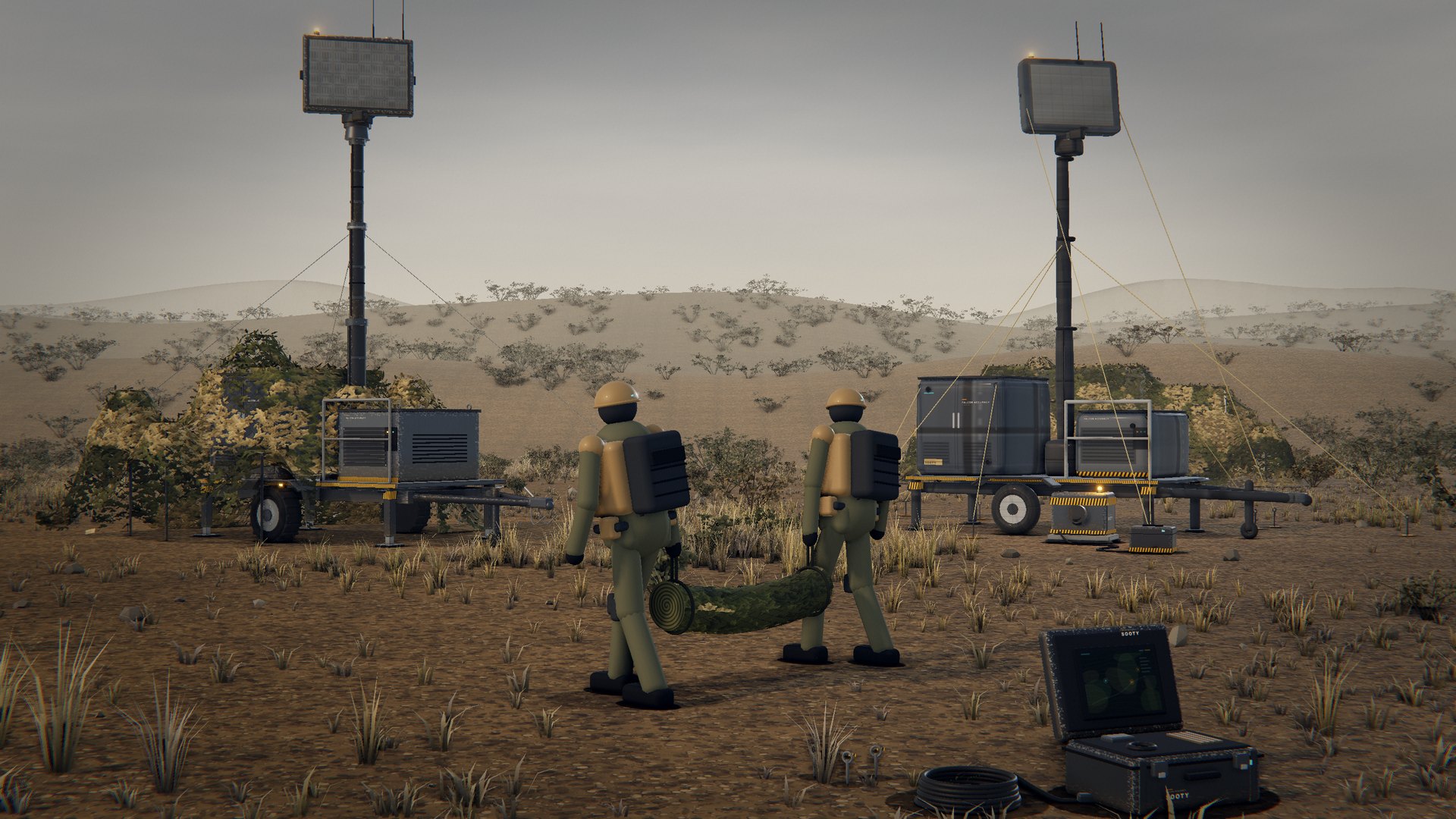
SOOTY

SOOTY Decoy and Camouflage Kit

The sooty falcon wears a slate-gray plumage that vanishes against desert rock in the evening light; SOOTY hides the real vehicle and shows a false one in its place.

Hide what is real. Show what is not.

SOOTY is a kit of multispectral camouflage nets for the force's real vehicles and inflatable decoys that reproduce the visual, thermal and radar signature of its own vehicles and radars. Paired with JINK, which carries the radio signature, it draws the adversary's surveillance and effort to empty positions while the real ones stay hidden.

hardwareConcept design7 links
Open dossier
23Air and Missile Warning

IMPING

IMPING Airfield Recovery System

Imping is the falconer's repair of a broken flight feather, a sound feather spliced onto the old shaft so the hawk flies again the same day; IMPING repairs a runway so aircraft fly again.

Surveys the runway in 30 minutes. Aircraft fly again the same day.

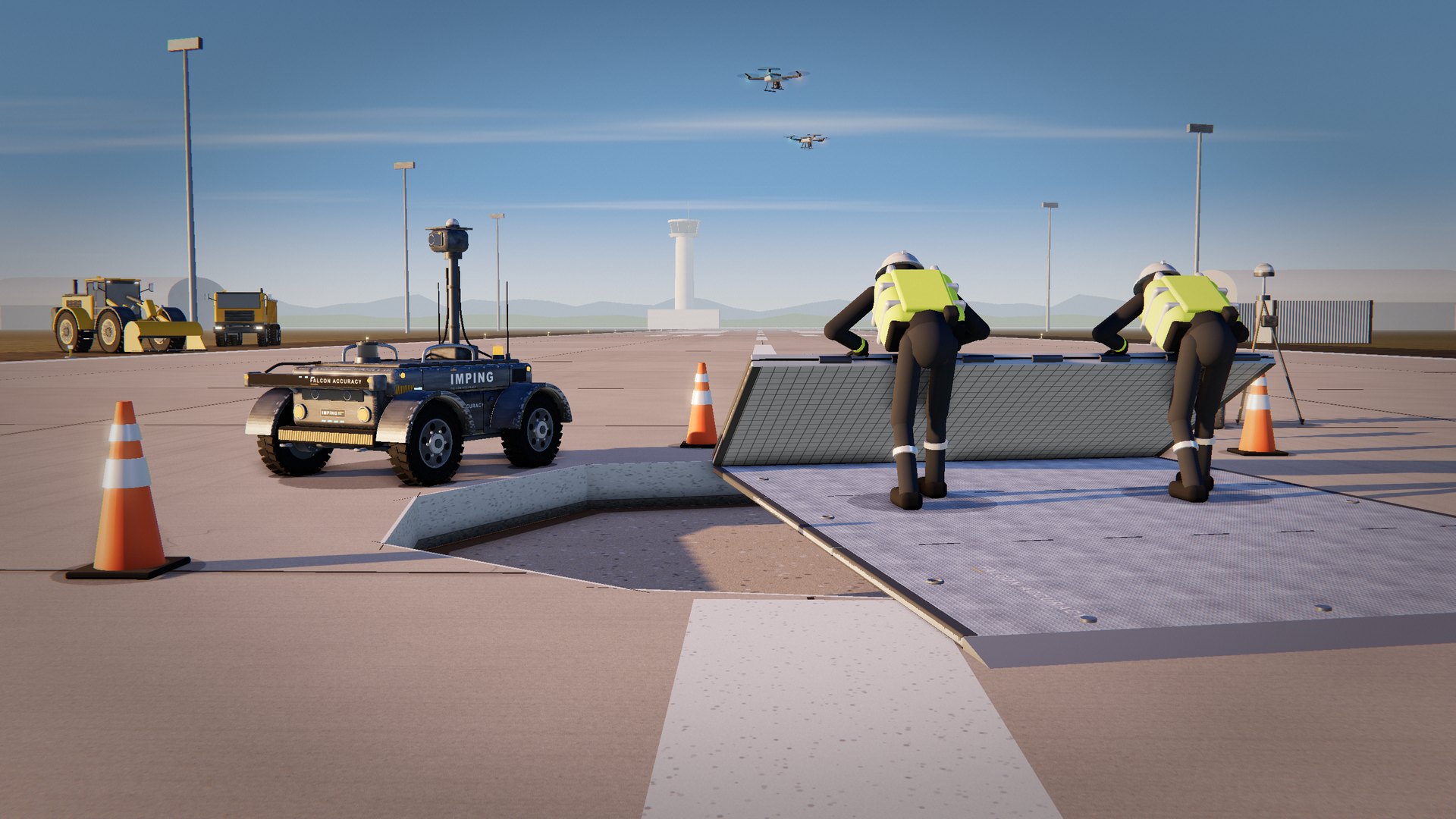
IMPING is a rapid airfield recovery system. Its drones and a ground robot survey a damaged runway in 30 minutes and map craters, debris and hazards for specialist teams, then it computes the minimum operating strip that lets aircraft fly again. Repair crews fill each crater in under 2 hours with rapid-setting fill and a folding mat.

hardwareConcept design7 links
Open dossier
Sector 06 · 6 products

Ground Robotics

Machines take the risk. People keep the decision.

  1. 24LURCHER
  2. 25FALCONER
  3. 26GYR
  4. 27APLOMADO
  5. 28VARVEL
  6. 29BRAIL

Ground robots exist to take the first step so that a person does not have to. The first door, the culvert under the road, the stretch of track nobody has driven since yesterday and the 300 meters back to the vehicles with a casualty on the litter are the minutes in which a patrol loses people. Falcon Accuracy builds machines for exactly those minutes. Each one carries sensors, tools, cargo or a litter and nothing else. Each one walks, drives or rolls on its own, reports over JESS into the PITCH picture, and stops to wait whenever the next action needs a human decision. The operator approves every contact with a suspect object, every route a convoy follows and every evacuation, and every one of those decisions is logged inside the client's network.

The six machines in this sector are built as one team with one control stack, one battery and connector standard and one tailoring program. LURCHER walks point, into buildings and under roads, and maps what it finds. FALCONER brings human-shaped hands forward, so it swaps drone batteries, opens doors and loads cargo without a person stepping out of cover. GYR carries the squad's 300 kilograms and feeds power to every other machine here. APLOMADO drives ahead of the convoy with ground-penetrating radar and marks what lies beneath the road. VARVEL goes up to the suspect object with an arm, an x-ray panel and a chemical sensor, and marks it for the force's specialists. BRAIL reaches a fallen operator, takes the litter aboard and brings them back with vitals streaming to the medic. The sector reads in that order, from the scout to the stretcher.

24Ground Robotics

LURCHER

LURCHER Quadruped Robot

A lurcher is the falconer's running dog, the sighthound cross that works ahead of the hawk and flushes the quarry, so it is the quadruped that walks point.

Walks point so no one else has to.

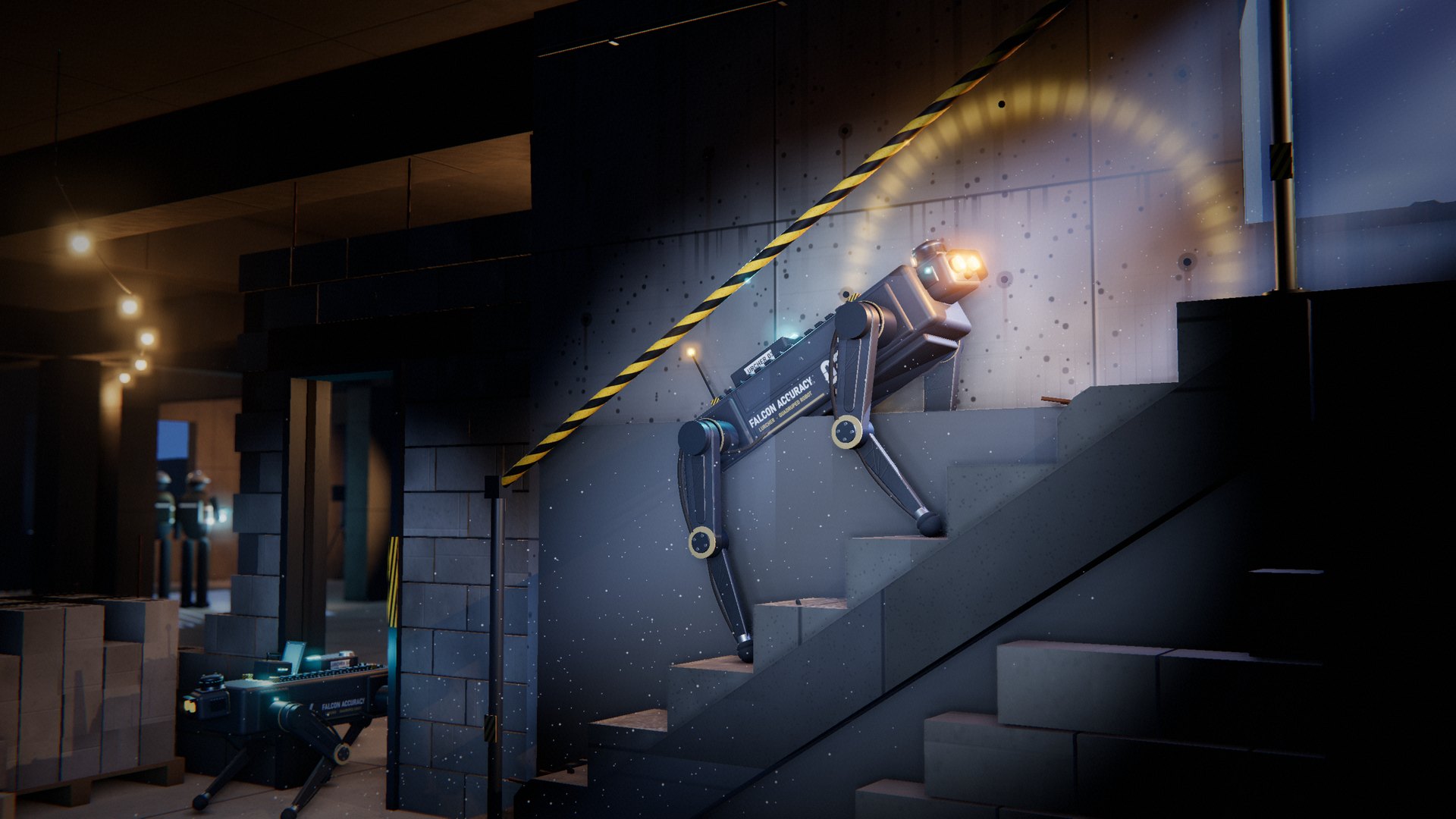
LURCHER is a 48 kilogram electric quadruped that goes first into buildings, culverts, tunnels and compounds. It climbs stairs, crouches under obstacles, maps what it finds and puts people, vehicles and openings on the PITCH picture within a second. The operator decides where it goes; LURCHER decides where to put its feet.

hardwareConcept design9 links
Open dossier
25Ground Robotics

FALCONER

FALCONER Humanoid Robot

The falconer is the handler who flies the hawk, carries the kit to the field and does the work by hand, so it is the humanoid robot built for tasks shaped for human hands.

Handles the drones, carries the load, takes the risk.

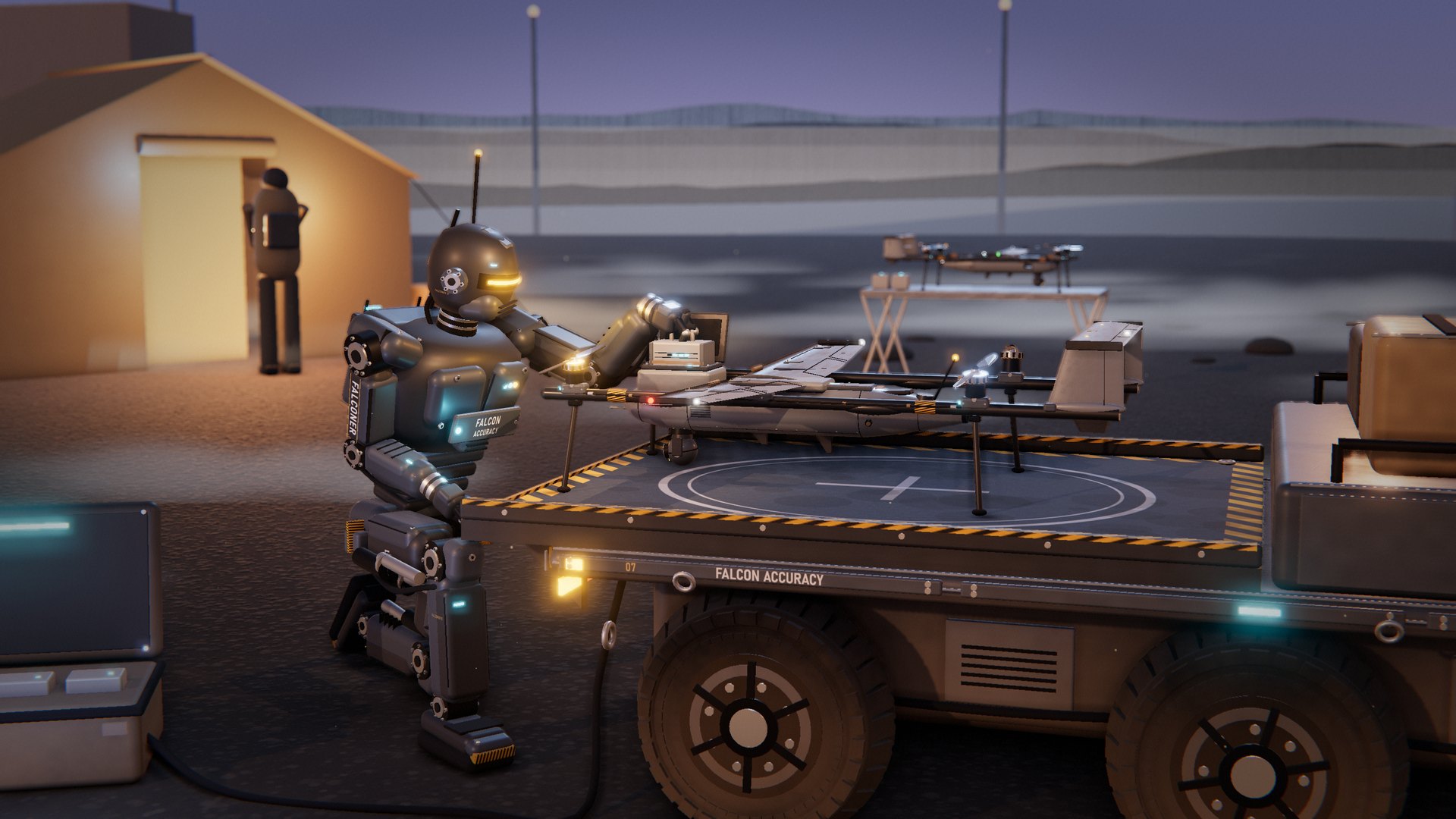
FALCONER is a 1.85 meter, 85 kilogram humanoid robot built to do the handler's work on a landing pad, at a gate or inside a building, where the tools, doors, ladders and cases are shaped for people. It swaps TIERCEL batteries, opens doors, loads GYR and carries 25 kilograms in its hands. An operator gives the task; FALCONER plans the steps and stops before any contact the operator has not approved.

hardwareConcept design8 links
Open dossier
26Ground Robotics

GYR

GYR Robotic Mule

GYR is the gyrfalcon, the largest and strongest of the falcons, which hunts low over open ground, so it is the load-carrying mule.

Carries the squad's weight, follows without a word.

GYR is a quiet electric six-wheel robot, under 55 decibels at 10 meters, that carries 300 kilograms of what the squad used to carry, follows the formation on its own and recharges drones, robots and radios in the field. A fold-out litter rail brings a casualty back, and the same autonomy stack, shipped as the JERKIN kit, retrofits the trucks a force already owns.

hardwareConcept design11 links
Open dossier
27Ground Robotics

APLOMADO

APLOMADO Route Clearance Sensor Vehicle

The aplomado falcon hunts low over open ground, working a line ahead of its partner and reading what moves beneath it; APLOMADO drives ahead of the convoy and reads what lies beneath the road.

Reads the road before the first wheel rolls.

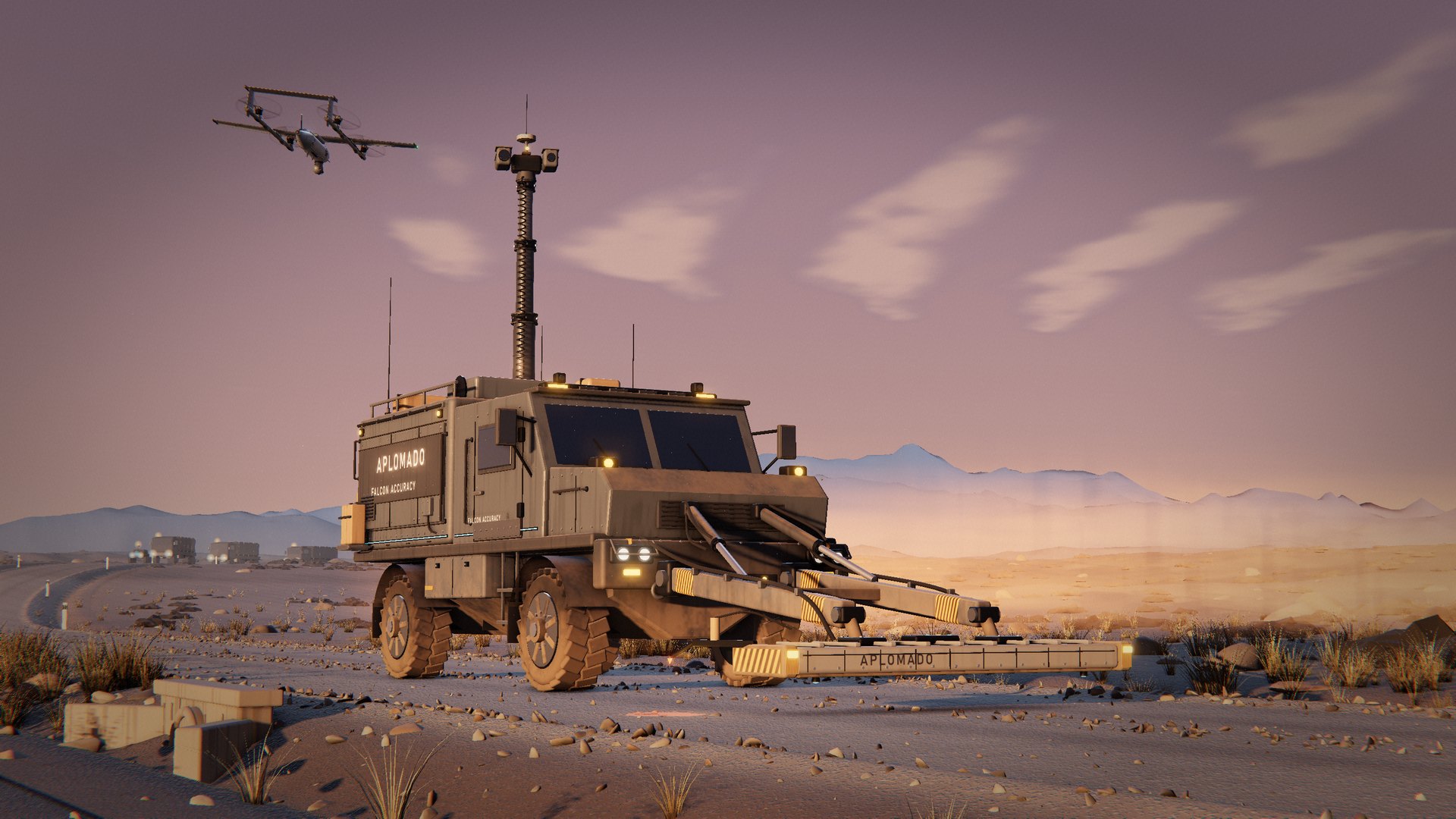
APLOMADO is an uncrewed 4x4 that drives 300 meters to 2 kilometers ahead of a convoy, sweeps a 3.2 meter lane with ground-penetrating radar and metal detection, and compares the road surface with its record of the last pass. It paints every anomaly on the road, places it on the PITCH map within 0.1 meters and stops to wait for a human decision. It senses and marks; it does not touch what it finds.

hardwareConcept design7 links
Open dossier
28Ground Robotics

VARVEL

VARVEL Hazard Inspection Robot

The varvel is the small engraved ring at the end of the jess that carries the owner's name, so it is the robot that names the hazard and leaves its mark on it.

Looks inside the hazard, marks it, keeps every person 300 meters back.

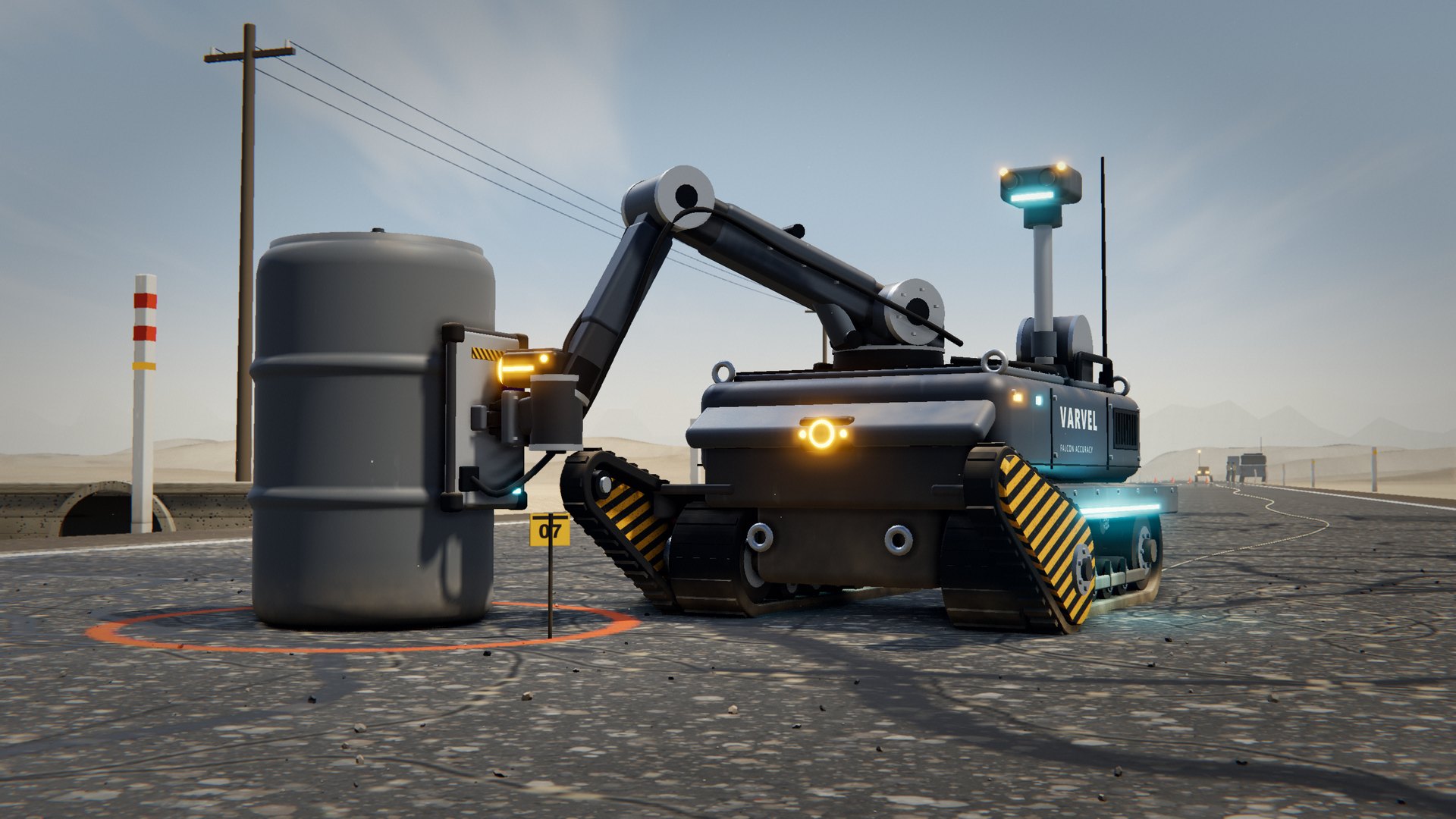
VARVEL is a 75 kilogram tracked robot with a 2 meter manipulator arm that walks the last 50 meters to a suspect object so that no person has to. Its wrist carries a zoom camera, a thermal core, a chemical sensor and a radiological probe, the arm places a digital x-ray panel to image the object from the outside, and it then paints a marking ring, plants a numbered radio tag and logs the find to the PITCH map. VARVEL inspects and marks; it never attempts to move, open or disturb what it finds.

hardwareConcept design8 links
Open dossier
29Ground Robotics

BRAIL

BRAIL Casualty Evacuation Robot

The brail is the soft strap a falconer binds around a hawk's wing to carry it without harm; BRAIL is the robot that lifts a casualty onto its litter deck without harm and carries them back.

Reaches the casualty first and brings them back with vitals in view.

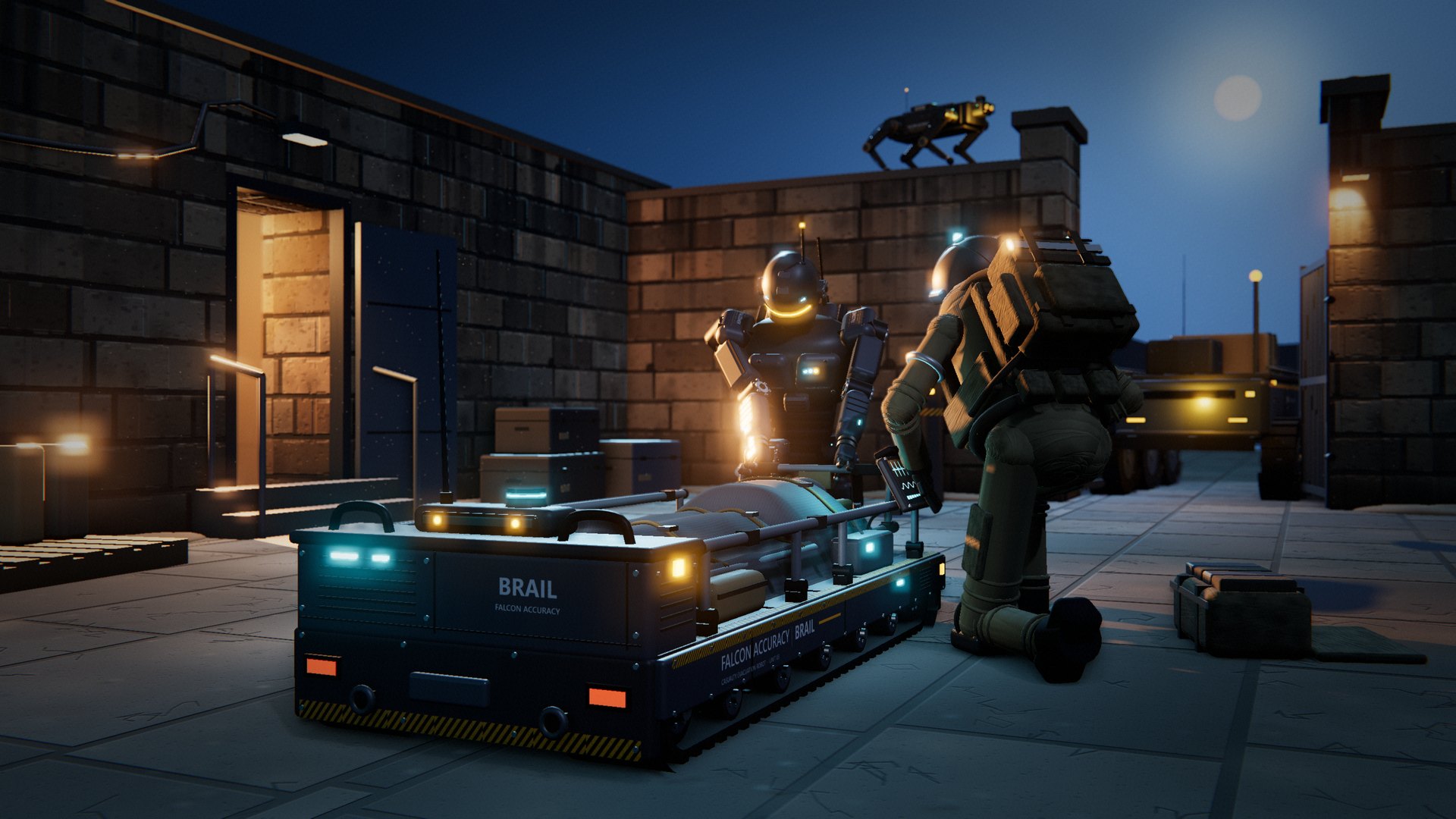
BRAIL is a 380 kilogram tracked robot with a powered litter deck that drives to a fallen operator, takes the litter aboard at 0.25 meters off the ground and carries the casualty back at 10 kilometers per hour over rough ground. A cuff and a chest sensor stream heart rate, breathing, oxygen and blood pressure to the medic's display and to PITCH the whole way. The medic decides the route and the destination; BRAIL drives it.

hardwareConcept design8 links
Open dossier
Sector 07 · 4 products

Maritime and Littoral

One picture from the harbor floor to the horizon.

  1. 30HAGGARD
  2. 31BOWSE
  3. 32MAIL
  4. 33PINION

A harbor is the one position a force cannot relocate. Its ships lie still at the pier, its fuel and stores sit on the quay, and the water that brings them in also brings a skiff at 40 knots, a diver under the surface or a shape left on the bottom. Watching that water today takes crews on boats and divers in the water, and both tire long before the threat does. Falcon Accuracy builds the maritime sector on the rule it applies everywhere else, a sensor on every platform, one picture in PITCH, and a watch officer who decides. Every craft in this sector is unarmed. It carries radar, cameras, sonar and radios, it reports, it shadows and it marks, and it leaves the response to the people the force has trained for it.

The sector works as a layered watch. Fixed sonar buoys and pier radars hold the harbor mouth around the clock and raise a track within 3 seconds. An uncrewed boat goes to the track, shadows it for 48 hours if needed and looks below the surface with its own sonar. An underwater vehicle inspects what the boat and the buoys flag, on the bottom or on a hull, and surfaces the evidence. A retrofit kit brings the crewed boats the force already owns into the same picture, so a port is watched by every hull it has, not only the ones it buys. Data stays inside the force's network, every tasking is logged, and every detection range in this sector is a figure a trials crew can measure in the client's own water. The products are HAGGARD Uncrewed Patrol Boat, BOWSE Underwater Inspection Vehicle, MAIL Harbor Sensor Network and PINION Boat Autonomy Kit.

30Maritime and Littoral

HAGGARD

HAGGARD Uncrewed Patrol Boat

A haggard is a falcon trapped in adult plumage, a bird that has already hunted alone through more than one season; HAGGARD is the boat that patrols the approach alone for 48 hours.

Patrols the approach for 48 hours. Sees above and below the waterline.

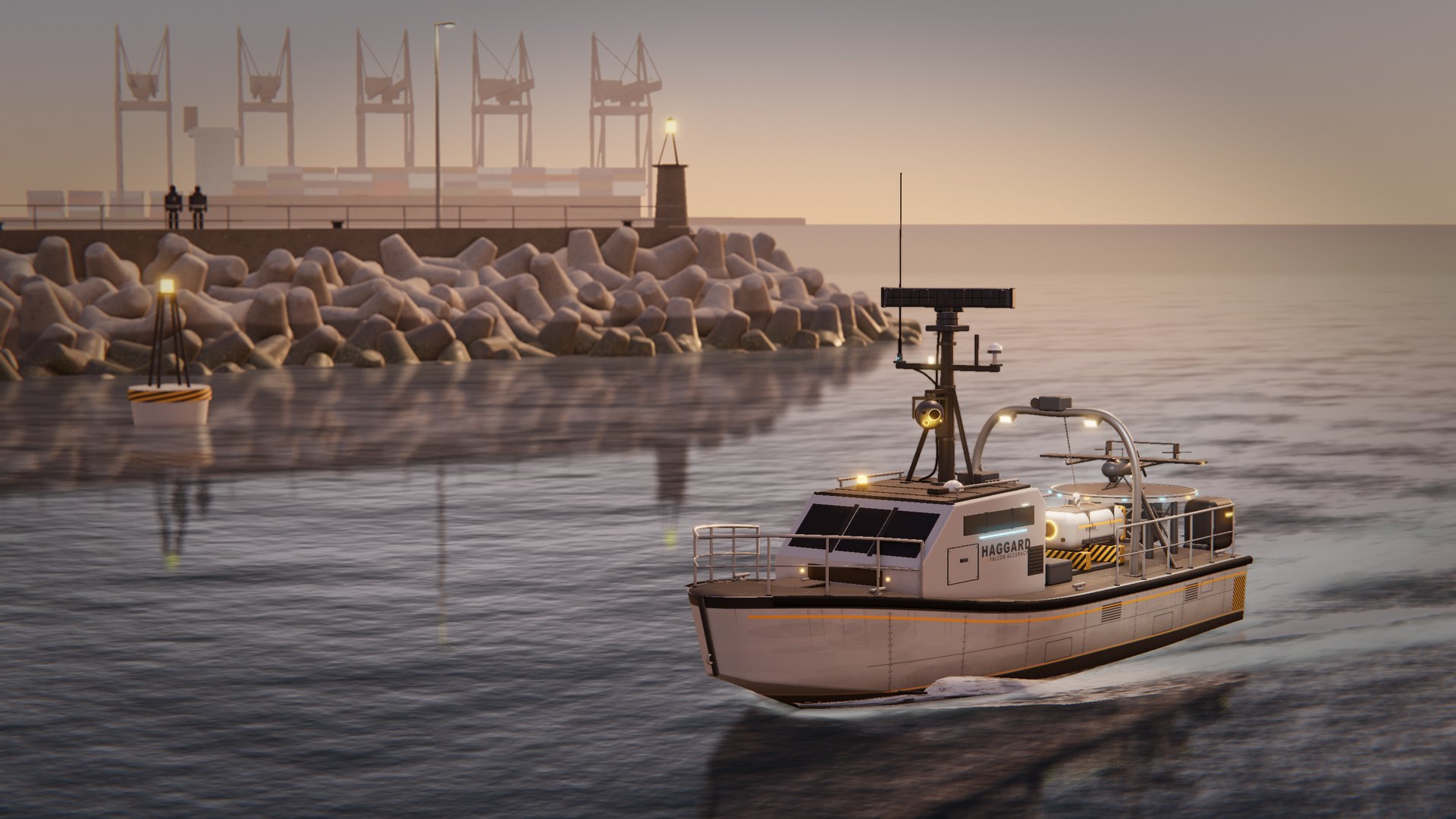
HAGGARD is an 8.5 meter uncrewed patrol boat that keeps watch over a harbor approach, an anchorage or a coastal lane for 48 hours at a time. Its radar, cameras and hull sonar build one picture above and below the waterline and send it to PITCH, while a watch officer ashore decides what the boat does next.

hardwareConcept design8 links
Open dossier
31Maritime and Littoral

BOWSE

BOWSE Underwater Inspection Vehicle

To bowse is to drink, the falconer's word for a hawk taking water; BOWSE is the vehicle that takes to the water to inspect a hull or the seabed.

Finds what lies on the bottom, marks it, and lets you decide.

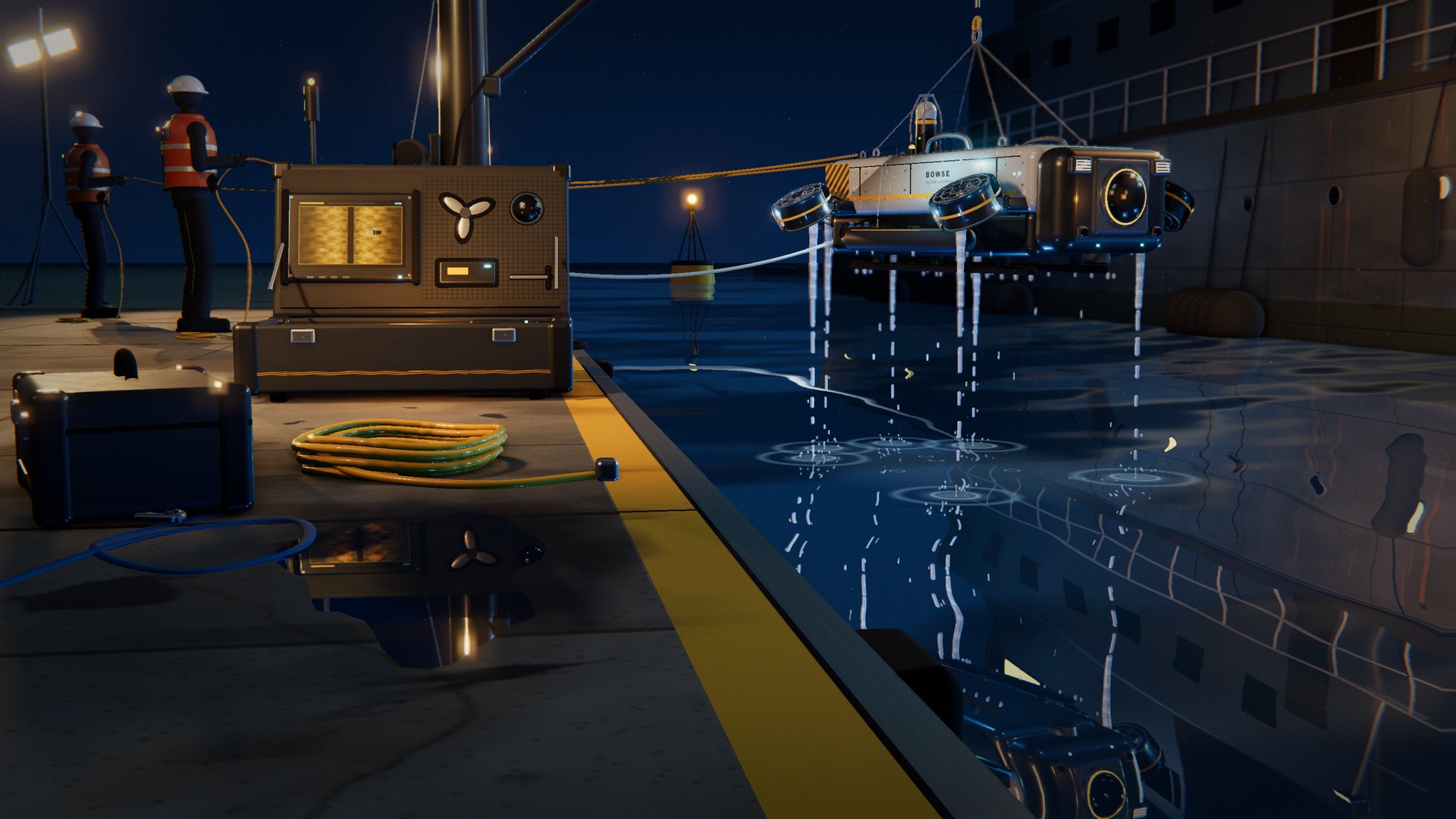
BOWSE is a 1.9 meter, 62 kilogram uncrewed underwater vehicle that surveys a harbor bottom for mine-like objects and inspects ship hulls, piers and intakes. It images each contact with sonar and cameras, classifies it on board, fixes its position within 1 meter and surfaces the evidence for a clearance officer, who decides what happens next.

hardwareConcept design6 links
Open dossier
32Maritime and Littoral

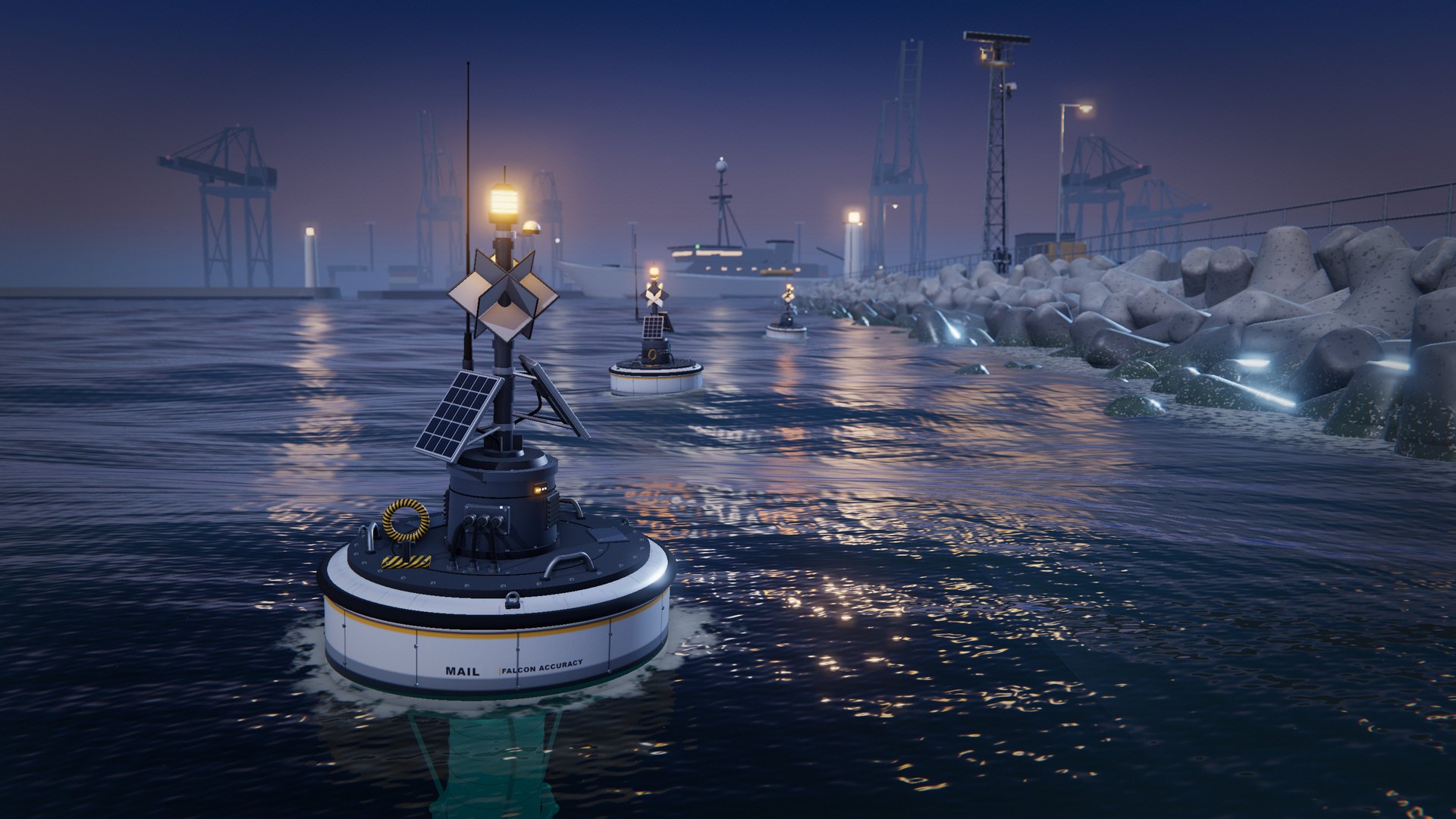
MAIL

MAIL Harbor Sensor Network

The mail is the falcon's breast plumage, the dense coat that keeps the weather off the bird; MAIL is the coat of buoys and masts that keeps watch on the harbor's door.

Hears a diver at 700 m. Sees a skiff at 12 km.

MAIL is a network of moored sonar buoys, pier radars and thermal cameras that watches a harbor mouth, an anchorage or a pier line around the clock. Its site-trained model tells divers and small craft from seals, wakes and debris, cues HAGGARD and the harbor's own boats through PITCH, and keeps the watch officer's decision log.

hardwareConcept design8 links
Open dossier
33Maritime and Littoral

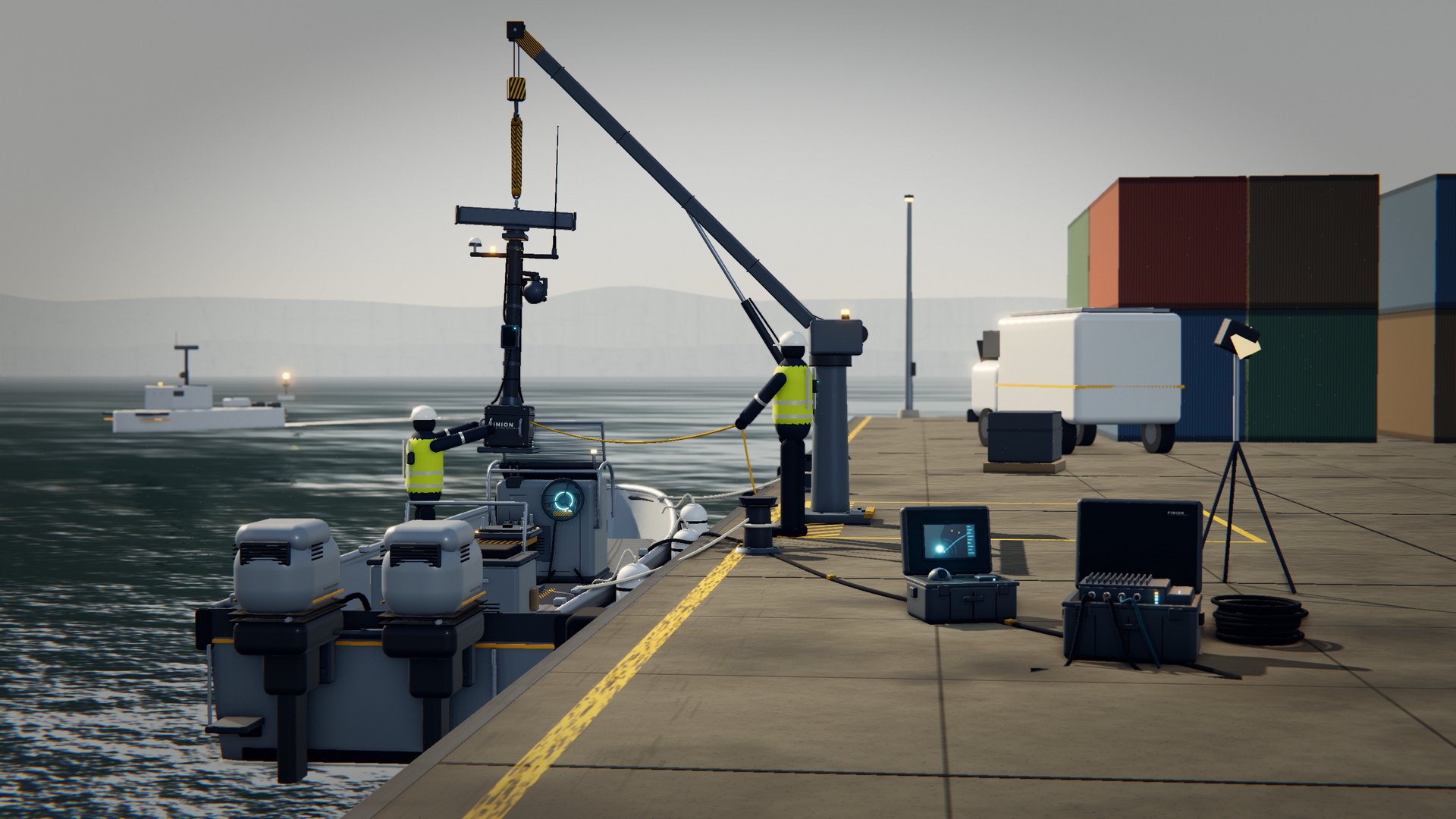
PINION

PINION Boat Autonomy Kit

The pinion is the outer wing of the falcon, the part that steers every turn in flight; PINION fits a crewed boat with the steering, sensors and autonomy of the family.

Fits the boats you already own. Three days from quay to patrol.

PINION is a retrofit kit that turns a crewed patrol boat of 7 to 15 meters into a sensing and autonomy node of the same family as HAGGARD. A mast module, a helm interface and a sealed compute case fit in three days at the quay, so the boat shares the PITCH picture with its crew aboard or runs an uncrewed patrol under a watch officer ashore.

hardwareConcept design8 links
Open dossier
Sector 08 · 5 products

Undersea Systems

Know the seabed, watch the cables, bring the crew home.

  1. 34SARCEL
  2. 35TERTIAL
  3. 36KITING
  4. 37RAMAGE
  5. 38GONYS

The seabed carries the cables and pipelines a nation runs on, its data, its power and its gas, and most of that seabed has never been surveyed at a detail that shows a dragged anchor scar or a span of unsupported pipe. A route is mapped once when the cable is laid and rarely after. The owner learns of damage when the traffic stops, hours after the vessel that caused it has gone. Survey ships cost a full crew for weeks, divers see little in dark water, and the ocean itself changes by the week in ways that move every sonar range a force plans on. Falcon Accuracy builds the undersea sector to close those gaps with sensors, not weapons. Every product here is unarmed. It maps, measures, listens, warns and rescues, and it leaves every response to the people the force has trained for it.

The sector works as one chain, from the open sea to the harbor floor and down to a submarine in distress. SARCEL maps cable and pipeline routes for 72 hours at a time, and TERTIAL does the same for a harbor basin. KITING gliders measure the water for months, RAMAGE tells the watch officer within 60 seconds when a vessel anchors or drags over a line, and GONYS brings a submarine crew up from 600 meters, 12 at a time. Every alert feeds PITCH, a human decides every response, every decision is logged, and all data stays inside the client's network.

34Undersea Systems

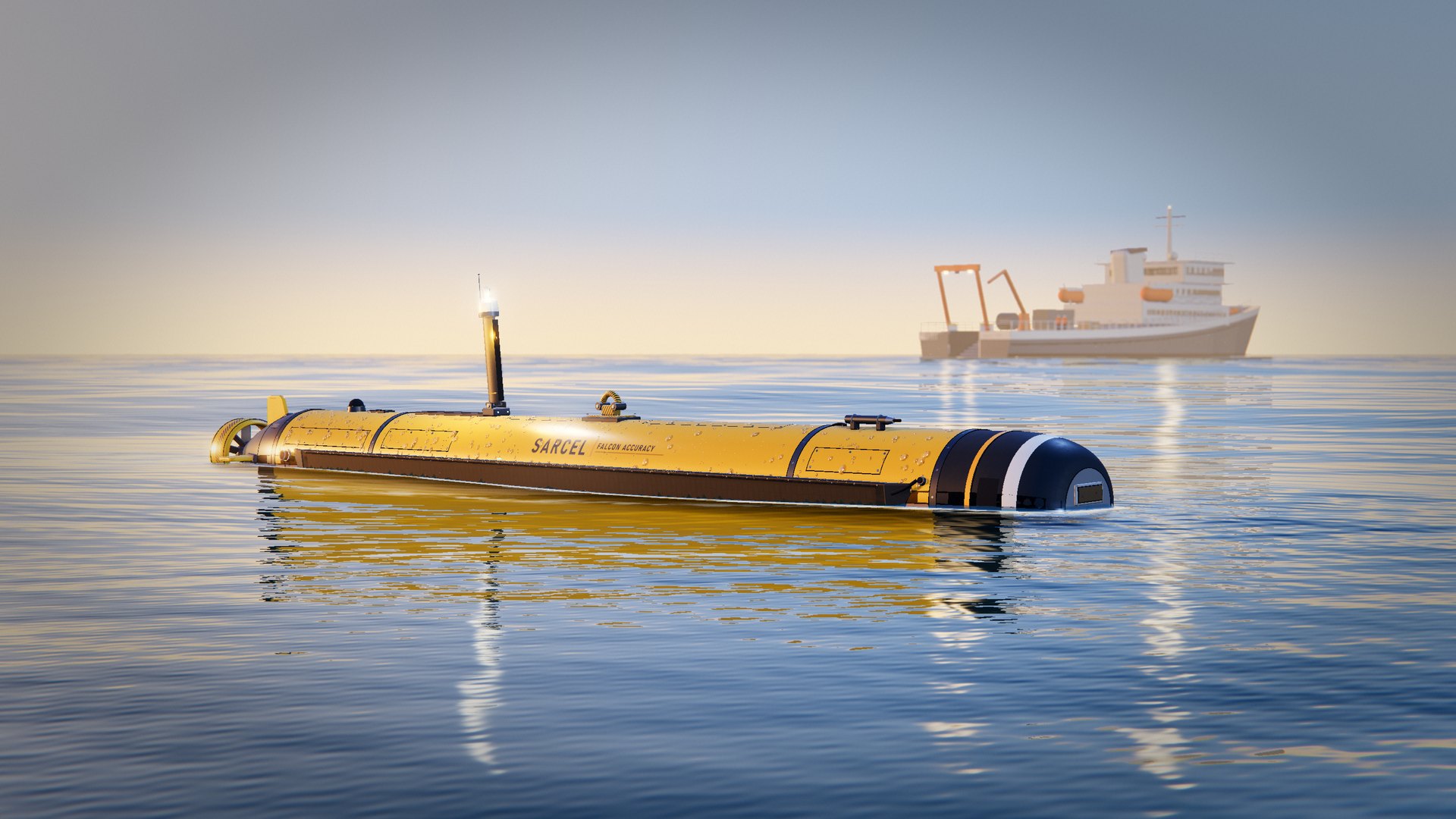
SARCEL

SARCEL Long-Range Survey AUV

The sarcel is the outer pinion feather of a hawk's wing, the long flight feather that carries the bird on its longest flights; SARCEL is the vehicle built for the longest survey runs.

Surveys the cable routes a nation runs on, 3,000 meters down.

SARCEL is a 6 meter autonomous underwater vehicle that maps the seabed and inspects cables and pipelines to 3,000 meters. It runs 72 hours on a survey line with synthetic aperture sonar, a multibeam echosounder, a magnetometer and a camera, and brings back a survey-grade map with every change since the last pass marked. It carries sensors only.

hardwareConcept design9 links
Open dossier
35Undersea Systems

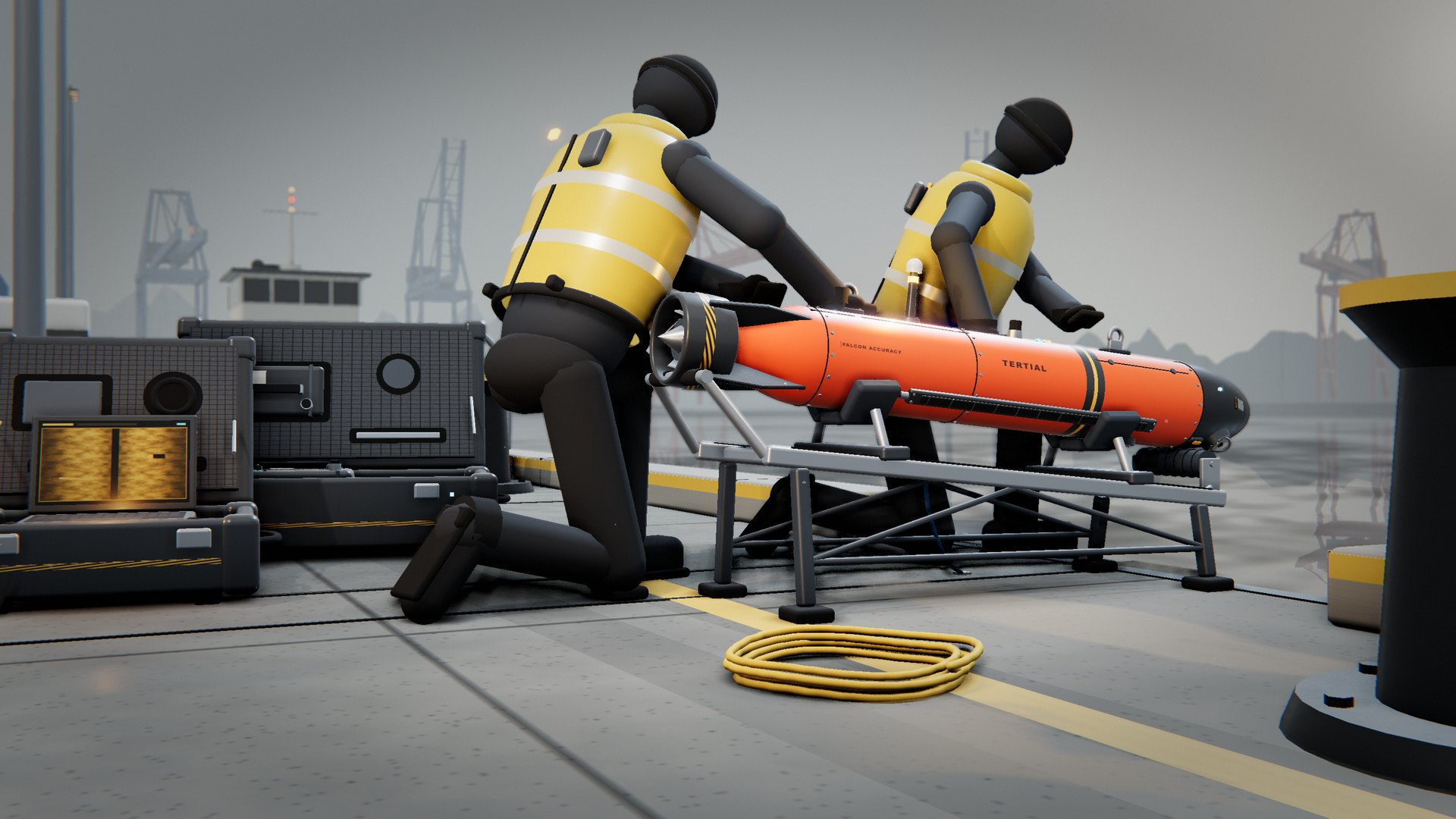
TERTIAL

TERTIAL Harbor Survey AUV

The tertials are the innermost flight feathers, the short ones closest to the falcon's body; TERTIAL works the water closest to home, the harbor basin.

Launched by two from the quay, a basin mapped in 7 hours.

TERTIAL is a 1.6 meter, 40 kilogram survey vehicle that two people launch by hand from a quay or a small boat. It maps a 2 square kilometer harbor basin with side-scan sonar in about 7 hours, photographs what it finds and ranks every object on the floor, so divers and BOWSE inspect only what matters.

hardwareConcept design8 links
Open dossier
36Undersea Systems

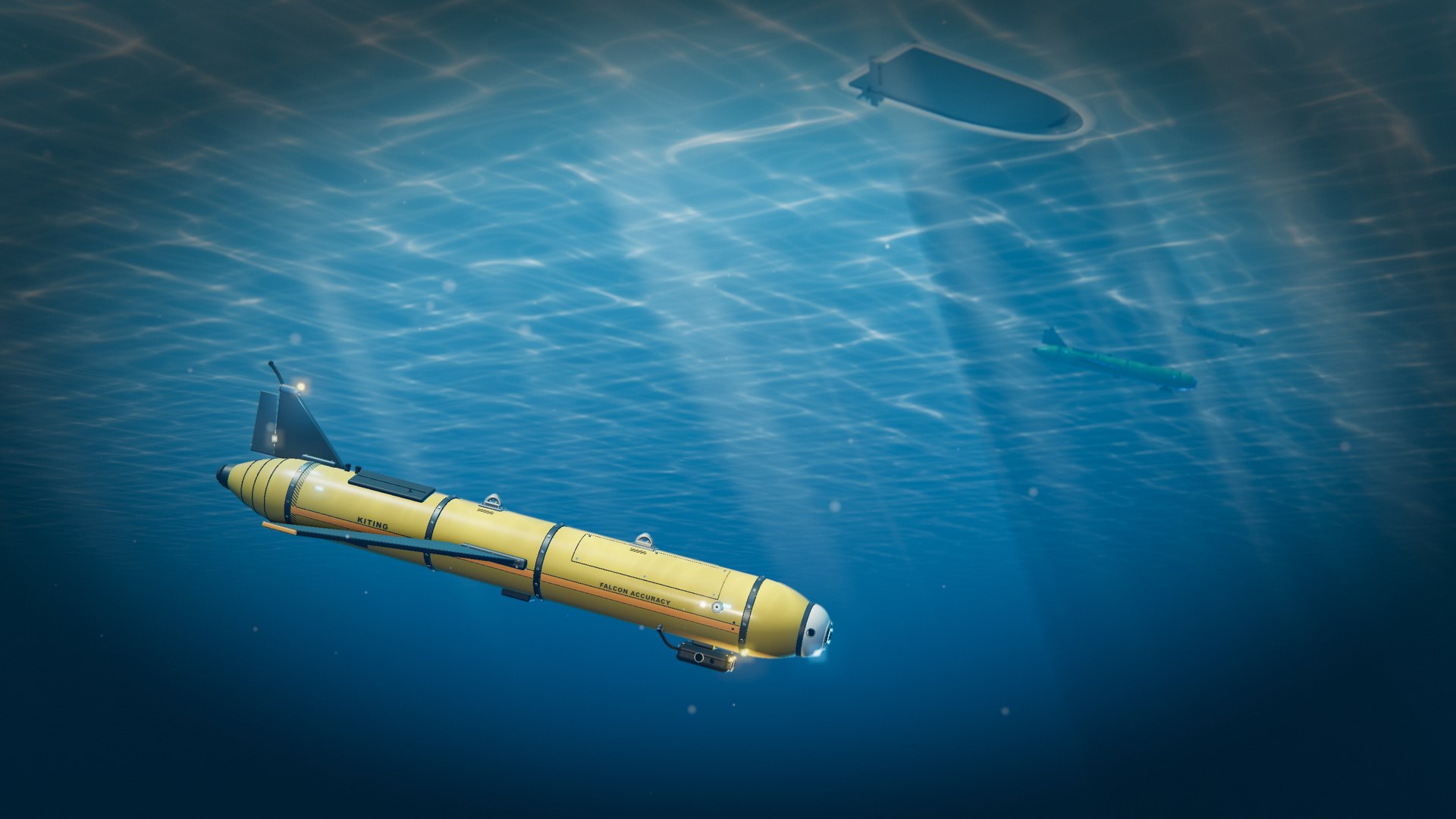
KITING

KITING Ocean Glider Fleet

Kiting is the way a falcon hangs on the wind with barely a wingbeat, holding its place for long minutes on almost no effort; KITING gliders ride their own buoyancy for months on almost no power.

Months at sea, measuring the water every sonar and diver works in.

KITING is a fleet of winged, buoyancy-driven underwater gliders that stay at sea for 3 to 6 months, diving to 1,000 meters and back about four times a day. They measure temperature, salinity, currents and ambient sound, surface to send each profile by satellite, and give the force's sonar crews, divers and planners an ocean model built on real data.

hardwareConcept design8 links
Open dossier
37Undersea Systems

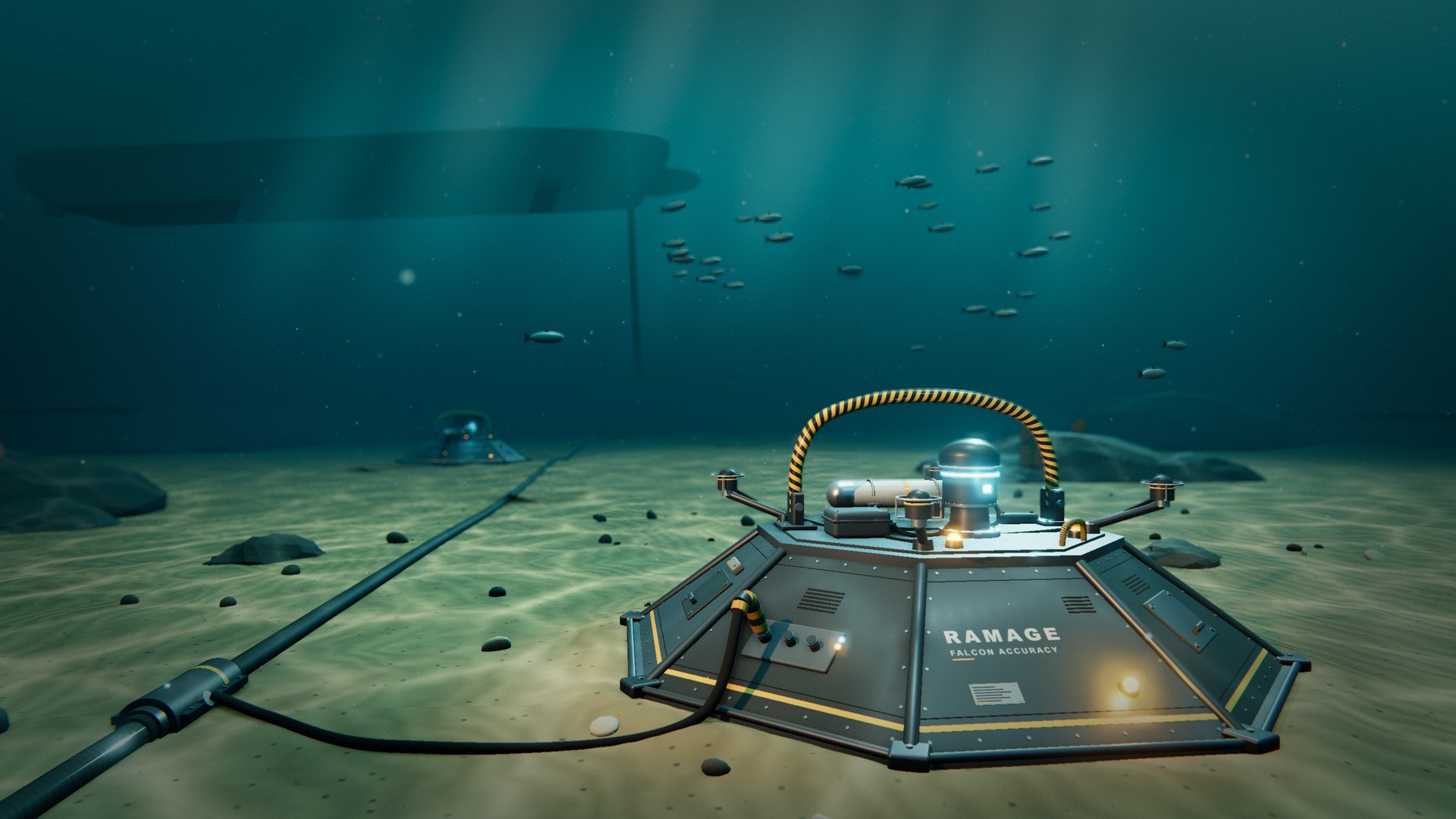
RAMAGE

RAMAGE Seabed Infrastructure Array

Ramage is the old falconer's word for a young hawk that has left the nest and moves from branch to branch, and for birdsong among the branches; RAMAGE listens along every branch of a seabed network.

Hears an anchor drop near the cable, reported within 60 seconds.

RAMAGE watches undersea cables and pipelines from the landing station to the deep sea. It listens on a fiber inside the cable itself and through seabed sensor nodes beside it, and alerts the watch officer when a vessel anchors, drags or lingers near the line or when an underwater vehicle approaches it. Every alert carries the position, the evidence and the vessel's track, and a human decides what happens next.

hardwareConcept design10 links
Open dossier
38Undersea Systems

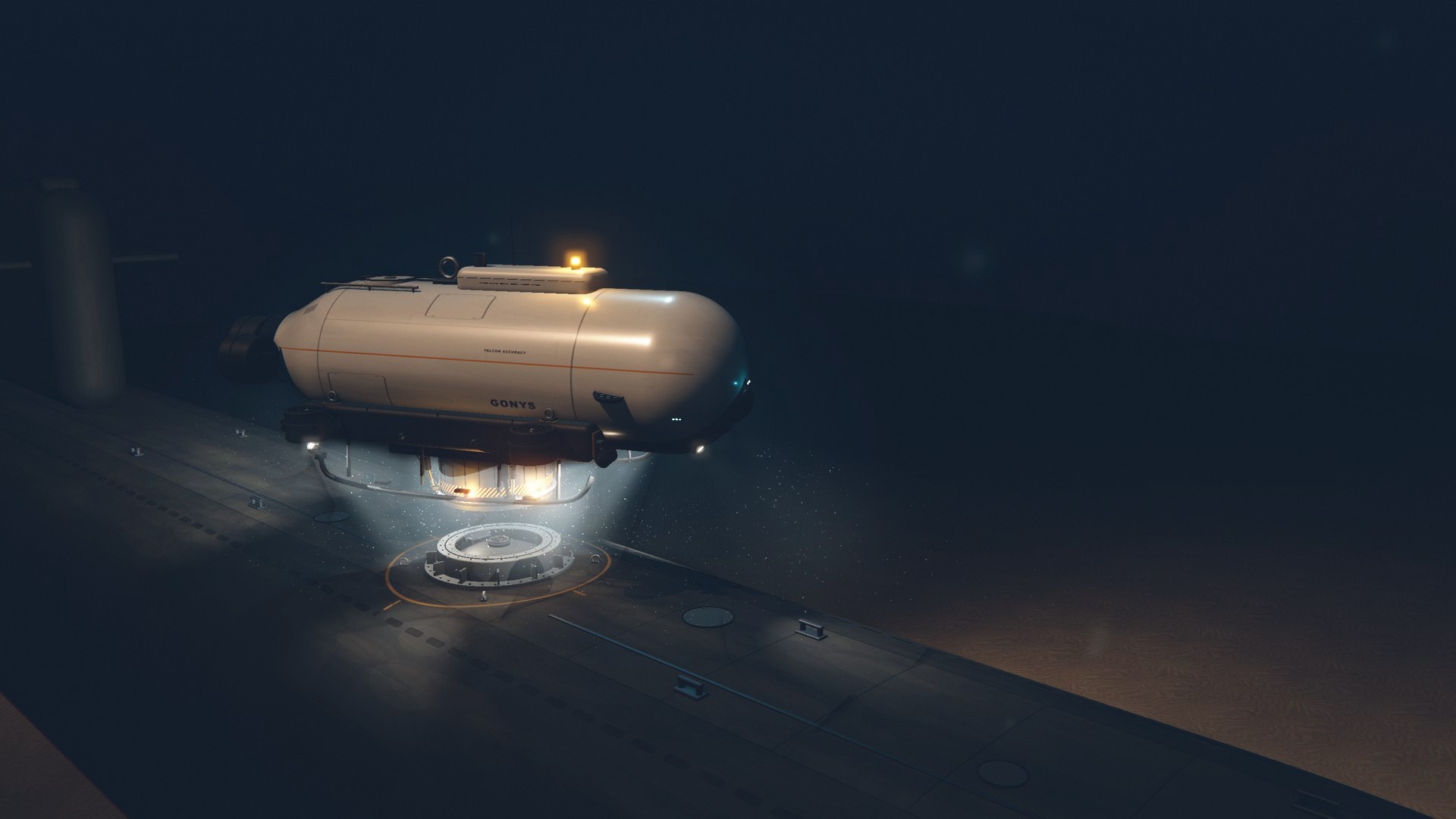
GONYS

GONYS Submarine Rescue Vehicle

The gonys is the ridge under a falcon's lower bill where its two halves join into one; GONYS joins a rescue vehicle to a submarine's hatch as one sealed passage.

Reaches a disabled submarine at 600 meters. Brings 12 home each trip.

GONYS is a crewed rescue submersible that mates with a distressed submarine's escape hatch down to 600 meters and brings its crew up in groups of 12. Flown in by cargo aircraft or carried on a ship of opportunity, it transfers survivors under pressure into a decompression chamber on deck. It is a rescue system and nothing else.

hardwareConcept design8 links
Open dossier
Sector 09 · 9 products

Space and Flight

From the pad to orbit and back, on the force's own range.

  1. 39RINGING
  2. 40CASTING
  3. 41MAKEHAWK
  4. 42TAITA
  5. 43LAGGAR
  6. 44TOWER
  7. 45NICTITANS
  8. 46BATE
  9. 47LURE

A force that depends on someone else's satellites waits for someone else's pass, and a force that depends on someone else's rockets waits in someone else's queue. The Space and Flight sector gives the force its own road to orbit, its own way to place, watch and bring home what it flies there, and its own range on which to test all of it first. Two launch vehicles cover the masses a force is likely to own, 300 kg for one plane of imaging cubesats and 8 t for larger satellites or several batches at once, and both land their first stages to fly again. Orbit is also crowded. A satellite the force paid for can be lost to a fragment nobody warned it about, and a sample or a sensor that flew in orbit is worth little until it is back on a laboratory bench.

The nine products work as one chain. RINGING and CASTING put the force's satellites in orbit, and MAKEHAWK carries up to 12 of them on to their own orbits. TAITA watches the theater, and LAGGAR brings each pass down beside the command post. TOWER warns up to 72 h before a close approach. NICTITANS brings 150 kg of samples home, BATE qualifies every payload before it flies, and LURE trains the crews who guard the range. Every machine is unarmed, a named human makes every launch, burn and deorbit decision, every command is logged, and all data stays inside the client's network.

39Space and Flight

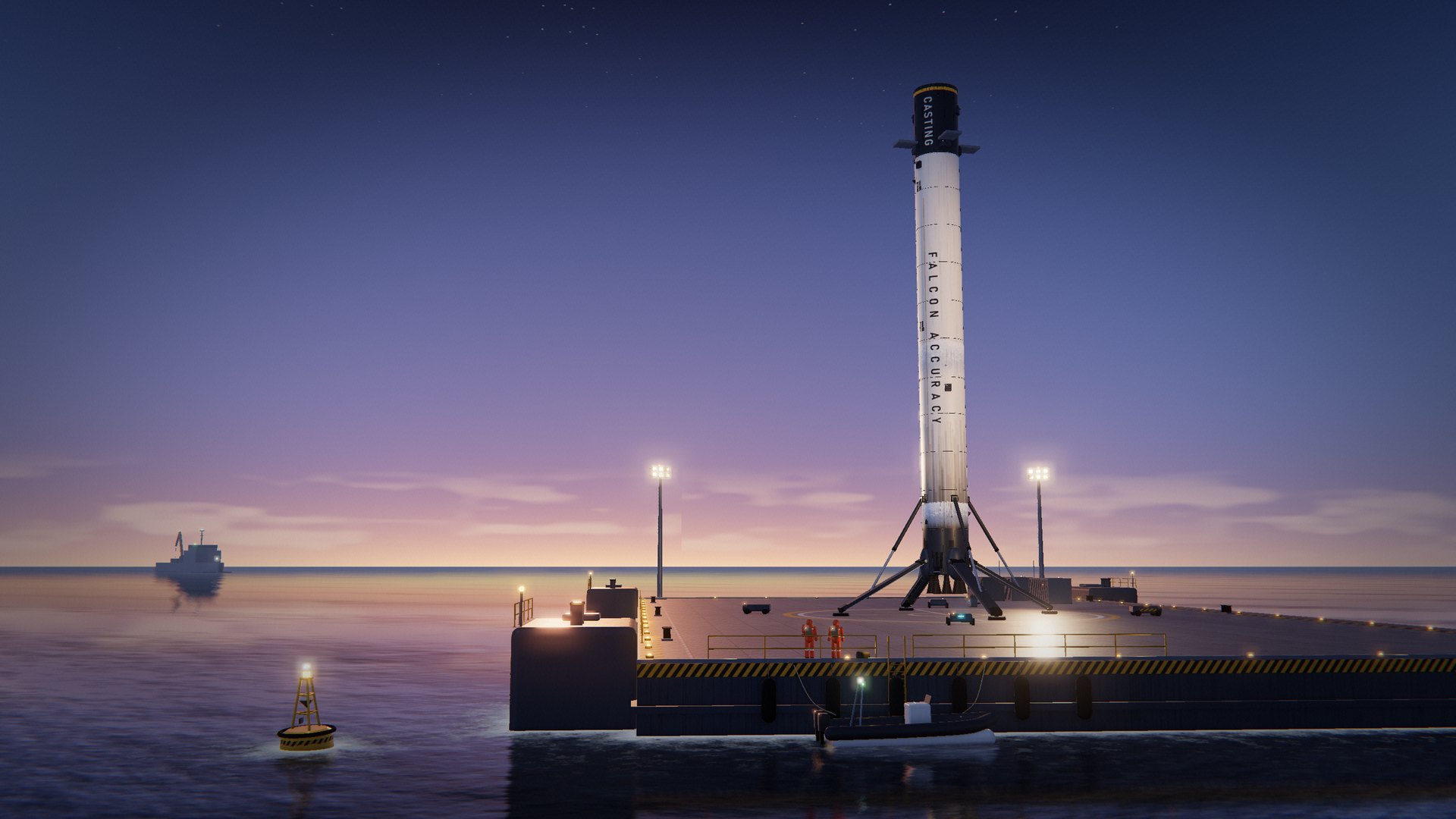
RINGING

RINGING Launch Vehicle

Ringing up is the falcon's spiral climb to the height from which it hunts; RINGING is the climb to orbit.

300 kg to orbit. The first stage comes home on four legs.

RINGING is a two-stage liquid-propellant launch vehicle that places 300 kg in a 500 km orbit from a 40 m by 40 m concrete pad. Its first stage flies back and lands on four legs within 10 m of a pad marker, ready to fly again within 14 days. The force launches its own satellites, on its own schedule, from its own ground.

hardwareConcept design8 links
Open dossier
40Space and Flight

CASTING

CASTING Reusable Medium-Lift Launch Vehicle

Casting off is the falconer's throw that sends the hawk from the fist into the air, and a well-made hawk comes back to fly again; CASTING throws the payload to orbit and brings its first stage home to fly again.

8 t to orbit. The first stage flies again within 30 days.

CASTING is a two-stage reusable launch vehicle that places 8 t in a 400 km low Earth orbit from a coastal pad. Its first stage lands on four deployable legs on an uncrewed sea platform 600 km downrange and flies again within 30 days, and both fairing halves come back under parafoils. One flight lifts the client's large satellites, a rideshare of smaller ones or up to three MAKEHAWK tugs carrying TAITA batches.

hardwareConcept design11 links
Open dossier
41Space and Flight

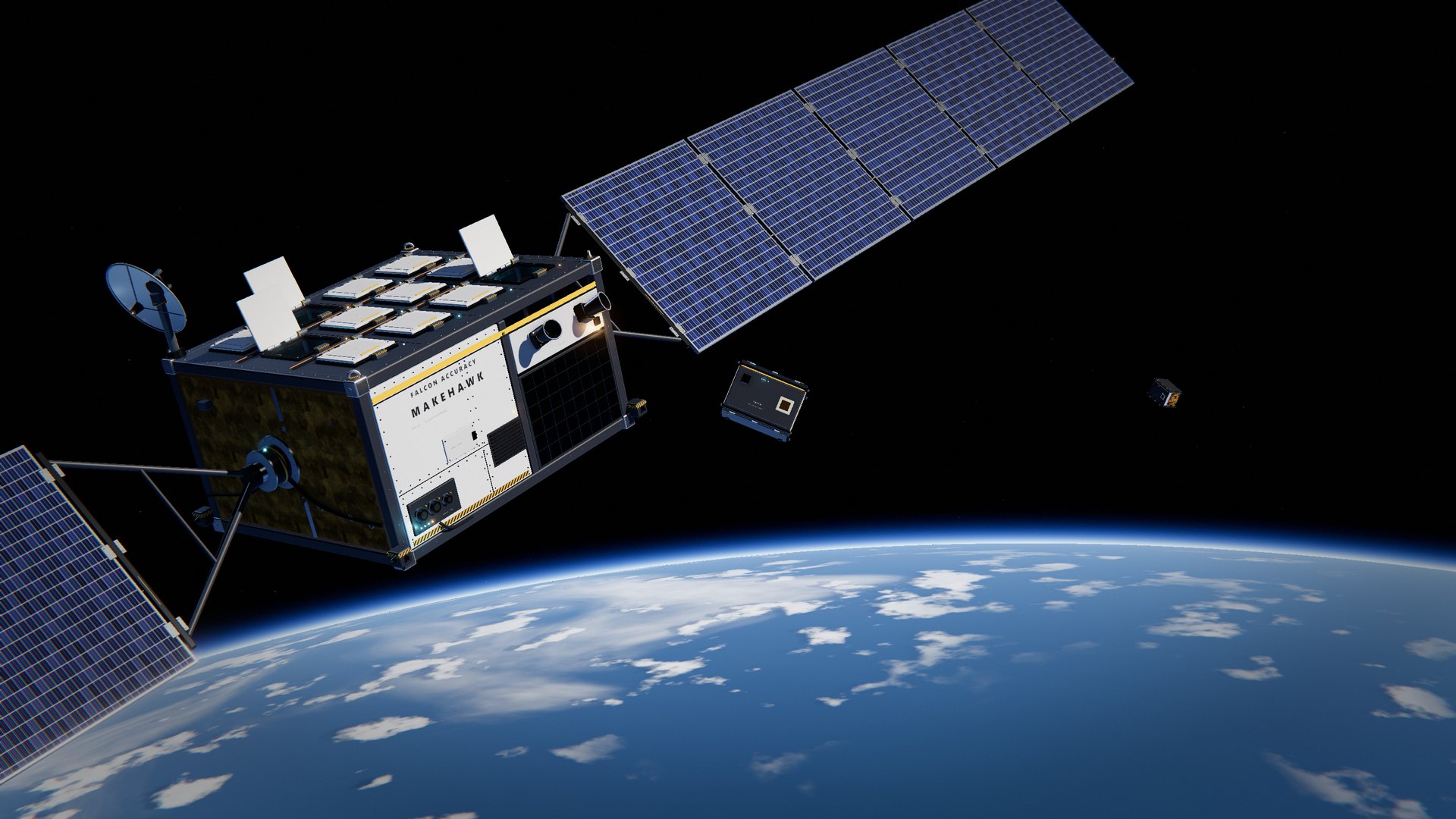
MAKEHAWK

MAKEHAWK Orbital Transfer Vehicle

A make-hawk is a steady, experienced hawk flown beside young ones to show them their work; MAKEHAWK flies new satellites to their own orbits and leaves each one at work.

Twelve satellites, twelve orbits, then it takes itself out of the sky.

MAKEHAWK is a space tug that rides a CASTING launch with up to 12 small satellites on board and carries each one from the drop-off orbit to its own altitude and slot. Chemical thrusters make the fast moves, electric thrusters make the slow ones, and a flight director approves every burn and every release. When the last satellite is free, MAKEHAWK spends the reserve it has carried since launch and takes itself out of orbit.

hardwareConcept design8 links
Open dossier
42Space and Flight

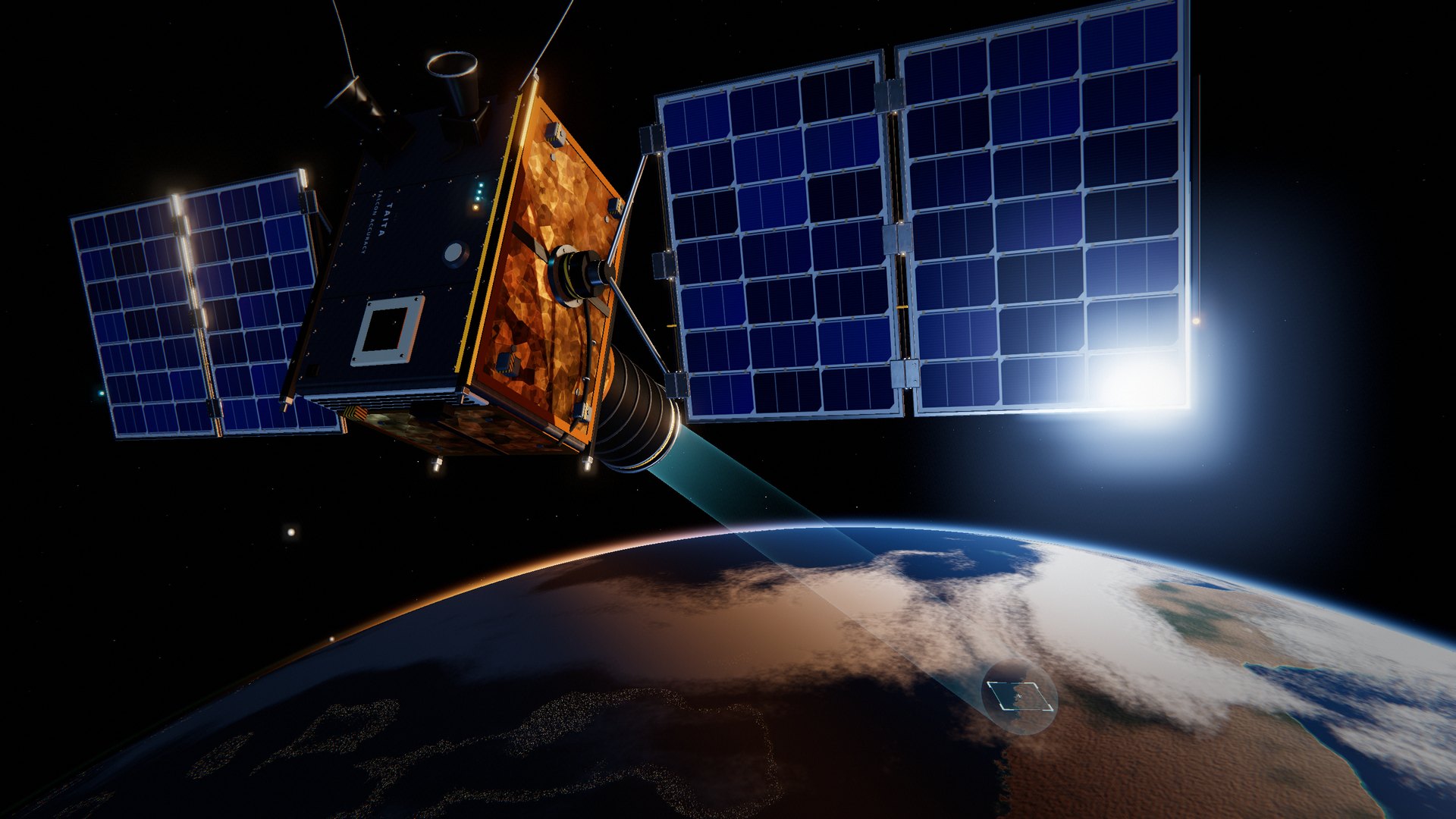
TAITA

TAITA ISR Cubesat Constellation

The Taita falcon is a small, fast falcon that lives on high cliffs and watches the ground far below; TAITA is the small, fast constellation that watches from orbit.

36 satellites overhead, tasked from the PITCH display in one tap.

TAITA is a constellation of 36 imaging cubesats in three planes with a median revisit of 30 min at 35 degrees latitude. The watch officer tasks a point or area from the PITCH display, and the tasked image and its detections return to that display within a median of 70 min. Detection runs on the satellite, so the first thing to land is the answer rather than the file.

hardwareConcept design10 links
Open dossier
43Space and Flight

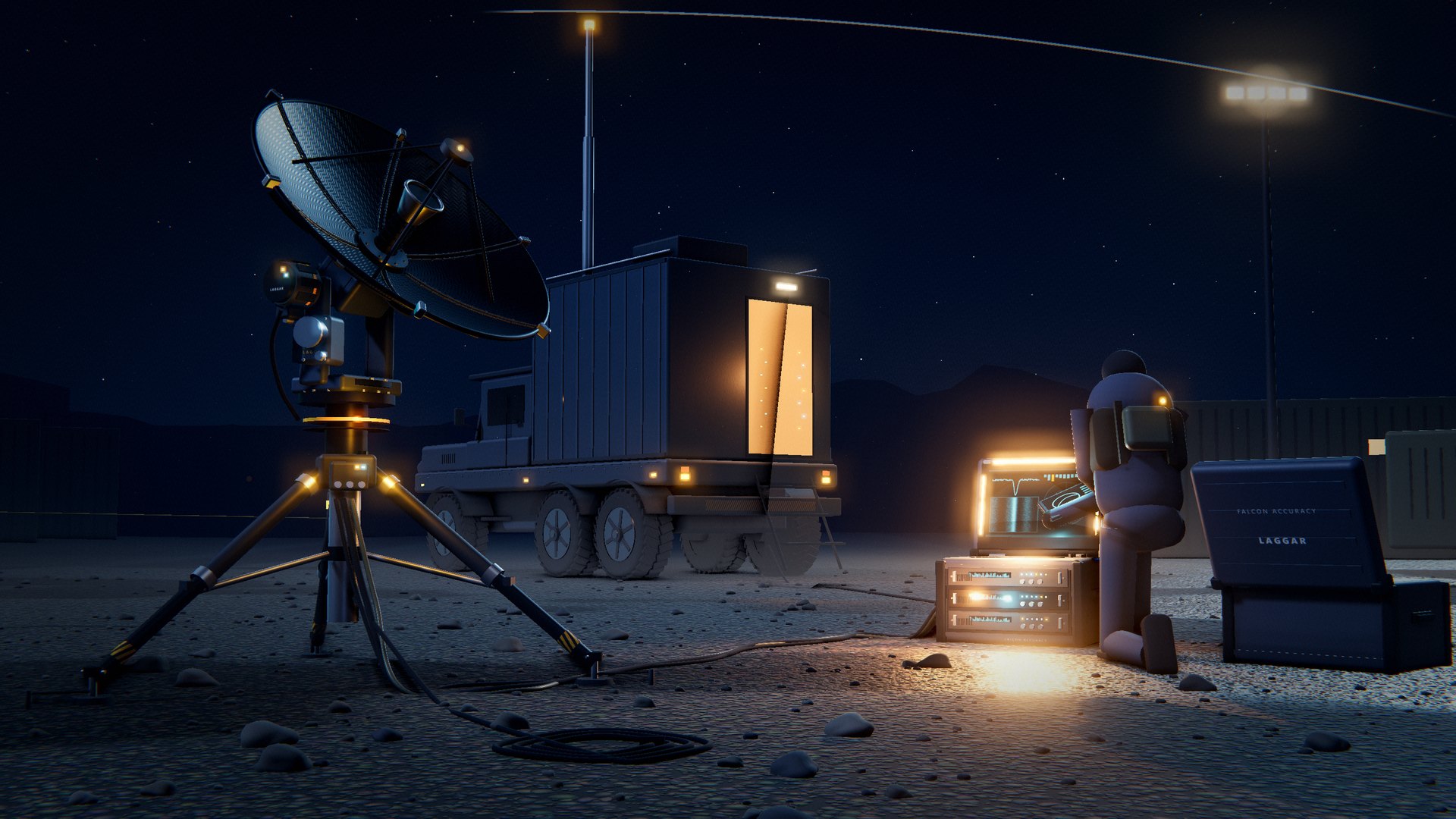
LAGGAR

LAGGAR Transportable Ground Station

The laggar falcon of open dry country waits on a high post for the quarry to show and moves the moment it does; LAGGAR waits under an open sky for the satellite pass and takes the downlink the moment it starts.

Two cases, 20 minutes, and the downlink belongs to the force.

LAGGAR is a satellite ground station that two operators carry in two cases and have tracking a TAITA pass within 20 min of opening them. Its 1.2 m reflector receives 150 Mbps in X band and sends tasking in S band, and the same antenna receives telemetry from BATE and LURE on the range. Imagery passes from the antenna to PITCH without leaving the client's network.

hardwareConcept design9 links
Open dossier
44Space and Flight

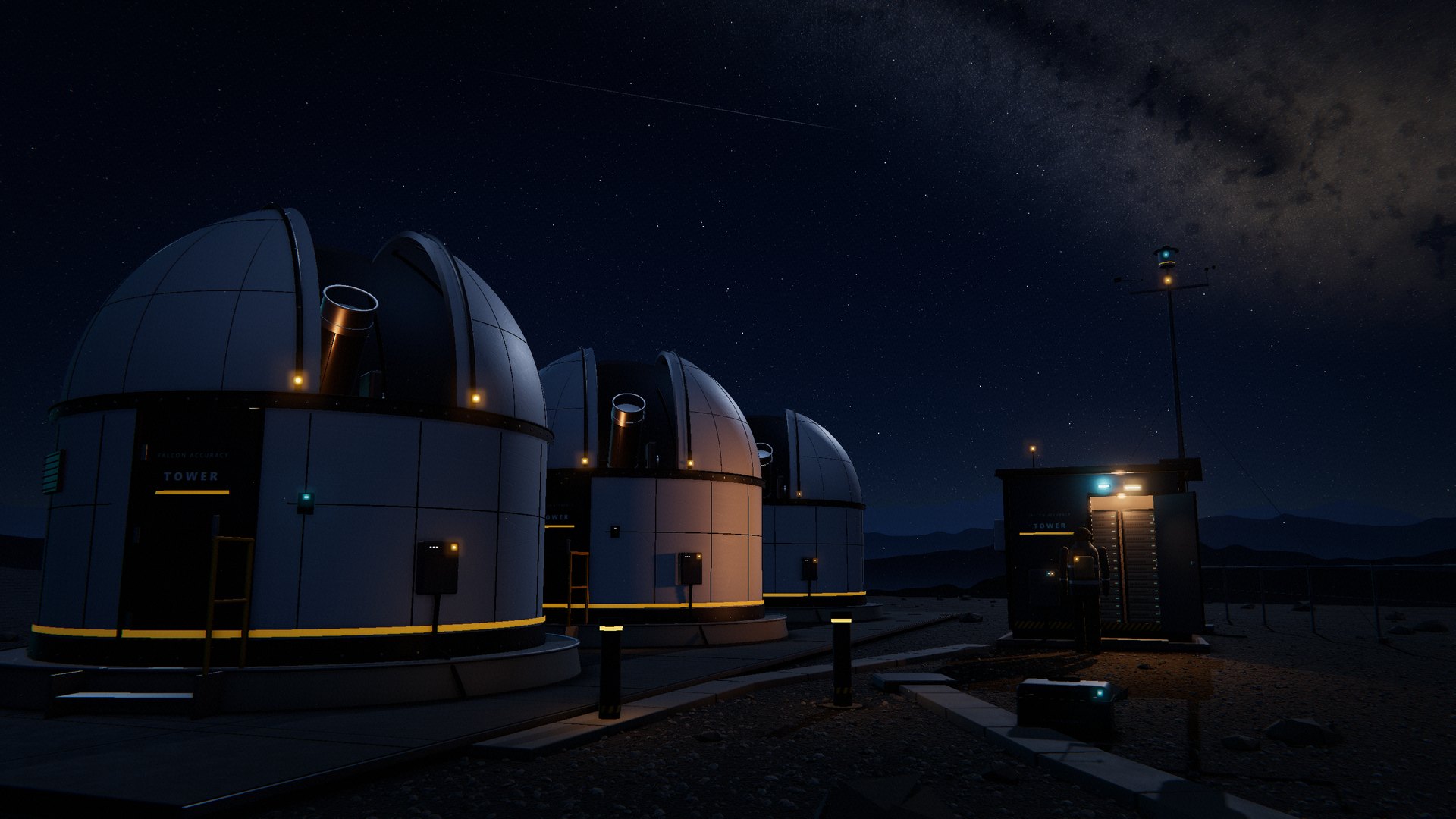
TOWER

TOWER Space Domain Awareness Network

To tower is the falcon's steep climb to a great height, where it holds and watches the whole sky around it; TOWER watches the sky around the client's satellites from domes on high ground.

Watches the orbits your satellites fly and warns before a close approach.

TOWER is a network of optical telescopes in automatic domes at remote sites that tracks satellites and debris in the orbits the client's satellites fly. It screens every client satellite against what it tracks four times a day and sends a collision warning up to 72 h before a close approach. An analyst confirms every warning before it leaves the operations center, and all data stays inside the client's network.

hardwareConcept design10 links
Open dossier
45Space and Flight

NICTITANS

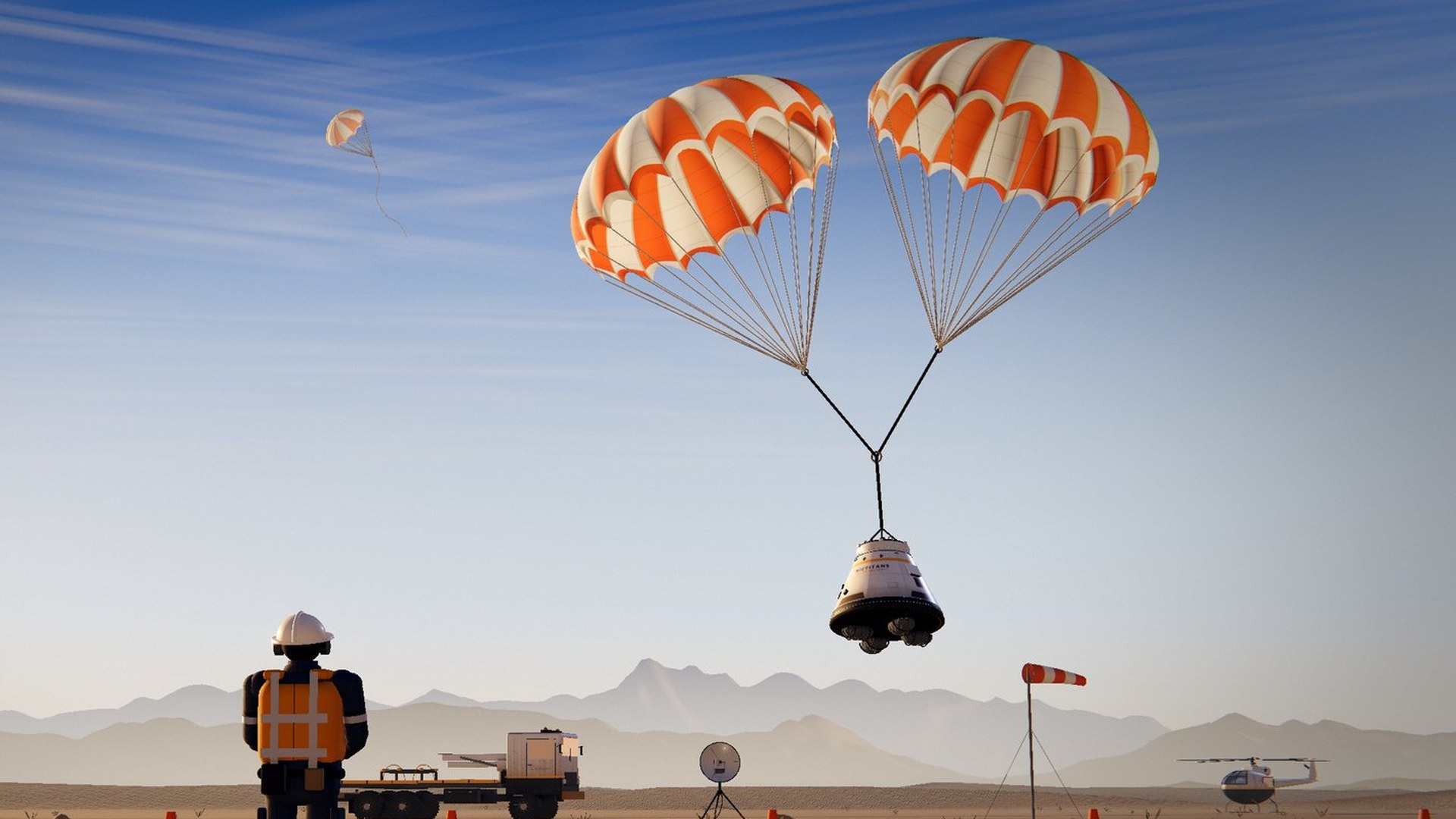
NICTITANS Reentry Capsule

The nictitans is the falcon's third eyelid, a clear membrane that sweeps across the eye to shield it in the fastest stoop; NICTITANS shields its cargo through the fastest descent there is, the return from orbit.

150 kg home from orbit, in your hands within 2 hours.

NICTITANS is a reentry capsule that flies up to 150 kg of experiments, sensor samples or cargo in orbit for up to 60 days and brings it back. It reenters behind a heat shield, and a drogue, two main parachutes and four airbags set it down on a desert range or the sea, where a recovery team reaches it within 2 h. Samples come back at the temperature the client set, inside the client's own chain of custody.

hardwareConcept design8 links
Open dossier
46Space and Flight

BATE

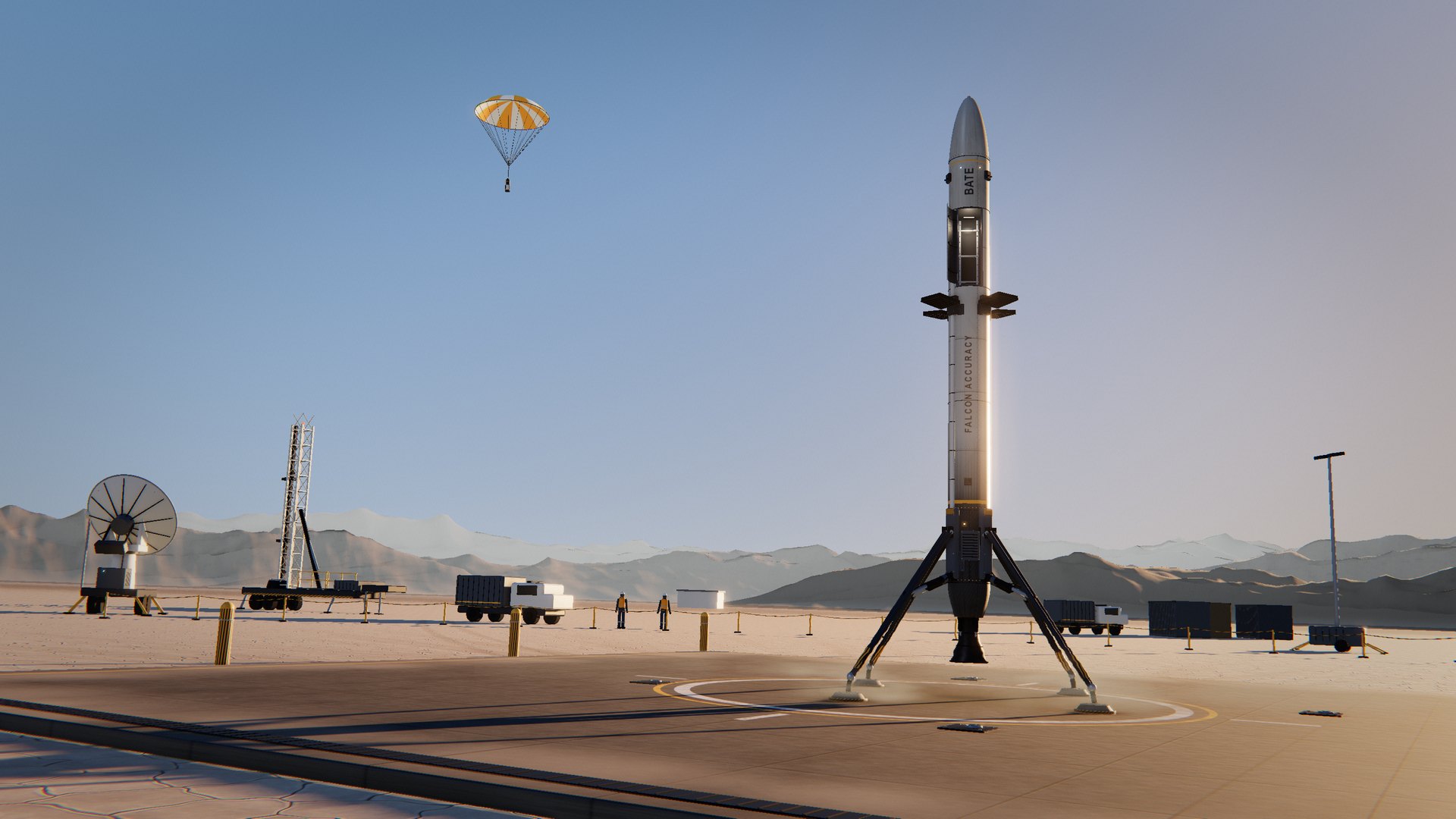
BATE Suborbital Test Rocket

To bate is the hawk's sudden leap from the fist, wings beating, a short flight that ends back where it began; BATE is the rocket that leaps to 120 kilometers and lands back on its legs.

60 kg to 120 km, back on its legs in 10 minutes.

BATE is a single-stage reusable rocket that lifts a 60 kg payload to 120 km, gives it 3 min above 80 km, and lands back on four legs within 10 min of liftoff. The payload module separates at apogee and returns under the parachute being qualified, or stays attached and lands with the vehicle. Sensors, radios and parachutes earn a flight record here before they fly on RINGING or TAITA.

hardwareConcept design7 links
Open dossier
47Space and Flight

LURE

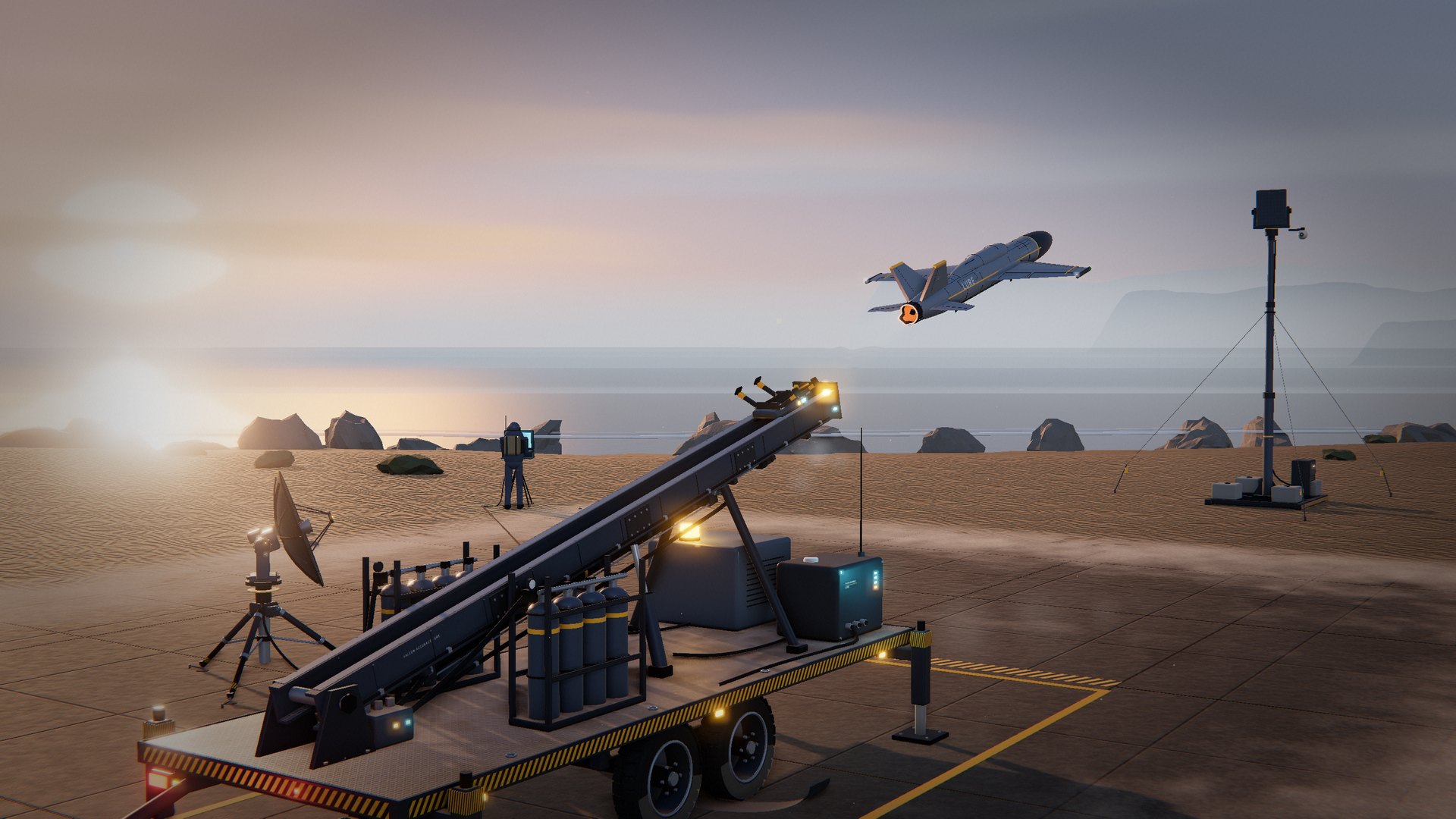
LURE High-Speed Target Drone

The lure is the padded target a falconer swings for the falcon to chase in training; LURE is the aircraft air-defense crews train against.

The aircraft you train against, 800 km/h at 20 m, back tomorrow.

LURE is an unarmed jet-powered target drone, 110 kg at launch, that flies the profiles air-defense crews need to see, from 800 km/h at 20 m above the sea to a 150 km/h loiter with a small radar return. It launches from a pneumatic rail, flies for 60 min, and comes down under a parachute and airbags for 30 flights. A scoring receiver logs every detection and track the crews make and the time each one took.

hardwareConcept design6 links
Open dossier
Sector 10 · 10 products

Rocket Systems

Launchers, engines and ranges the force owns, from the pad to orbit.

  1. 48CORACOID
  2. 49MOUNTEE
  3. 50PATAGIUM
  4. 51ENEW
  5. 52RACHIS
  6. 53NANKEEN
  7. 54CRINES
  8. 55BARBULE
  9. 56TERRET
  10. 57PUTOVER
  11. 39RINGING
  12. 40CASTING

A force that owns satellites still depends on whoever owns the launch, the engines, the range and the upper-air data. A satellite lost on a Monday is replaced when a foreign manifest has room, from a foreign range, under a foreign range safety officer. Heavy satellites and station modules need more lift than RINGING and CASTING give, a single small satellite needs a launcher that needs no pad at all, and a force that loses its range needs another one within days. Every vehicle in the Rocket Systems sector is unarmed civil space hardware that carries satellites, experiments, instruments or relief cargo, built in white composite and launched from pads, balloons and ships.

The ten products work as one chain. CORACOID lifts 38 t to low Earth orbit, and MOUNTEE puts 50 kg in orbit from under a stratospheric balloon. PATAGIUM stands up a complete launch site from 20 containers in 10 days, and ENEW takes RINGING and CASTING to the equator. RACHIS engines power the family. NANKEEN gives 200 kg of experiments 6 min of microgravity, and CRINES measures the upper air every day. BARBULE tracks every flight against its safety corridor, TERRET releases up to 24 satellites in a programmed order, and PUTOVER lands 10 t of relief supplies on a prepared pad within 90 min. A named human makes every launch, release and landing decision, every command is logged, and all data stays inside the client's network.

48Rocket Systems

CORACOID

CORACOID Heavy-Lift Reusable Launch Vehicle

The coracoid is the stout bone that braces each wing against the breastbone and carries the full load of every downstroke; CORACOID braces two side boosters against one core and carries the heaviest loads the force sends to orbit.

38 t to orbit. All three cores come home.

CORACOID is a three-core heavy launch vehicle that places 38 t in a 400 km low Earth orbit. Its two side boosters fly back and land at the launch site, and its center core lands on an uncrewed sea platform. One flight lifts a large satellite, a station module or a whole constellation batch.

hardwareConcept design10 links
Open dossier
49Rocket Systems

MOUNTEE

MOUNTEE Balloon-Launched Micro-Launcher

The mountee is a hawk's steady rise to height before it makes its flight; MOUNTEE rises under a balloon to 20 km before its rocket lights.

No pad, no tower. 50 kg to orbit from 20 km.

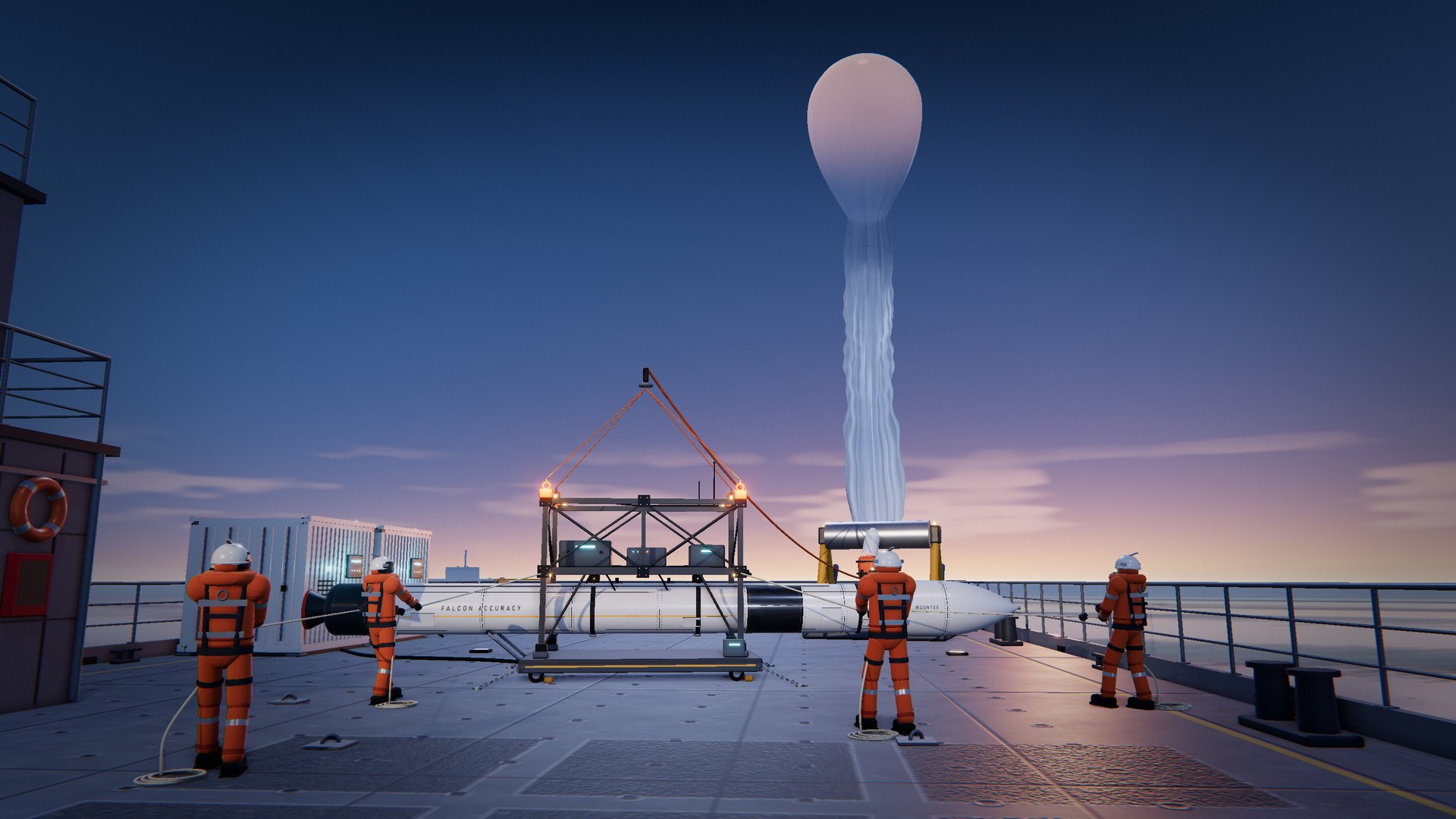
MOUNTEE is a two-stage micro-launcher that rides a stratospheric balloon to 20 km, separates and puts up to 50 kg in a 500 km orbit. It launches from a ship deck or a cleared field with no pad, no tower and no fixed range. A crew of 12 can put a single replacement satellite in orbit within 72 h of arriving at the site.

hardwareConcept design8 links
Open dossier
50Rocket Systems

PATAGIUM

PATAGIUM Expeditionary Launch Site

The patagium is the fold of skin that lies packed against a bird's body and spreads into the leading edge of the wing when it opens; PATAGIUM lies packed in 20 containers and opens into a full launch site.

Twenty containers, ten days, a launch site on your own ground.

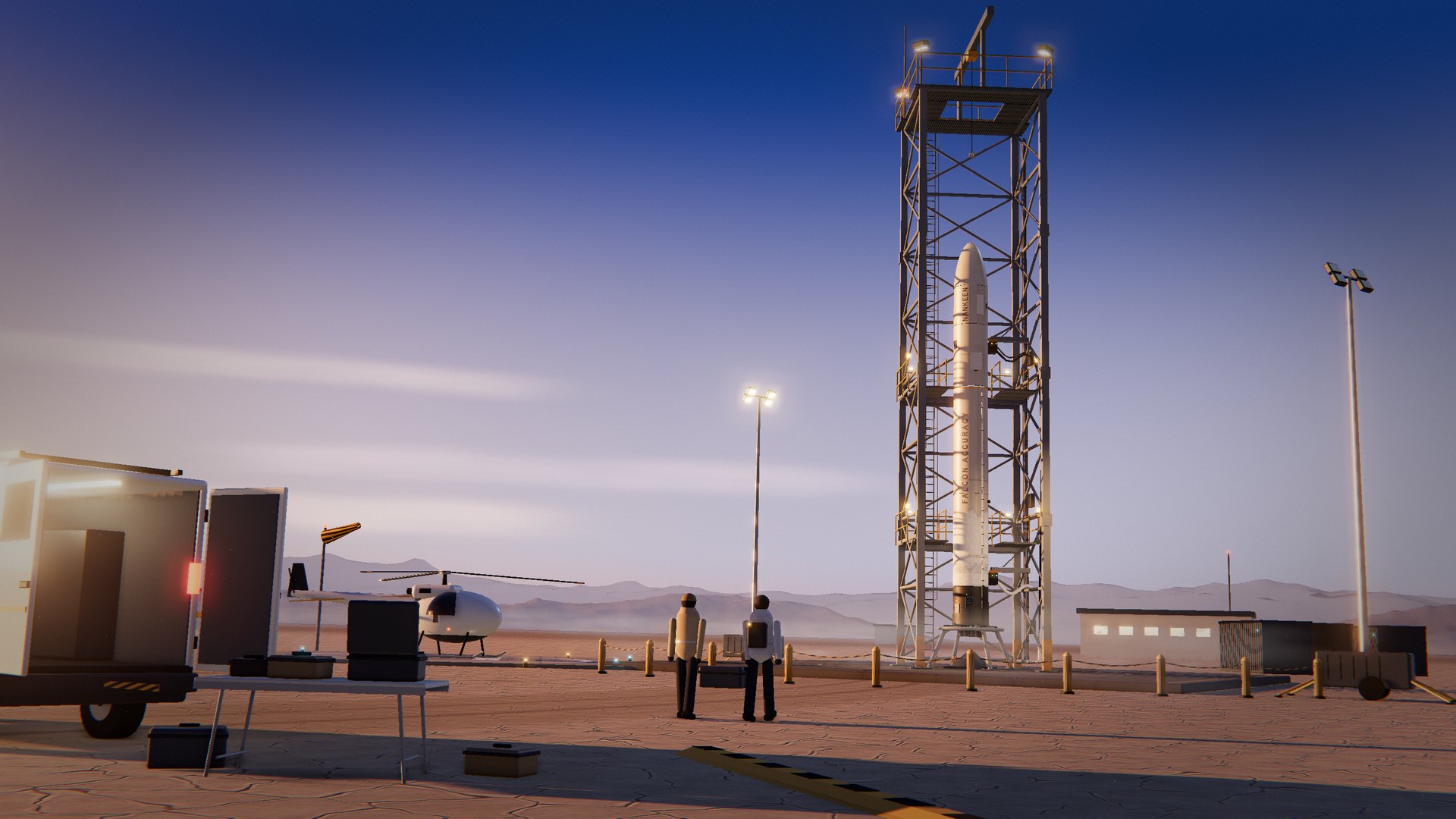
PATAGIUM is a complete launch site for RINGING that ships in 20 standard containers and stands up on a prepared concrete slab in 10 days. It brings its own launch mount, mobile gantry, propellant farm, power and mission control. A force that loses a satellite, or the use of its fixed range, launches a replacement from its own territory.

hardwareConcept design10 links
Open dossier
51Rocket Systems

ENEW

ENEW Equatorial Launch Platform

In old falconry, to enew is to drive a bird off the land and down onto the water; ENEW takes the force's launches off the land and out onto open water at the equator.

Launch from the equator, far from every coast.

ENEW is a self-propelled semi-submersible launch platform with a command ship that carries RINGING and CASTING class vehicles to the equator and launches them from open sea. Launching at the equator adds up to 15 percent payload to low-inclination and geostationary transfer orbits. The crew launches from the command ship 5 km away, and every drop zone lies over empty ocean.

hardwareConcept design10 links
Open dossier
52Rocket Systems

RACHIS

RACHIS Reusable Rocket Engine Family

The rachis is the stiff central shaft of a flight feather, the part that carries every load the vane puts on it; RACHIS engines carry every Falcon Accuracy launcher.

Two sizes, one design, about 50 flights between overhauls.

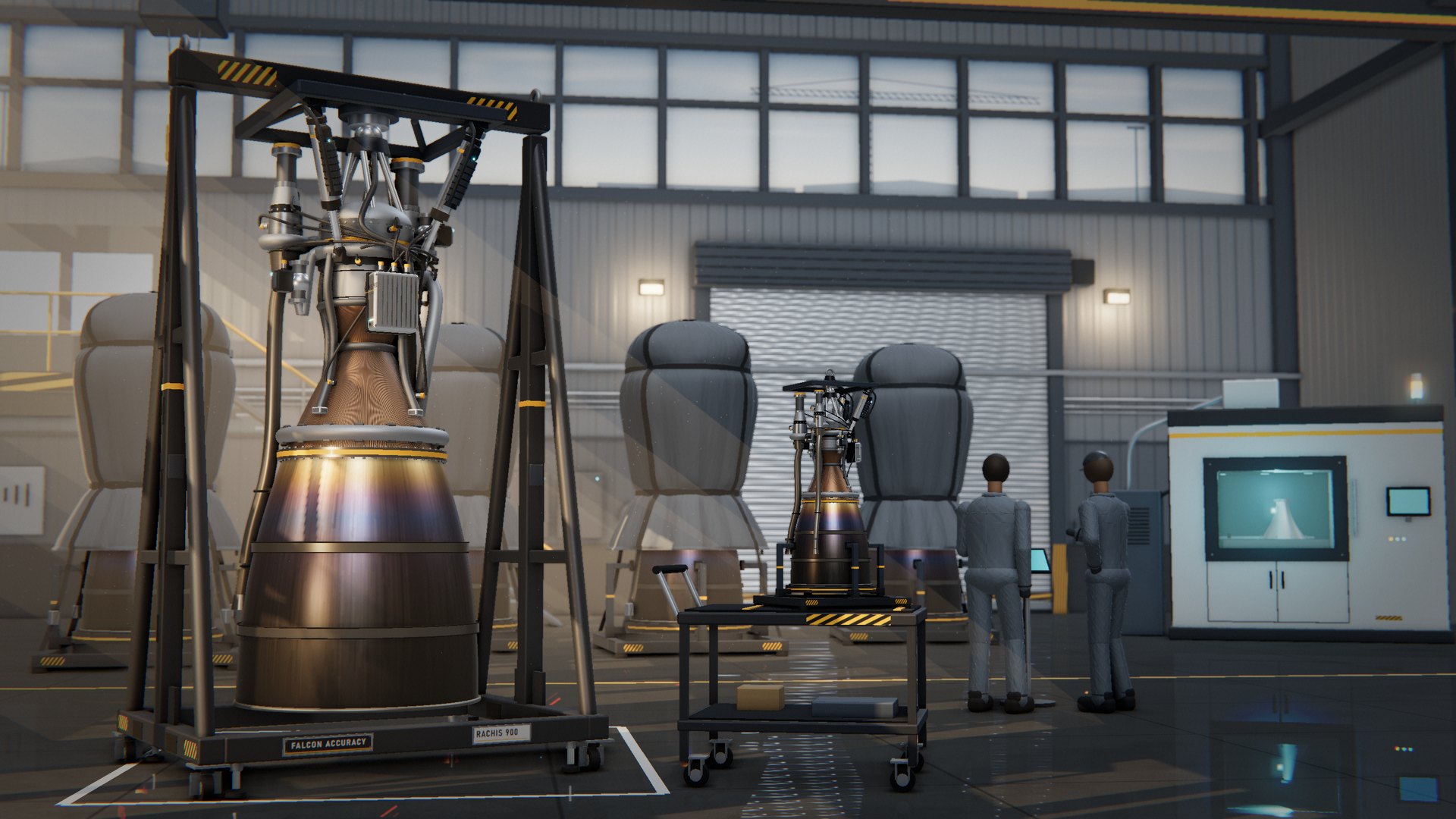
RACHIS is a family of 3D-printed, throttling, restartable rocket engines in two sizes, RACHIS 30 for small launch vehicles and upper stages and RACHIS 900 for large boosters. Both fly about 50 times between overhauls and restart in flight for landings and orbit changes. The force builds and services its own engines and can supply third-party satellite launch vehicles, only for unarmed launch vehicles and under the export rules that apply.

hardwareConcept design8 links
Open dossier
53Rocket Systems

NANKEEN

NANKEEN Microgravity Research Rocket

The nankeen, a small falcon of open country, hangs almost motionless over one patch of ground, wings working against the wind; NANKEEN holds 200 kg of experiments almost motionless in free fall for 6 minutes.

200 kg of experiments, 6 minutes of microgravity, home by parachute.

NANKEEN is a suborbital research rocket that lifts 200 kg of experiments to 260 km and gives them about 6 min of microgravity. The experiment module returns under a parachute to the range, where the research team has it back within 90 min. Materials, biology and sensor laboratories get a flight in weeks rather than years.

hardwareConcept design8 links
Open dossier
54Rocket Systems

CRINES

CRINES Meteorological Rocketsonde

The crines are the fine hair-like feathers around a falcon's cere, the first part of the bird to feel the air it flies into; CRINES feels the upper air every day before the force flies into it.

Winds, temperature and density from 20 to 90 km, every day.

CRINES is a 2.5 m research rocket launched from a vertical tower that measures winds, temperature and density from 20 to 90 km. Near the top of its climb it releases a sensor that descends under a parachute and reports every second. Daily launches feed weather and space-weather forecasts for launches, aviation and operations.

hardwareConcept design9 links
Open dossier
55Rocket Systems

BARBULE

BARBULE Launch Range Tracking Network

Barbules are the tiny hooks that lock every barb of a feather into one unbroken vane; BARBULE locks radars, optical trackers and telemetry antennas into one unbroken track of every launch.

Every launch tracked, every corridor checked, every flight recorded.

BARBULE is the tracking network of the force's launch range, with radars, optical trackers and telemetry antennas that follow every launch from liftoff to orbit or landing. It shows the range safety officer where the vehicle is, where it would come down at that moment and whether it is inside its corridor. The officers decide, and every second of the flight is recorded.

hardwareConcept design14 links
Open dossier
56Rocket Systems

TERRET

TERRET Rideshare Satellite Dispenser

Terrets are the small rings that join a falcon's jesses to the leash and let it go free the moment the falconer slips them; TERRET is the ring that holds 24 satellites and lets each one go in turn.

Twenty-four satellites on one ring, each release confirmed.

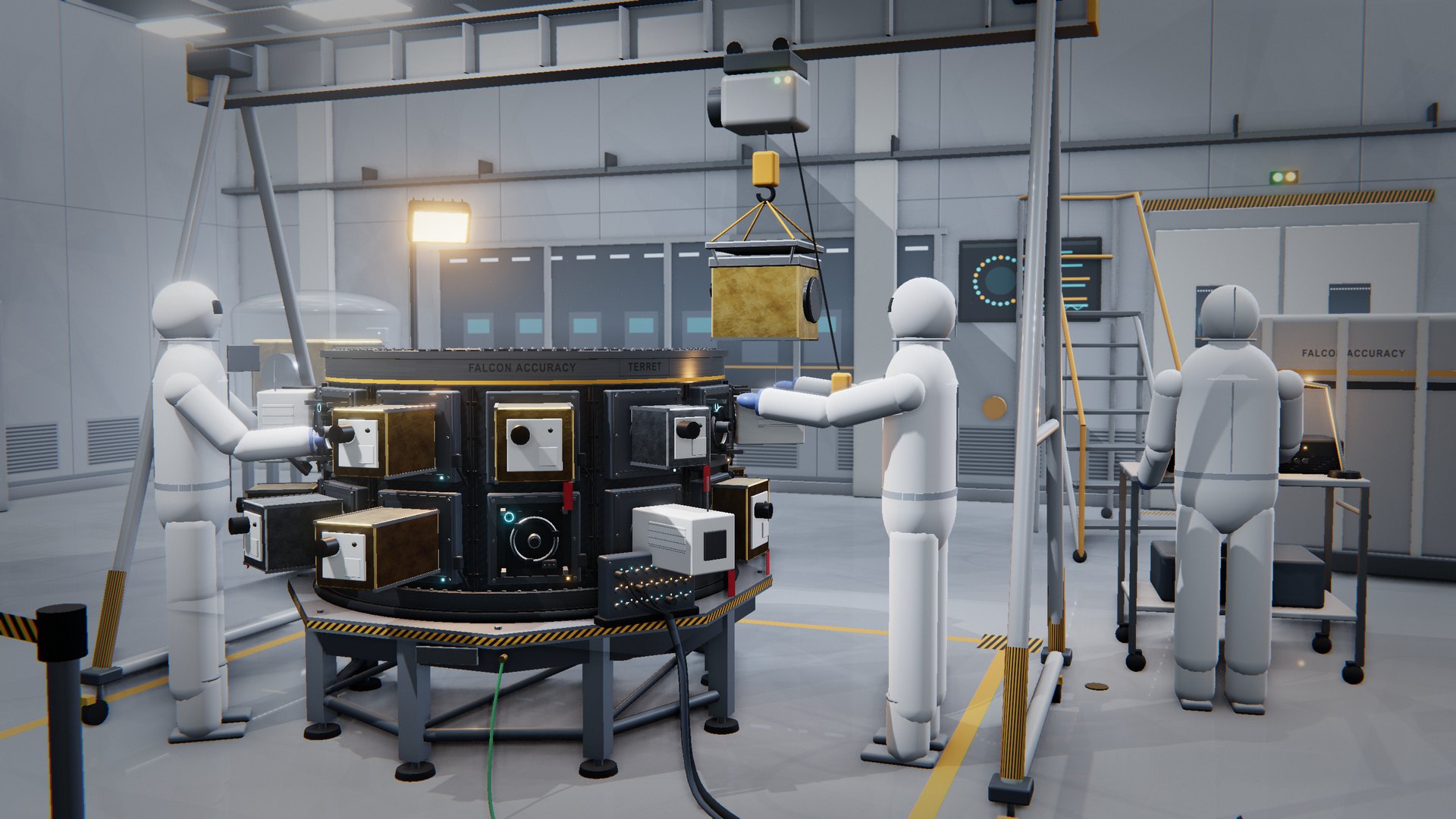
TERRET is a rideshare ring that carries up to 24 small satellites on any of the force's larger launchers and releases them in a programmed sequence. Each separation is confirmed by switch, accelerometer and camera, and reported to the flight director within 2 s. The ring then stays on the upper stage and reenters with it.

hardwareConcept design9 links
Open dossier
57Rocket Systems

PUTOVER

PUTOVER Point-to-Point Cargo Rocket

A hawk puts over when it passes a full crop on so the meal can feed the whole bird; PUTOVER passes a full load of relief supplies on to the people who need it.

10 t of relief supplies on a prepared pad within 90 minutes.

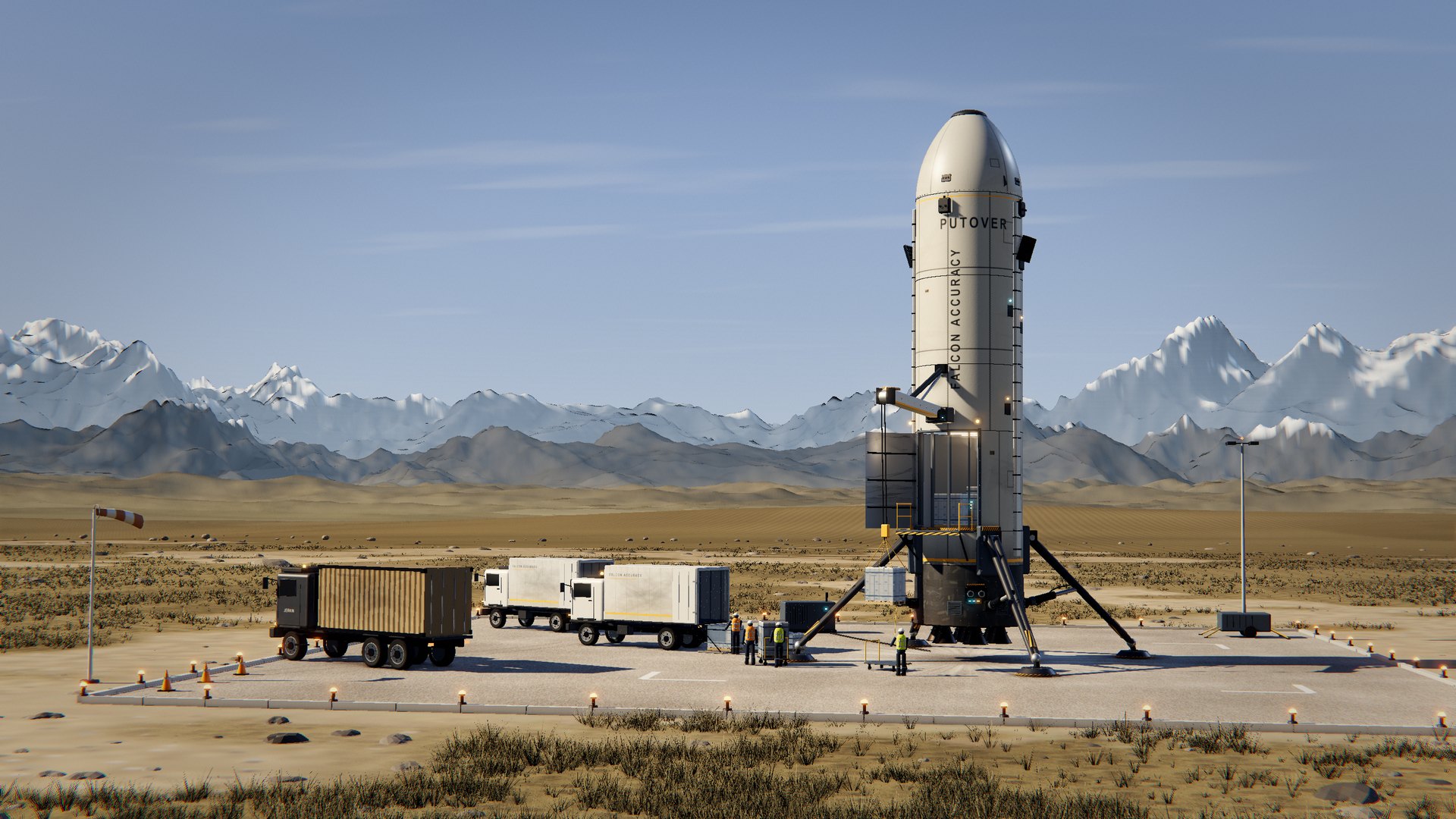
PUTOVER is a reusable two-stage cargo rocket that delivers up to 10 t of relief supplies to a prepared pad up to 12,000 km away within 90 min of liftoff. Its booster lands back at the launch site, and its cargo stage lands on its own legs at the destination. It is built for disaster response and remote logistics where roads, ports and runways are cut.

hardwareConcept design9 links
Open dossier
Sector 11 · 5 products

Electronic Warfare and Spectrum

Hear everything. Show little. Hold your fix.

  1. 58HOOD
  2. 59BRANCHER
  3. 60SYRINX
  4. 61JINK
  5. 62NARES

A force is usually found by its emissions before it is seen. Every radio, radar and drone link is a point that an adversary's direction finders can place within a few hundred meters, and the same adversary attacks the spectrum the force depends on, starting with satellite navigation and timing. This sector answers both problems without transmitting into them. Its receivers listen from packs, vehicles, aircraft and surveyed masts, place each emitter with an error a range can measure, and show the commander how far his own transmissions carry. Its one transmitting product, a decoy set, reproduces the force's own signature under a script that a human approves and a log records. Nothing here jams, and nothing here reads message content.

The five products work as one chain. HOOD rides with the force and listens outward and inward. BRANCHER holds the same watch from masts that never move and learns the normal spectrum of a site in 14 days. SYRINX is the analyst's workstation where an unknown emitter becomes a confirmed library entry that reaches every receiver within 60 seconds, with the model retrained inside the client's network. JINK reproduces the measured signature of a real unit from a position the commander chooses, so the real unit can go quiet. NARES keeps position and time trustworthy under jamming and spoofing, which every other product in the chain needs for its geolocation and its scripts. The sector holds HOOD Spectrum Sensing System, BRANCHER Direction-Finding Mast Network, SYRINX Signal Analysis Workstation, JINK Emission Decoy System and NARES Navigation Protection Kit.

58Electronic Warfare and Spectrum

HOOD

HOOD Spectrum Sensing System

The hood is the leather cover that keeps a falcon calm and unseen until the falconer lifts it, so HOOD is the system that hears the whole spectrum while keeping the force's own emissions small.

Hear the emitters. Show them as little as the mission allows.

HOOD turns the force's packs, vehicles and TIERCEL aircraft into passive listening posts that find radars, radios, jammers and drone pilots. At the same time it watches the force's own emissions, models how far each one carries and tells each JESS node when it is too loud. It transmits nothing.

hardwareConcept design11 links
Open dossier
59Electronic Warfare and Spectrum

BRANCHER

BRANCHER Direction-Finding Mast Network

A brancher is the young falcon that has left the nest and sits in the branches around it, watching everything that moves; BRANCHER is the ring of fixed masts around a site that watches everything on the spectrum.

A ring of listening masts. Every emitter placed, day and night.

BRANCHER is a network of surveyed direction-finding masts around a base, along a border sector or across a training area. Three or more masts place a radio, radar, jammer or drone controller within 1 percent of range, learn the site's normal spectrum in 14 days and flag a new emitter within 10 seconds. The masts transmit nothing and hold the watch through the night, after the mobile HOOD nodes have moved on.

hardwareConcept design7 links
Open dossier
60Electronic Warfare and Spectrum

SYRINX

SYRINX Signal Analysis Workstation

The syrinx is the organ that shapes every call a falcon makes, the source that gives each voice its signature; SYRINX takes a signal apart to name the emitter that made it.

Name every emitter. Teach every receiver by morning.

SYRINX is the analyst's workstation for the spectrum. It takes the unknown emitters that HOOD and BRANCHER cluster, shows their parameters and recordings, and lets two analysts turn a label into a library entry that every receiver holds within 60 seconds. The recognition model retrains inside the client's network overnight, and no recording leaves.

softwareConcept design6 links
Open dossier
61Electronic Warfare and Spectrum

JINK

JINK Emission Decoy System

A jink is the sharp sidestep a bird makes in flight to throw a pursuing falcon off its line; JINK throws a direction finder off the force by sounding like the unit from where the unit is not.

Sound like the unit. Stand where the unit is not.

JINK is a set of small transmitting decoys that reproduce a unit's own radio signature, as measured by HOOD and BRANCHER, from a position the commander chooses. Six nodes imitate a company headquarters net, and a node on a GYR imitates a unit on the march. The real unit goes quiet, the decoys carry its pattern, and a drone-link receiver in each node reports when the deception draws a look.

hardwareConcept design8 links
Open dossier
62Electronic Warfare and Spectrum

NARES

NARES Navigation Protection Kit

The nares are the falcon's nostrils, with the bony cones inside them that keep the air flowing true at 300 kilometers per hour; NARES keeps the force's position and time flowing true under jamming and spoofing.

A trusted fix under jamming. A spoof caught within two seconds.

NARES keeps the force's position and time trustworthy when satellite navigation is jammed or spoofed. A seven-element antenna array on the vehicle nulls up to 6 jammers, a 400 g puck protects the dismounted operator, and a rack unit holds time for BRANCHER masts and PITCH to within 1 microsecond over 24 hours. A spoofed signal is caught within 2 seconds, rejected and reported, and the jammer's bearing goes to HOOD.

hardwareConcept design9 links
Open dossier
Sector 12 · 5 products

Cyber Defense

See the network. Prove every device. Let the intruder trip the alarm.

  1. 63KEEN
  2. 64HALSBAND
  3. 65CERE
  4. 66QUARRY
  5. 67BEWIT

A tactical network is flat, moves every few days and is run by a cyber cell of three people who also carry radios. It links goggles, vests, radios, aircraft, vehicles, robots and the decision core, and every one of those devices arrived through a supply chain the force does not control. An intruder who captures one radio or one laptop today can reach most of that network, and the first sign is usually a system that stops working. Falcon Accuracy treats cyber defense as part of force protection and builds it under the same rules as the rest of the catalog. Every product is defensive. Every action waits for a human decision and is logged. Every byte of telemetry, every model and every recording stays on hardware inside the client's network.

The five products form one stack and are fitted, trained and set to the force like everything else Falcon Accuracy builds. KEEN Network Detection Platform watches traffic and endpoints and hands the watch officer one ranked queue of cases with the evidence attached. HALSBAND Zero-Trust Access Fabric grants each session on proof of operator, device and role, re-checks it every 5 minutes and keeps enforcing for 30 days with no link to headquarters. CERE Integrity Attestation System measures firmware and boards at receipt and every 24 hours in service, so a device that changes loses its access until a person clears it. QUARRY Deception Grid plants decoy hosts and credentials that only an intruder would touch. BEWIT Secure Smartphone puts the whole stack in the operator's hand.

63Cyber Defense

KEEN

KEEN Network Detection Platform

A keen hawk is sharp-set and in hunting condition, alert to every movement in its field; KEEN brings that attention to every packet and endpoint on the network.

Every packet, every endpoint, one ranked queue for the watch officer.

KEEN watches the network from the tactical edge to the headquarters rack and runs a lightweight agent on every endpoint. Models trained on the client's own traffic group related alerts into cases, rank them and write down the evidence. A watch officer decides what happens next, and every decision is logged.

softwareConcept design7 links
Open dossier
64Cyber Defense

HALSBAND

HALSBAND Zero-Trust Access Fabric

The halsband is the collar a trained hawk wears, the sign that it belongs to a falconer's hand and flies under rules; HALSBAND is the fabric that admits only operators and devices that carry proof.

No session without proof. Proof renewed every 5 minutes.

HALSBAND replaces the flat tactical network, where anyone on the net can reach anything, with sessions granted to a proven operator, a proven device and a mission role. Rugged gateway nodes on vehicles, in command posts and at the headquarters edge enforce the policy and keep enforcing it when the link to headquarters drops.

hardwareConcept design7 links
Open dossier
65Cyber Defense

CERE

CERE Integrity Attestation System

The cere is the bare skin at the base of a falcon's beak whose color tells the falconer at a glance whether the bird is well; CERE reads the health of every board and firmware image before it joins the network.

Prove what is inside the box before it joins the net.

CERE verifies that the firmware, boot chain and components of every device match the signed record from the maker and the force's own acceptance scan, and keeps verifying while the device is in service. A bench station in the depot checks what arrives, and an attestation agent checks what is already fielded.

hardwareConcept design9 links
Open dossier
66Cyber Defense

QUARRY

QUARRY Deception Grid

The quarry is the game a falcon is flown at; QUARRY plants bait that only an intruder would hunt, and the hunt itself gives the intruder away.

Decoys that only an intruder touches. One touch, one alarm.

QUARRY plants decoy hosts, accounts, files and credentials across the force's networks that look real and have no legitimate use. Any contact with a decoy is a high-confidence signal, routed to KEEN and the watch officer with the intruder's path recorded. The grid holds no real data and acts against no one.

softwareConcept design6 links
Open dossier
67Cyber Defense

BEWIT

BEWIT Secure Smartphone

The bewit is the small leather strap that fastens the bell to a falcon's leg so the falconer always hears where the bird is; BEWIT keeps the operator in reach of command on any network.

A handset built to survive the drop and the hostile network.

BEWIT is a rugged handset with a hardware security element, two isolated operating environments and a radio stack that treats every cellular, satellite and mesh network as hostile. It carries the HALSBAND identity, the CERE attestation and the KEEN agent, so the device in the operator's hand runs the same stack as the headquarters rack.

hardwareConcept design9 links
Open dossier
Sector 13 · 5 products

Sovereign AI and Prediction

The force's own language model, its own forecasts, its own rules.

  1. 68INTERMEW
  2. 69OSSICLE
  3. 70UNHOODED
  4. 71HYOID
  5. 72CANCELEER

A staff that runs on someone else's language model sends its questions, its doctrine and its reports to someone else's servers, and it gets back answers it cannot trace to a source. Public models also know little about the force's own manuals, units, vehicles and languages, and they predict nothing about its own logistics, fleet or ground. Meanwhile the staff still writes every brief by hand, the mechanic still searches a 2,000-page manual on a tailgate, and no one can say which model version wrote which paragraph or who approved it. The Sovereign AI and Prediction sector closes those gaps with models that are trained, run and governed entirely inside the client's network.

The five products work as one chain. INTERMEW is the Falcon Accuracy defense language model, built in three sizes and tuned on the client's doctrine, manuals, reports and languages, and it answers only with citations to the client's own documents. OSSICLE turns the force's history into calibrated forecasts of demand, failure, readiness, weather impact and incident risk, each with its uncertainty band and its drivers. UNHOODED puts INTERMEW at every staff desk to draft, summarize and translate, and HYOID carries the edge model on a 15 W module to the operator, the vehicle and the motor pool. CANCELEER is where commanders, legal advisers and auditors set what every model may do and approve each version before it reaches operators. A human decides at every step, every output is labeled as AI-generated, every query and answer is logged, and no model or document leaves the client's network.

68Sovereign AI and Prediction

INTERMEW

INTERMEW Defense Language Model

An intermewed falcon has molted in the falconer's own mews and grown its new feathers there, at home and under the falconer's care; INTERMEW models are grown, tuned and retrained inside the client's own network and never leave it.

The force's own language model. Air-gapped, cited, and under human command.

INTERMEW is the Falcon Accuracy defense language model, a family of three sizes for the edge, the field and the headquarters. Each one is tuned inside the client's network on its doctrine, manuals, reports and languages, runs with no outside connection, and answers with a citation to the client's own documents. It writes text for a human to read and never acts on its own.

softwareConcept design12 links
Open dossier
69Sovereign AI and Prediction

OSSICLE

OSSICLE Forecasting Engine

The scleral ossicles are the ring of small bones that holds a falcon's eye rigid so it stays focused far ahead; OSSICLE keeps the force's forecasts in focus days and weeks ahead.

Calibrated forecasts with their bands, their drivers and their track record.

OSSICLE is the forecasting engine of the Falcon Accuracy system. It gives calibrated probabilistic predictions of logistics demand, equipment failure, unit readiness, weather impact on operations and incident risk, each with an uncertainty band, the drivers behind it and a backtest score. It feeds PITCH, CROP, YARAK and WEATHER, and a human decides what to do with every forecast.

softwareConcept design11 links
Open dossier
70Sovereign AI and Prediction

UNHOODED

UNHOODED Staff Assistant

A falcon is unhooded when the falconer wants it to see the field, and only then; UNHOODED opens the client's archive to the staff officer who asks, and shows only what that officer is cleared to see.

Drafts, summaries and translations from your archive, each one reviewed by name.

UNHOODED is the staff assistant built on INTERMEW. It drafts briefs, summarizes reports, translates and answers questions across the client's archives with a citation on every claim. Every draft is labeled as AI-generated and goes to a named reviewer before anyone else sees it.

softwareConcept design10 links
Open dossier
71Sovereign AI and Prediction

HYOID

HYOID Edge Language Module

The hyoid is the small bone at the root of a falcon's tongue that carries it and gives it movement; HYOID is the small module that gives the operator and the vehicle a voice to ask with and an answer to hear.

INTERMEW Edge in a 15 W module. Offline, spoken, cited.

HYOID is a rugged 15 W module that runs INTERMEW Edge with no network at all. On MALAR goggles, a BEWIT handset or a vehicle it answers spoken questions, translates speech, writes reports from dictation and guides maintenance from the vehicle's own manuals, citing the page. Every exchange is logged on the module and merged into CALAMUS when a link returns.

hardwareConcept design11 links
Open dossier
72Sovereign AI and Prediction

CANCELEER

CANCELEER AI Governance Console

A canceleer is the turn a falcon makes on the wing during its stoop to check and correct its line before it commits; CANCELEER is where the force checks and corrects every model before it reaches operators.

Set what every model may do. Approve every version. Review every answer.

CANCELEER is the one place where commanders, legal advisers and auditors govern every Falcon Accuracy model. They set what each model may do, see its evaluation and red-team results, review the logs and approve each new version before it reaches operators. No model changes without their recorded signatures.

softwareConcept design11 links
Open dossier
Sector 14 · 5 products

Command and Decision

One picture, tested plans, coordinated machines, every decision on record.

  1. 73PITCH
  2. 74LORES
  3. 75SLIP
  4. 76LEASH
  5. 77CALAMUS

Your headquarters already receives more than it can read and sees more than it can fuse. Sensors arrive on separate displays, reports arrive in a pile, each plan is tested against one assumed enemy response, and 40 aircraft and 20 robots each want an operator of their own. The Command and Decision sector is the part of the Falcon Accuracy system that closes those gaps at staff level. It fuses every feed into one picture in under 1 second, reads the day's reports with a citation on every claim, runs each course of action 10,000 times before dawn, assigns and separates the machines that carry the chosen plan out, and writes every recommendation, approval and order into one signed record. A human decides at each step, and the data stays inside your network.

Every product in the sector runs on the same three hardware tiers, a hardened rack, a two-case kit for a deployed headquarters and a 1.1 kg pack node, and each is tailored in the same order, fitted to the systems you already run, trained on your own terrain, archive and incident history, and set to your doctrine and law. The sector holds five products. PITCH Neural Decision Core fuses, predicts and recommends. LORES Intelligence Triage Assistant reads and cites. SLIP Course-of-Action Engine tests each plan against an adversary that adapts. LEASH Fleet Coordination Layer turns the chosen plan into assigned, separated and bounded machines. CALAMUS Decision Record binds all of it to its evidence and its author.

73Command and Decision

PITCH

PITCH Neural Decision Core

The pitch is the height a falcon climbs to before it stoops, the vantage from which it sees the whole field and chooses its moment, so it names the decision core.

Every sensor, one picture, threats flagged, the next move predicted.

PITCH is the brain of the Falcon Accuracy system. It fuses every feed the force owns into one live picture, flags threats across all of them, predicts what happens next and recommends courses of action with the evidence behind each one. The decision stays with the human.

softwareConcept design17 links
Open dossier
74Command and Decision

LORES

LORES Intelligence Triage Assistant

The lores are the patches between a falcon's eye and its beak, feathered dark to cut the glare so the eye sees the quarry and nothing else; LORES cuts the glare from a thousand pages so the analyst sees the one line that matters.

Reads every report in the network. Answers only with its sources.

LORES is a reading assistant for the intelligence staff, built on language models that run inside the client's network. It ingests reports, transcripts, documents and imagery captions, ranks what is new and relevant, and answers the analyst's questions with a citation on every claim. An analyst approves anything that becomes a fact in PITCH.

softwareConcept design8 links
Open dossier
75Command and Decision

SLIP

SLIP Course-of-Action Engine

The slip is the moment a falconer releases the hawk at quarry, chosen only when the flight is judged right; SLIP is the engine that tests every course of action before the commander releases one.

Plans tested against an adversary that adapts, then watched live.

SLIP is the planning and wargame engine of the command sector. It builds courses of action from the PITCH picture and the LORES estimate, runs each one 10,000 times against an adversary model that maneuvers, observes and jams, and shows the commander where each plan breaks and why. Once a plan is chosen, SLIP tracks it live and warns when a decision point is close.

softwareConcept design7 links
Open dossier
76Command and Decision

LEASH

LEASH Fleet Coordination Layer

The leash runs from the falconer's fist through the swivel to the jesses and holds the hawk under control until it is sent; LEASH holds every aircraft, robot and vehicle to its assignment and its envelope.

Aircraft, robots and vehicles tasked as one flight, deconflicted every second.

LEASH is the coordination layer between the approved plan and the machines that carry it out. It turns tasks from PITCH and SLIP into assignments for TIERCEL aircraft, GYR mules, LURCHER and FALCONER robots and crewed vehicles, keeps them apart in the air and on the roads, manages their energy and holds every machine inside an envelope the commander set. One operator supervises many machines, and a human approves every task.

softwareConcept design9 links
Open dossier
77Command and Decision

CALAMUS

CALAMUS Decision Record

The calamus is the hollow base of a feather, the quill that became the pen; CALAMUS writes every recommendation, approval and order into one signed record.

Every recommendation, approval and order, bound to its evidence and author.

CALAMUS is the tamper-evident record behind every Falcon Accuracy system. It binds each sensor detection, model recommendation, human approval and machine task into one signed chain, so that the commander, the legal adviser and the trainer can replay any minute of an operation and see who decided what on which evidence. It runs inside the client's network and is readable only by the roles the client sets.

softwareConcept design10 links
Open dossier
Sector 15 · 5 products

Perimeter and Base Security

Sense the wire, cover the gaps, control the gate, answer in minutes.

  1. 78SCREEN
  2. 79BLOCK
  3. 80HALLUX
  4. 81RAKE
  5. 82FORMEL

A base is attacked where it is weakest, and the weak points are known in advance. Dead ground the fixed cameras cannot see. The gate, which opens 400 times a day. The 20 minutes between an alarm at the wire and a guard arriving on foot. The watch officer who holds 300 alarms a night and has stopped looking at them. Falcon Accuracy builds base security as five layers that share one picture. The fixed layer senses the wire and the ground beneath it. A mobile layer stands a sensor mast in 20 minutes wherever a survey finds a gap. The gate layer inspects every vehicle in 90 seconds and keeps the guard behind cover. The response layer puts a camera over the alarm point within 2 minutes. The command layer gives the watch officer a ranked queue, a dispatch button and a log.

Every layer runs its detection on the device, so the picture exists when the network does not, and every track feeds PITCH when it does. Nuisance alarms are the enemy of a guard force, so each site's classifier trains on that site's wildlife, weather and traffic during a two-week baseline before it is trusted with a single dispatch. A human watch officer decides every response, every decision is logged with the evidence that drove it, and all site data stays inside the client's network. The sector holds five products. SCREEN Perimeter Security System senses the fence and the buried line. BLOCK Sensor Tower raises radar, thermal and acoustic sensing on an 8-meter mast in 20 minutes. HALLUX Vehicle Inspection Lane inspects and admits vehicles at the gate. RAKE Perimeter Patrol Drone flies the fence line and holds over the alarm. FORMEL Security Operations Console puts all of it in front of one watch officer.

78Perimeter and Base Security

SCREEN

SCREEN Perimeter Security System

The screen perch is the high perch with a cloth drop beneath it on which a hawk is kept safe between flights; in military usage a screen is the security force that watches an approach and reports, so it is base security.

A fence that knows wind from wire cutters.

SCREEN wraps a base, airfield or critical site in layered sensing, from fence sensors and buried fiber to radar and thermal cameras. One site-trained model holds nuisance alarms below one per kilometer per day, and every confirmed alarm reaches the watch officer with a track and a thermal clip attached.

hardwareConcept design7 links
Open dossier
79Perimeter and Base Security

BLOCK

BLOCK Sensor Tower

The block is the solid stand on which a falcon sits in the weathering yard, watching the ground around it; BLOCK is the mast that stands watch over the ground around a base.

Radar, thermal and ears on an 8-meter mast, standing in 20 minutes.

BLOCK is a trailer or pallet sensor tower that two guards raise in 20 minutes. Its 8-meter mast carries ground and air radar, a thermal and low-light camera, an acoustic array and a drone-link receiver, with the SCREEN classifier running on the tower itself. It covers dead ground, new sites and temporary camps that the fixed perimeter cannot reach.

hardwareConcept design7 links
Open dossier
80Perimeter and Base Security

HALLUX

HALLUX Vehicle Inspection Lane

The hallux is the falcon's rear toe, the one that closes the grip and holds the quarry still; HALLUX holds every vehicle still at the gate long enough to inspect it.

Every vehicle inspected in 90 seconds, the guard behind cover.

HALLUX is an autonomous inspection lane for the base gate. It identifies the vehicle and its credential on approach, images the underbody, cargo and cab, compares them with that vehicle's stored reference and its manifest, and flags what has changed, while a guard behind cover decides whether to open the barrier. Throughput is 40 vehicles an hour per lane.

hardwareConcept design7 links
Open dossier
81Perimeter and Base Security

RAKE

RAKE Perimeter Patrol Drone

To rake is a falcon's fast, wide run along a line, sweeping the ground beneath it before it turns back to the falconer; the drone rakes the fence line and returns to its box.

Over the alarm in 2 minutes, holding until the guards arrive.

RAKE is a quadrotor that lives in a weatherproof box on the perimeter and flies the fence line on a schedule or on an alarm. It carries thermal and 4K cameras, a spotlight and a loudspeaker, and nothing else. It launches within 30 seconds of a confirmed alarm, reaches any point on a 4-kilometer perimeter inside 2 minutes and holds the intruder in view until the guards close.

hardwareConcept design9 links
Open dossier
82Perimeter and Base Security

FORMEL

FORMEL Security Operations Console

The formel is the female falcon, the larger bird that a falconer trusts with the hardest flights; FORMEL is the console a watch officer trusts with every alarm on the base.

Every alarm ranked, every dispatch in 20 seconds, every decision logged.

FORMEL is the watch officer's console for base security. It takes alarms, tracks, video and gate records from SCREEN, BLOCK, HALLUX, RAKE and the site's existing systems, ranks each alarm by the evidence behind it, proposes the nearest guard team and route, and records who decided what and when. It runs on a site server or a PITCH Edge node inside the client's network.

softwareConcept design10 links
Open dossier
Sector 16 · 4 products

Logistics and Sustainment

Forecast the need, print the part, move the load with fewer crews.

  1. 83YARAK
  2. 84PLUME
  3. 85CROP
  4. 86JERKIN

Sustainment decides how long a force can keep operating, and today it runs on surprise. A truck fails on the road with no warning, the part it needs is 3 weeks away, and a second truck is stripped to keep the first one moving. Fuel and water are pushed forward on consumption rates written years ago, and the report that a unit is short arrives after it is short. Every convoy that carries the excess ties up two people per truck on the most exposed ground in the theater. The data to see all of this already exists on the vehicle bus, in the maintenance bay and in the reports the units file every day, and nothing reads it together.

This sector reads it together. One platform listens to each vehicle and aircraft and forecasts which component fails in the next 30 days, at least 10 days before it does, with the evidence beside the forecast. One container cell scans, prints and inspects the qualified part at the forward site in hours. One model forecasts every class of supply for every unit 90 days out, with confidence bands, and plans the loads. One retrofit kit lets 8 trucks drive themselves behind a crewed leader, so the load reaches the unit with 2 people on the road instead of 18. A human approves every work order, every supply order and every convoy move, every decision is logged, and the records and models stay inside the client's network. The products are YARAK Predictive Maintenance Platform, PLUME Expeditionary Parts Cell, CROP Supply Prediction Model and JERKIN Autonomous Convoy Kit.

83Logistics and Sustainment

YARAK

YARAK Predictive Maintenance Platform

Yarak is the state of a hawk in peak condition, keen and ready to fly, and the platform keeps a fleet in that state.

Know what fails next week. Fix it this week.

YARAK listens to every vehicle and aircraft in the fleet through small bus-and-vibration nodes and a drive-through inspection arch, then forecasts which component fails in the next 10 to 30 days and why. The maintainer approves each work order with the evidence beside it, and the commander sees an availability forecast instead of a count.

softwareConcept design9 links
Open dossier
84Logistics and Sustainment

PLUME

PLUME Expeditionary Parts Cell

A plume is a single feather, the part a falconer replaces when one breaks so the hawk flies whole again; PLUME prints and inspects the single part that puts a machine back on the road.

Scan the broken part. Print the new one by morning.

PLUME is a 20 foot container that scans, prints, machines and inspects replacement parts at a forward site, from a library of qualified designs that starts with 1,200 Falcon Accuracy family parts. Two technicians have it printing 6 hours after it is set down, and a technician and the client's engineering authority decide what is released.

hardwareConcept design7 links
Open dossier
85Logistics and Sustainment

CROP

CROP Supply Prediction Model

The crop is the falcon's food store, which the falconer reads to judge how much the bird has taken and when it must feed again, and the model reads a force's consumption the same way.

See the stock-out seven days before the unit does.

CROP forecasts daily demand for every unit and every class of supply up to 90 days out, with confidence bands learned from the force's own history and the operation being planned. It warns of stock-outs a week ahead, proposes what to hold where and builds the load plans, while the logistics officer approves every order.

softwareConcept design7 links
Open dossier
86Logistics and Sustainment

JERKIN

JERKIN Autonomous Convoy Kit

The jerkin is the male gyrfalcon, smaller than the female and flown the same way; JERKIN puts the autonomy of the GYR mule onto the trucks a force already owns, so one crewed cab leads a line of them.

Two crew, nine trucks, one road. The followers carry no one.

JERKIN is a retrofit kit of sensors, a 200 TOPS computer and drive-by-wire actuators that lets up to 8 trucks a force already owns follow one crewed leader at 60 km/h with no one in their cabs. It fits in 3 days, comes off in 1 day, and a human commands the convoy and decides at every halt.

hardwareConcept design7 links
Open dossier
Sector 17 · 5 products

Training and Simulation

The kit you fight with becomes the range you train on.

  1. 87CREANCE
  2. 88WEATHER
  3. 89RUFTER
  4. 90RANGLE
  5. 91PANNEL

A force that fields goggles, vests, mesh radios, drones and robots fights only as well as the hours its people have spent on them under load. Those hours are scarce. Time on a live aircraft costs a sortie per mistake, the ground a force must fight on is rarely the ground it can train on, and most of what an exercise teaches is lost in the 48 h after it ends because the review is built by hand from memory and a few clips. The training sector closes those three gaps with the same kit the force already carries, so nothing is learned on equipment it will not fight with.

Every product here records in one format and runs on the same PITCH kits the force already fields. The opposing force is a model trained on the client's theater, the terrain is the client's own, and every review is a set of findings an instructor accepts or rejects, so a human decides what the force learns and every decision is logged. All recordings, twins and scores stay inside the client's network. The sector holds five products. CREANCE is the live range, WEATHER the mission rehearsal twin, RUFTER the operator simulator, RANGLE the casualty care trainer and PANNEL the after-action review engine.

87Training and Simulation

CREANCE

CREANCE Live Training Range

The creance is the long light line on which a young falcon makes its first flights to the fist, free to fly yet held by the falconer; the range lets a force train in earnest on real ground while the instructor holds the line.

Fight it a thousand times before you fight it once.

CREANCE turns the client's own terrain into a live training range. The goggles render the opposing force, the vests register the simulated hits and an instructor runs the drill from a tablet on the JESS mesh. Planners then run the mission a thousand times on a terrain twin before anyone steps off.

hardwareConcept design11 links
Open dossier
88Training and Simulation

WEATHER

WEATHER Mission Rehearsal Twin

To weather a hawk is to set it out on its block, where it sees the ground, the wind and the world before it is flown; WEATHER sets the force inside a twin of the objective before the real night.

Walk the objective a hundred times before the first night.

WEATHER builds a digital twin of the objective at 10 cm from SAILS mapping, TIERCEL and EYAS imagery and the force's own recordings, then lets squads, robot operators and the command post rehearse the mission inside it together, in the goggles and on the controllers they will carry. It reports where the plan breaks and hands the rehearsed plan to CREANCE for a live run.

softwareConcept design10 links
Open dossier
89Training and Simulation

RUFTER

RUFTER Operator Simulator

The rufter is the plain hood a newly taken hawk wears through its first days of training, before it has earned the field; RUFTER is where a new operator flies the first hundred sorties, faults included, before the real machine.

A hundred sorties and a hundred crashes, no aircraft lost.

RUFTER is a simulator for the operators of TIERCEL, GYR, LURCHER, FALCONER and RAKE. It plugs in the force's own controllers and goggles, runs the same autonomy software as the machines, and trains operators through link loss, low battery, dust, wind and crowded airspace on the client's own terrain, with an instructor scoring every run.

hardwareConcept design11 links
Open dossier
90Training and Simulation

RANGLE

RANGLE Casualty Care Trainer

Rangle is the handful of small smooth stones a falconer gives a hawk to clear and settle its crop, the oldest remedy in the sport; the trainer teaches the medic the remedies that matter now.

A casualty that breathes, bleeds and records every second of care.

RANGLE is a sensorized training casualty with the mass of an equipped operator. It breathes, bleeds, loses its pulse on schedule and answers in the client's language, registers every tourniquet, dressing and airway placement to the second, and ties into the MANTLE casualty alert and the GYR litter so the chain from first alert to aid station is drilled rather than described.

hardwareConcept design8 links
Open dossier
91Training and Simulation

PANNEL

PANNEL After-Action Review Engine

The pannel is the hawk's stomach, where the day's quarry is broken down into what the bird keeps; PANNEL digests every recording of an exercise into the few moments that decided it.

Find the three minutes that decided the exercise.

PANNEL takes every recording the force makes, from CREANCE drills, WEATHER rehearsals, RUFTER runs and RANGLE drills to live missions logged by PITCH, and builds one timeline of every movement, call and decision. It finds the moments that decided the outcome, explains them in plain language with the evidence attached, and gives the instructor a review within 5 min of end of exercise.

softwareConcept design9 links
Open dossier
Sector 18 · 5 products

Tailoring and Services

Fitted, trained, set and kept in service by your own people.

  1. 92ENSEAM
  2. 93FURCULA
  3. 94ROUSE
  4. 95TOMIAL
  5. 96FEAK

Every product in this catalog is designed to be tailored, and tailoring is work with a schedule, a team and acceptance criteria rather than a line in a brochure. Four things decide whether a system still works on day 400. It has to join the radios and command software the force already owns. Its models have to keep learning on the force's own data without that data leaving the building. An independent team has to try to defeat it before an adversary does. The force's own instructors and technicians have to keep it running without a Falcon Accuracy engineer on site. This sector turns each of those jobs into a product with figures a buyer can hold it to. Every service runs inside the client's network, on client-issued accounts, with a named client officer deciding and every decision logged.

The five products run as one lifecycle. ENSEAM Tailoring Program delivers FIT, TRAIN, SET as a 40-week program that ends in a signed acceptance trial on the force's own ground. FURCULA Integration Gateway joins legacy radios, sensors, vehicle buses and command software to the picture in 10 weeks per site. ROUSE Model Operations Service retrains, tests and releases models every 4 weeks on racks the client owns. TOMIAL Red-Team and Assurance Service puts every system and every release through an emulated adversary before a human signs it. FEAK Sustainment and Instructor Service keeps the fleet available for 10 years and certifies the force's own instructors and technicians to run it.

92Tailoring and Services

ENSEAM

ENSEAM Tailoring Program

To enseam a hawk is to bring it into flying condition for the season ahead, a program of weeks that ends with the first free flight of the season; ENSEAM brings a force's system into condition over 40 weeks and ends with a signed acceptance trial on its own ground.

Nine months from site survey to signed acceptance on your ground.

ENSEAM is the 9-month program that delivers FIT, TRAIN, SET for any Falcon Accuracy system a force buys. One joint team fits the hardware to the issued kit and sites, trains the models on the client's own data inside the client's network, sets doctrine, rules and thresholds, and proves the result at a 10-day acceptance trial on the force's own ground.

serviceConcept design7 links
Open dossier
93Tailoring and Services

FURCULA

FURCULA Integration Gateway

The furcula is the wishbone, the bone that ties the falcon's two shoulders into one frame that bears the whole wingbeat; FURCULA ties a force's legacy systems and the Falcon Accuracy family into one frame.

Your legacy radios, sensors and software join the picture in ten weeks.

FURCULA is the systems-integration service that connects the radios, sensors, vehicles and command software a force already owns to PITCH and the rest of the family. Falcon Accuracy engineers fit gateway units in the operations room and on vehicles, write and test the protocol adapters, and hand over a join that the force's own technicians can maintain.

serviceBench prototype7 links
Open dossier
94Tailoring and Services

ROUSE

ROUSE Model Operations Service

A hawk rouses when it shakes every feather back into place, ready to fly again; ROUSE retrains, tests and releases every model so it is back in place every 4 weeks.

Models retrain where the data lives and never leave the building.

ROUSE is the model-operations service that keeps every Falcon Accuracy model learning on the client's own data, inside the client's network. A rack in the client's building collects labeled data from fielded systems, retrains, tests and stages each model, and a named client officer approves every release. Nothing leaves the network.

serviceBench prototype12 links
Open dossier
95Tailoring and Services

TOMIAL

TOMIAL Red-Team and Assurance Service

The tomial tooth is the notch in a falcon's beak that finds the one weak point in whatever the bird holds; TOMIAL finds the weak point in every system and release before an adversary does.

Every release meets an emulated adversary before your force relies on it.

TOMIAL is the red-team and assurance service that tests every Falcon Accuracy system, and every ROUSE model release, against an emulated adversary on a closed range before a human signs it for use. The team works to rules the client signs, inside the client's network, and hands over findings with fixes and retest dates.

serviceConcept design11 links
Open dossier
96Tailoring and Services

FEAK

FEAK Sustainment and Instructor Service

A hawk feaks after every meal, wiping its beak clean so it is ready for the next flight; FEAK keeps every fielded system clean and ready for 10 years and teaches a force's own people to do the same.

Kept in service for ten years by your own people.

FEAK is the sustainment and train-the-trainer service that keeps every fielded Falcon Accuracy system available and current over a 10-year life. It stocks spares forward, repairs at the force's own workshops, pushes software and model updates on a schedule the force sets, and certifies the force's instructors and technicians so that by year 3 the force runs its own courses and most of its own repairs.

serviceConcept design12 links
Open dossier
Readiness, stated plainly

What we can vouch for

Every product carries a readiness tier and a short list of what Falcon Accuracy can demonstrate or commit to today. Across the catalog that is 410 statements, and none of them is a fielded claim. Nothing shown has been built, tested or certified.

Tier 1

Concept design

94of 96 products

Exterior design, mass and power budgets and performance targets are set and open to design review. Behavior is shown in simulation. No unit has been built.

Every product not listed in another tier.
Tier 2

Bench prototype

2of 96 products

The software or core subsystem runs on a bench rig with synthetic or recorded data, and every step is logged. Bench figures are not field figures.

Tier 3

Trial-ready

0of 96 products

A complete unit and its trial protocol are ready for an acceptance trial on the client's own range. No product in this edition has reached this tier.

Across 410 vouch statements, the ones that name

  1. 60Design reviewsbudgets, drawings and models opened to the client's engineers
  2. 60Simulationsbehavior shown in simulation with the parameters disclosed
  3. 53Bench demonstrationsa rig, a measurement and a record the client can repeat
  4. 59Trial protocolsthe acceptance test written before the build
  5. 79Data commitmentsdata, models and logs stay inside the client's network
Interactive 3D

Turn it in your hands

The same models that produce the catalog renders, built live in your browser in meters. Drag to turn, scroll or pinch to zoom, pick a pose. Where WebGL is not available, the render is shown instead.

Concept render of the TIERCEL ISR Drone Pair

Scroll here to load the 3D viewer

Model

View

Geometry and decals are drawn in the browser from the model code. Lighting is a studio preset. Nothing is uploaded and nothing leaves this page.

The method

Tailoring, step by step

FITto the kit, vehicles and sites the force already hasTRAINon the client's theater, threats and languageSETto the client's doctrine, rules and thresholds
  1. 01

    Site survey and threat library

    Falcon Accuracy engineers walk the force's sites, vehicles and kit lockers with the force's own officers over 10 days and list every helmet, vehicle, boat, mast, radar site, shelter site, airfield, launch site, radio, server room, document store and operations room in scope within 5 working days of the visit, down to the connector and the pouch. With the force's intelligence staff, the same team writes the threat library for this theater, so every detector is trained against the emitters, drone and missile tracks, launch heat signatures, craft, seabed activity and tactics recorded there rather than a generic set. Both documents belong to the force.

  2. 02

    FIT

    Mounts, cable buses, brackets, gateways and radio plans are built for the helmets, carriers, vehicles, boats, survey vessels, masts, airfields, launch ranges, ground stations, server rooms and operations rooms the force already has. FURCULA joins legacy radios, sensors, vehicle buses and command software to the picture in 10 weeks per site, with under 50 milliseconds of added latency and a library of 60 adapters. Nothing that still works is replaced. FIT runs weeks 1 to 12 of the ENSEAM program.

  3. 03

    Baseline and data collection

    Before any model is trusted with a dispatch, each site and fleet runs a baseline on its own ground. SCREEN learns a site's wildlife, weather and traffic over 14 days, BRANCHER learns its normal spectrum in the same 14 days, RAMAGE learns each cable route's shipping and fishing traffic over 30 days, YARAK listens to the vehicle bus, CRINES profiles the upper air over each launch site, OSSICLE backtests every forecast on 24 months of the force's own history, and the force's own operators collect and label 400 hours of sensor data and 50,000 frames per detector class. Terrain, imagery, recordings and incident history gather on racks inside the client's network. No data leaves it.

  4. 04

    TRAIN

    Every detector, speech, language and prediction model, from the LONGWING track classifier and the KITING sound-speed model to INTERMEW and OSSICLE, trains on the client's theater, threats and language on a ROUSE rack in the client's building, weeks 13 to 28 of the program. Each candidate runs against a held-out set of 20,000 frames and the TOMIAL adversarial set of 5,000 frames and 200 scenarios, and ships with a written precision and recall report measured on the client's own data. INTERMEW is also scored on a 2,000-question evaluation set that the client's own staff write. The client's counterpart signs the gate, and the weights never leave the building.

  5. 05

    Acceptance trial

    A 10-day acceptance trial on a range the force chooses scores 60 scripted events against numbered criteria, with the force's own operators wearing, flying, driving, sailing and launching the kit. Every figure in this catalog is a design target until it passes here. Each criterion is measured and signed by the client's authority, a failed criterion reruns within 14 days, and the signed trial record belongs to the force.

  6. 06

    SET and in-service retraining

    The thresholds, escalation ladders, symbology, call signs and release rules loaded with the force's officers in a 3-day workshop are confirmed against the trial record, one logged entry per rule, and the client's authority signs the configuration into service. From then on ROUSE retrains every model on a 4-week cycle on racks the client owns, stages each release to 10 percent of nodes for 7 days, and a named client officer approves it. CANCELEER holds each language and forecasting model release until a named commander, legal adviser and model officer sign it. TOMIAL runs a 5-day regression on every release, and FEAK certifies the force's instructors and technicians so that by year 3 the force runs its own courses and 80 percent of its own repairs. Nothing leaves the client's network.

Principles

Built to be trusted

The design commitments every product shares, stated plainly for procurement and legal readers.

01

A human decides

Every product senses, proposes, warns or reports. No machine in this catalog moves a convoy, releases data downward, dispatches a guard team, releases a public alert, commits a launch or stops a drone without an authorized person's approval, and every approval is logged with the evidence that drove it.

02

Unarmed and defensive by design

Every machine carries sensors, cameras, radios, antennas, computers, cargo, litters, decoys or tools. None carries a weapon. Airspace products detect, classify and locate small drones and their pilots, and the response stays with people the force has trained for it. Warning products track, warn, shelter and recover, and they destroy and intercept nothing. Rockets carry satellites, experiments, instruments and relief cargo, and they launch from pads, balloons and ships. Cyber products monitor, detect, attest, deceive and respond. Language and forecasting models write and predict for a person to review, and they act on no machine and target nothing. Spectrum receivers transmit nothing and read no message content.

03

Data stays inside the client's network

Footage, recordings, maps, logs, labels and model weights live on hardware the client owns. Models train and retrain there, Falcon Accuracy staff work on client-issued accounts, and every access is logged. Nothing leaves the client's network, not for support and not for product improvement.

04

Works when the network does not

Detection runs on the device, from the goggles to the satellite. Every product keeps sensing, warning and logging when the link drops and reconciles its record when the link returns. JESS re-forms the mesh within 200 milliseconds, and HALSBAND keeps enforcing access policy for 30 days with no link to headquarters.

05

Every decision on record

CALAMUS binds each sensor detection, model recommendation, human approval and machine task into one signed, tamper-evident chain. The commander, the legal adviser and the trainer can replay any minute of an operation and see who decided what on which evidence. Only the roles the client sets can read it.

06

Figures you can test

Every performance figure in this catalog is a design target with a unit that a buyer can measure on a range. Falcon Accuracy writes each one into the acceptance trial protocol as a numbered criterion, reports pass or fail against it, and reruns a failed criterion within 14 days rather than restating it.

Naming

Words from the falcon's world

Every codename is one word from the falcon's world, taken from the falconer's working vocabulary, the names of the falcon species or the falcon's own anatomy and flight. Each word was chosen because it describes what its product does, and each was checked against real defense products and company names before it was kept. No word is used twice across the 96 products in the catalog, from MALAR on the operator to GONYS 600 meters down, CORACOID on the pad, NICTITANS on its way home from orbit and INTERMEW, the language model that grows its new feathers inside the client's own network. The glossary gives each codename its meaning in the falcon's world and the reason it fits.

APLOMADOAPLOMADO Route Clearance Sensor Vehicle
The aplomado falcon hunts low over open ground, working a line ahead of its partner and reading what moves beneath it; APLOMADO drives ahead of the convoy and reads what lies beneath the road.
BARBARYBARBARY High-Altitude Relay Glider
The Barbary falcon holds the high desert cliffs of North Africa and hunts above the heat and haze where little else flies; BARBARY holds station at 20 kilometers, above the weather and the horizon.
BARBULEBARBULE Launch Range Tracking Network
Barbules are the tiny hooks that lock every barb of a feather into one unbroken vane; BARBULE locks radars, optical trackers and telemetry antennas into one unbroken track of every launch.
BATEBATE Suborbital Test Rocket
To bate is the hawk's sudden leap from the fist, wings beating, a short flight that ends back where it began; BATE is the rocket that leaps to 120 kilometers and lands back on its legs.
BECKBECK Civil Alert Network
A beck is the small signal of the hand that calls a hawk back to the fist at once; BECK is the signal that calls people to shelter within seconds.
BEWITBEWIT Secure Smartphone
The bewit is the small leather strap that fastens the bell to a falcon's leg so the falconer always hears where the bird is; BEWIT keeps the operator in reach of command on any network.
BLOCKBLOCK Sensor Tower
The block is the solid stand on which a falcon sits in the weathering yard, watching the ground around it; BLOCK is the mast that stands watch over the ground around a base.
BOWSEBOWSE Underwater Inspection Vehicle
To bowse is to drink, the falconer's word for a hawk taking water; BOWSE is the vehicle that takes to the water to inspect a hull or the seabed.
BRAILBRAIL Casualty Evacuation Robot
The brail is the soft strap a falconer binds around a hawk's wing to carry it without harm; BRAIL is the robot that lifts a casualty onto its litter deck without harm and carries them back.
BRANCHERBRANCHER Direction-Finding Mast Network
A brancher is the young falcon that has left the nest and sits in the branches around it, watching everything that moves; BRANCHER is the ring of fixed masts around a site that watches everything on the spectrum.
CADGECADGE Load-Carriage Exoskeleton
The padded frame on which several hawks are carried to the field at once; the exoskeleton is the frame that carries the operator's load.
CALAMUSCALAMUS Decision Record
The calamus is the hollow base of a feather, the quill that became the pen; CALAMUS writes every recommendation, approval and order into one signed record.
CANCELEERCANCELEER AI Governance Console
A canceleer is the turn a falcon makes on the wing during its stoop to check and correct its line before it commits; CANCELEER is where the force checks and corrects every model before it reaches operators.
CASTINGCASTING Reusable Medium-Lift Launch Vehicle
Casting off is the falconer's throw that sends the hawk from the fist into the air, and a well-made hawk comes back to fly again; CASTING throws the payload to orbit and brings its first stage home to fly again.
CERECERE Integrity Attestation System
The cere is the bare skin at the base of a falcon's beak whose color tells the falconer at a glance whether the bird is well; CERE reads the health of every board and firmware image before it joins the network.
CORACOIDCORACOID Heavy-Lift Reusable Launch Vehicle
The coracoid is the stout bone that braces each wing against the breastbone and carries the full load of every downstroke; CORACOID braces two side boosters against one core and carries the heaviest loads the force sends to orbit.
COVERTCOVERT Smart Helmet
Coverts are the rows of small, tough feathers that overlap and shield the roots of a falcon's flight feathers; the helmet shields the head and everything the operator carries on it.
CREANCECREANCE Live Training Range
The creance is the long light line on which a young falcon makes its first flights to the fist, free to fly yet held by the falconer; the range lets a force train in earnest on real ground while the instructor holds the line.
CRINESCRINES Meteorological Rocketsonde
The crines are the fine hair-like feathers around a falcon's cere, the first part of the bird to feel the air it flies into; CRINES feels the upper air every day before the force flies into it.
CROPCROP Supply Prediction Model
The crop is the falcon's food store, which the falconer reads to judge how much the bird has taken and when it must feed again, and the model reads a force's consumption the same way.
CUFFCUFF Haptic Command Glove
The cuff is the long leather sleeve of the falconer's glove, the part that takes the bird's grip; CUFF is the glove through which the operator takes hold of the machines.
ELEONORAELEONORA Squad Coordination App
Eleonora's falcon nests in colonies on sea cliffs and hunts in company, many birds working one stretch of air as a team; ELEONORA puts the whole squad on one shared picture.
ENEWENEW Equatorial Launch Platform
In old falconry, to enew is to drive a bird off the land and down onto the water; ENEW takes the force's launches off the land and out onto open water at the equator.
ENSEAMENSEAM Tailoring Program
To enseam a hawk is to bring it into flying condition for the season ahead, a program of weeks that ends with the first free flight of the season; ENSEAM brings a force's system into condition over 40 weeks and ends with a signed acceptance trial on its own ground.
EYASEYAS Indoor Reconnaissance Drone
An eyas is a young falcon still in the nest, the smallest of the family and the one that has not yet flown in the open; EYAS is the smallest aircraft in the catalog and flies indoors.
FALCONERFALCONER Humanoid Robot
The falconer is the handler who flies the hawk, carries the kit to the field and does the work by hand, so it is the humanoid robot built for tasks shaped for human hands.
FEAKFEAK Sustainment and Instructor Service
A hawk feaks after every meal, wiping its beak clean so it is ready for the next flight; FEAK keeps every fielded system clean and ready for 10 years and teaches a force's own people to do the same.
FORMELFORMEL Security Operations Console
The formel is the female falcon, the larger bird that a falconer trusts with the hardest flights; FORMEL is the console a watch officer trusts with every alarm on the base.
FURCULAFURCULA Integration Gateway
The furcula is the wishbone, the bone that ties the falcon's two shoulders into one frame that bears the whole wingbeat; FURCULA ties a force's legacy systems and the Falcon Accuracy family into one frame.
GONYSGONYS Submarine Rescue Vehicle
The gonys is the ridge under a falcon's lower bill where its two halves join into one; GONYS joins a rescue vehicle to a submarine's hatch as one sealed passage.
GYRGYR Robotic Mule
GYR is the gyrfalcon, the largest and strongest of the falcons, which hunts low over open ground, so it is the load-carrying mule.
HAGGARDHAGGARD Uncrewed Patrol Boat
A haggard is a falcon trapped in adult plumage, a bird that has already hunted alone through more than one season; HAGGARD is the boat that patrols the approach alone for 48 hours.
HALLUXHALLUX Vehicle Inspection Lane
The hallux is the falcon's rear toe, the one that closes the grip and holds the quarry still; HALLUX holds every vehicle still at the gate long enough to inspect it.
HALSBANDHALSBAND Zero-Trust Access Fabric
The halsband is the collar a trained hawk wears, the sign that it belongs to a falconer's hand and flies under rules; HALSBAND is the fabric that admits only operators and devices that carry proof.
HAMULIHAMULI Bonded Backhaul Terminal
Hamuli are the small hooks along each barb of a feather that lock it to the barb beside it, so a thousand barbs hold as one vane; HAMULI locks six links into one path to command and holds that path when a link fades.
HOODHOOD Spectrum Sensing System
The hood is the leather cover that keeps a falcon calm and unseen until the falconer lifts it, so HOOD is the system that hears the whole spectrum while keeping the force's own emissions small.
HYOIDHYOID Edge Language Module
The hyoid is the small bone at the root of a falcon's tongue that carries it and gives it movement; HYOID is the small module that gives the operator and the vehicle a voice to ask with and an answer to hear.
IMPINGIMPING Airfield Recovery System
Imping is the falconer's repair of a broken flight feather, a sound feather spliced onto the old shaft so the hawk flies again the same day; IMPING repairs a runway so aircraft fly again.
INTERMEWINTERMEW Defense Language Model
An intermewed falcon has molted in the falconer's own mews and grown its new feathers there, at home and under the falconer's care; INTERMEW models are grown, tuned and retrained inside the client's own network and never leave it.
JERKINJERKIN Autonomous Convoy Kit
The jerkin is the male gyrfalcon, smaller than the female and flown the same way; JERKIN puts the autonomy of the GYR mule onto the trucks a force already owns, so one crewed cab leads a line of them.
JESSJESS Tactical Mesh Radio
The jess is the soft leather strap on the falcon's leg through which the falconer holds the bird; JESS is the link between the operator and command.
JINKJINK Emission Decoy System
A jink is the sharp sidestep a bird makes in flight to throw a pursuing falcon off its line; JINK throws a direction finder off the force by sounding like the unit from where the unit is not.
KEENKEEN Network Detection Platform
A keen hawk is sharp-set and in hunting condition, alert to every movement in its field; KEEN brings that attention to every packet and endpoint on the network.
KETTLEKETTLE Launch Warning Constellation
A kettle is a flock of raptors circling high on a column of rising warm air; KETTLE is the ring of satellites that circles high above the theater and watches for heat rising from the ground.
KITINGKITING Ocean Glider Fleet
Kiting is the way a falcon hangs on the wind with barely a wingbeat, holding its place for long minutes on almost no effort; KITING gliders ride their own buoyancy for months on almost no power.
LAGGARLAGGAR Transportable Ground Station
The laggar falcon of open dry country waits on a high post for the quarry to show and moves the moment it does; LAGGAR waits under an open sky for the satellite pass and takes the downlink the moment it starts.
LEASHLEASH Fleet Coordination Layer
The leash runs from the falconer's fist through the swivel to the jesses and holds the hawk under control until it is sent; LEASH holds every aircraft, robot and vehicle to its assignment and its envelope.
LONGWINGLONGWING Early Warning Radar
Longwing is the falconer's name for the true falcons, the long-winged birds that hunt the open sky and see their quarry from the greatest range; LONGWING is the radar that sees farthest.
LORESLORES Intelligence Triage Assistant
The lores are the patches between a falcon's eye and its beak, feathered dark to cut the glare so the eye sees the quarry and nothing else; LORES cuts the glare from a thousand pages so the analyst sees the one line that matters.
LURCHERLURCHER Quadruped Robot
A lurcher is the falconer's running dog, the sighthound cross that works ahead of the hawk and flushes the quarry, so it is the quadruped that walks point.
LURELURE High-Speed Target Drone
The lure is the padded target a falconer swings for the falcon to chase in training; LURE is the aircraft air-defense crews train against.
MAILMAIL Harbor Sensor Network
The mail is the falcon's breast plumage, the dense coat that keeps the weather off the bird; MAIL is the coat of buoys and masts that keeps watch on the harbor's door.
MAKEHAWKMAKEHAWK Orbital Transfer Vehicle
A make-hawk is a steady, experienced hawk flown beside young ones to show them their work; MAKEHAWK flies new satellites to their own orbits and leaves each one at work.
MALARMALAR Smart Goggles
The dark stripe beneath a falcon's eye that cuts glare and keeps its sight sharp in hard light; the goggles keep the operator's sight sharp at night.
MANTLEMANTLE Smart Vest
A raptor mantling spreads its wings over what it guards; the vest spreads sensing over the wearer and warns first.
MEWSMEWS Protective Shelter Module
The mews is the building where falconers keep their hawks safe through the molt and the weather; MEWS keeps people safe for as long as the warning lasts.
MOUNTEEMOUNTEE Balloon-Launched Micro-Launcher
The mountee is a hawk's steady rise to height before it makes its flight; MOUNTEE rises under a balloon to 20 km before its rocket lights.
NANKEENNANKEEN Microgravity Research Rocket
The nankeen, a small falcon of open country, hangs almost motionless over one patch of ground, wings working against the wind; NANKEEN holds 200 kg of experiments almost motionless in free fall for 6 minutes.
NARESNARES Navigation Protection Kit
The nares are the falcon's nostrils, with the bony cones inside them that keep the air flowing true at 300 kilometers per hour; NARES keeps the force's position and time flowing true under jamming and spoofing.
NICTITANSNICTITANS Reentry Capsule
The nictitans is the falcon's third eyelid, a clear membrane that sweeps across the eye to shield it in the fastest stoop; NICTITANS shields its cargo through the fastest descent there is, the return from orbit.
OSSICLEOSSICLE Forecasting Engine
The scleral ossicles are the ring of small bones that holds a falcon's eye rigid so it stays focused far ahead; OSSICLE keeps the force's forecasts in focus days and weeks ahead.
PANNELPANNEL After-Action Review Engine
The pannel is the hawk's stomach, where the day's quarry is broken down into what the bird keeps; PANNEL digests every recording of an exercise into the few moments that decided it.
PASSAGEPASSAGE Data Diode Gateway
A passage falcon is a young wild bird taken on its first migration, in transit one way; PASSAGE moves data between networks in one direction only.
PATAGIUMPATAGIUM Expeditionary Launch Site
The patagium is the fold of skin that lies packed against a bird's body and spreads into the leading edge of the wing when it opens; PATAGIUM lies packed in 20 containers and opens into a full launch site.
PECTENPECTEN Optical Link Terminal
The pecten is the comb of vessels inside a falcon's eye that feeds the retina and lets the eye hold a distant target; PECTEN holds an infrared beam on a terminal kilometers away.
PINIONPINION Boat Autonomy Kit
The pinion is the outer wing of the falcon, the part that steers every turn in flight; PINION fits a crewed boat with the steering, sensors and autonomy of the family.
PITCHPITCH Neural Decision Core
The pitch is the height a falcon climbs to before it stoops, the vantage from which it sees the whole field and chooses its moment, so it names the decision core.
PLUMEPLUME Expeditionary Parts Cell
A plume is a single feather, the part a falconer replaces when one breaks so the hawk flies whole again; PLUME prints and inspects the single part that puts a machine back on the road.
PUTOVERPUTOVER Point-to-Point Cargo Rocket
A hawk puts over when it passes a full crop on so the meal can feed the whole bird; PUTOVER passes a full load of relief supplies on to the people who need it.
QUARRYQUARRY Deception Grid
The quarry is the game a falcon is flown at; QUARRY plants bait that only an intruder would hunt, and the hunt itself gives the intruder away.
RACHISRACHIS Reusable Rocket Engine Family
The rachis is the stiff central shaft of a flight feather, the part that carries every load the vane puts on it; RACHIS engines carry every Falcon Accuracy launcher.
RAKERAKE Perimeter Patrol Drone
To rake is a falcon's fast, wide run along a line, sweeping the ground beneath it before it turns back to the falconer; the drone rakes the fence line and returns to its box.
RAMAGERAMAGE Seabed Infrastructure Array
Ramage is the old falconer's word for a young hawk that has left the nest and moves from branch to branch, and for birdsong among the branches; RAMAGE listens along every branch of a seabed network.
RANGLERANGLE Casualty Care Trainer
Rangle is the handful of small smooth stones a falconer gives a hawk to clear and settle its crop, the oldest remedy in the sport; the trainer teaches the medic the remedies that matter now.
RINGINGRINGING Launch Vehicle
Ringing up is the falcon's spiral climb to the height from which it hunts; RINGING is the climb to orbit.
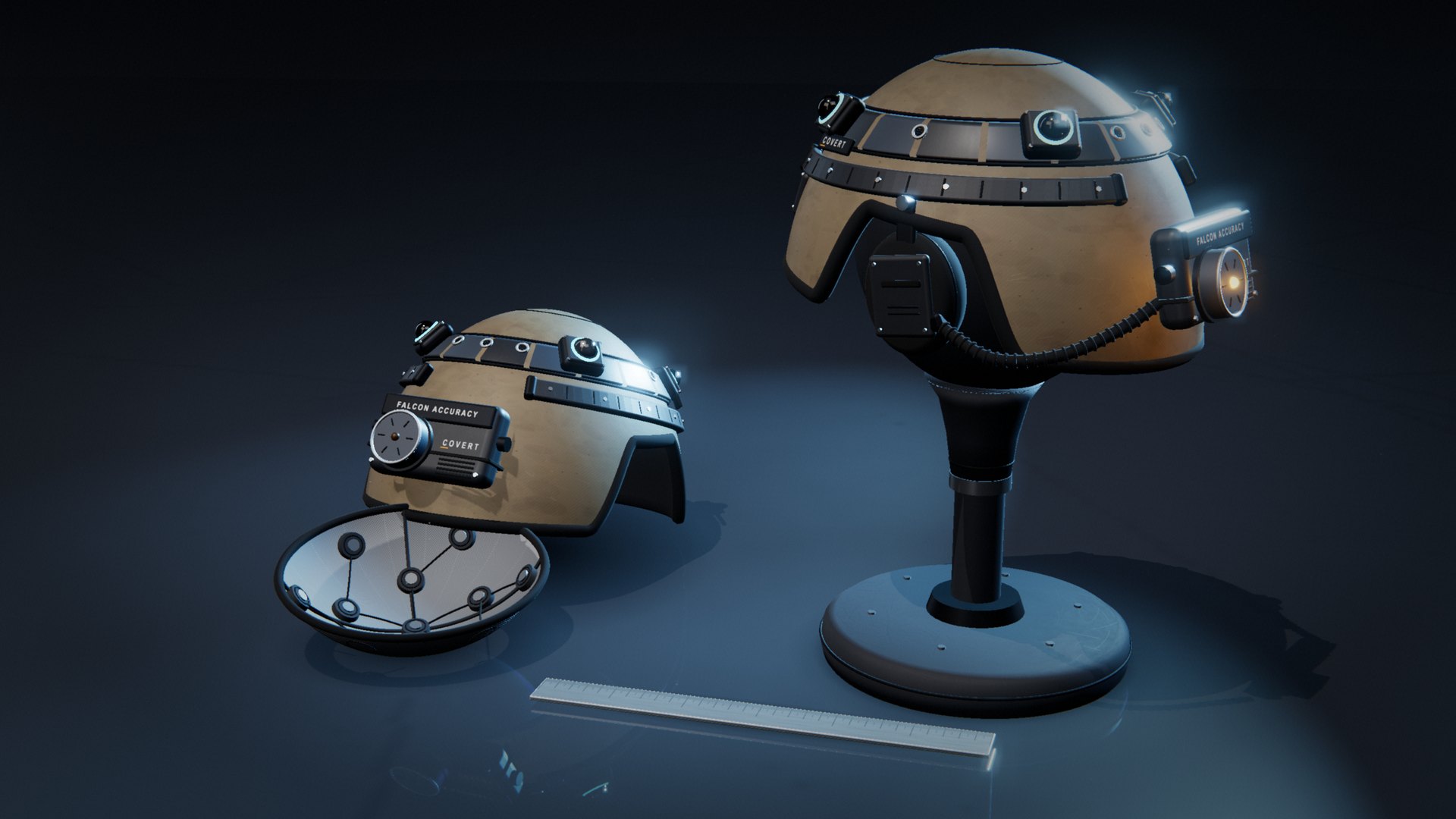
ROUSEROUSE Model Operations Service
A hawk rouses when it shakes every feather back into place, ready to fly again; ROUSE retrains, tests and releases every model so it is back in place every 4 weeks.
RUFTERRUFTER Operator Simulator
The rufter is the plain hood a newly taken hawk wears through its first days of training, before it has earned the field; RUFTER is where a new operator flies the first hundred sorties, faults included, before the real machine.
SAILSSAILS Long-Endurance ISR Aircraft
The sails are the falconer's word for the falcon's long wings, the surfaces that carry it for hours on the wind; SAILS is the aircraft that stays up for 12 hours on a 5.2 meter wing.
SARCELSARCEL Long-Range Survey AUV
The sarcel is the outer pinion feather of a hawk's wing, the long flight feather that carries the bird on its longest flights; SARCEL is the vehicle built for the longest survey runs.
SCREENSCREEN Perimeter Security System
The screen perch is the high perch with a cloth drop beneath it on which a hawk is kept safe between flights; in military usage a screen is the security force that watches an approach and reports, so it is base security.
SLIPSLIP Course-of-Action Engine
The slip is the moment a falconer releases the hawk at quarry, chosen only when the flight is judged right; SLIP is the engine that tests every course of action before the commander releases one.
SOOTYSOOTY Decoy and Camouflage Kit
The sooty falcon wears a slate-gray plumage that vanishes against desert rock in the evening light; SOOTY hides the real vehicle and shows a false one in its place.
STANNELSTANNEL Low-Altitude Air Picture
Stannel is the old English name for the small falcon that hangs on the wind over one field, head held still, and reads everything that moves beneath it; STANNEL holds the low sky the same way.
SYRINXSYRINX Signal Analysis Workstation
The syrinx is the organ that shapes every call a falcon makes, the source that gives each voice its signature; SYRINX takes a signal apart to name the emitter that made it.
TAITATAITA ISR Cubesat Constellation
The Taita falcon is a small, fast falcon that lives on high cliffs and watches the ground far below; TAITA is the small, fast constellation that watches from orbit.
TERRETTERRET Rideshare Satellite Dispenser
Terrets are the small rings that join a falcon's jesses to the leash and let it go free the moment the falconer slips them; TERRET is the ring that holds 24 satellites and lets each one go in turn.
TERTIALTERTIAL Harbor Survey AUV
The tertials are the innermost flight feathers, the short ones closest to the falcon's body; TERTIAL works the water closest to home, the harbor basin.
TIERCELTIERCEL ISR Drone Pair
The tiercel is the male falcon, a third smaller than the female and quicker in the air; it names the small, fast surveillance aircraft.
TOMIALTOMIAL Red-Team and Assurance Service
The tomial tooth is the notch in a falcon's beak that finds the one weak point in whatever the bird holds; TOMIAL finds the weak point in every system and release before an adversary does.
TOWERTOWER Space Domain Awareness Network
To tower is the falcon's steep climb to a great height, where it holds and watches the whole sky around it; TOWER watches the sky around the client's satellites from domes on high ground.
UNHOODEDUNHOODED Staff Assistant
A falcon is unhooded when the falconer wants it to see the field, and only then; UNHOODED opens the client's archive to the staff officer who asks, and shows only what that officer is cleared to see.
VARVELVARVEL Hazard Inspection Robot
The varvel is the small engraved ring at the end of the jess that carries the owner's name, so it is the robot that names the hazard and leaves its mark on it.
WAITONWAITON Tethered Overwatch Drone
Waiting on is the falcon holding station high above the falconer until the game is flushed below it; WAITON holds station above its vehicle for as long as the vehicle has power.
WAKEWAKE Drone Detection Mast
Waking is the falconer's all-night watch beside a newly taken hawk; WAKE is the mast that keeps the all-night watch over the low sky.
WEATHERWEATHER Mission Rehearsal Twin
To weather a hawk is to set it out on its block, where it sees the ground, the wind and the world before it is flown; WEATHER sets the force inside a twin of the objective before the real night.
YARAKYARAK Predictive Maintenance Platform
Yarak is the state of a hawk in peak condition, keen and ready to fly, and the platform keeps a fleet in that state.
Printable catalog

The catalog as a PDF

The printable catalog carries all 96 product sheets in 18 sectors, from the operator's kit through air and missile warning, undersea systems, space, rocket systems and the force's own defense language model to the services that tailor them, with the system diagram, the tailoring method, the trust principles and the glossary in A4 format for procurement, legal and technical readers who work from paper. It states the same design targets and the same honesty statement as this site, and each product sheet names the figures the acceptance trial measures.

Contact

Talk to Falcon Accuracy

contact@falconaccuracy.comEmail is the only channel

Write with the force, the mission and the theater in view. Falcon Accuracy replies with the questions that start the tailoring survey.

Falcon Accuracy works with government and allied forces under the export rules that apply to each. Write to contact@falconaccuracy.com with the force, the sector and the question. Every request is reviewed before any technical exchange, and the reply comes from an engineer.